• 文献检索
  • 文档翻译
  • 深度研究
  • 学术资讯
  • Suppr Zotero 插件Zotero 插件
  • 邀请有礼
  • 套餐&价格
  • 历史记录
应用&插件
Suppr Zotero 插件Zotero 插件浏览器插件Mac 客户端Windows 客户端微信小程序
定价
高级版会员购买积分包购买API积分包
服务
文献检索文档翻译深度研究API 文档MCP 服务
关于我们
关于 Suppr公司介绍联系我们用户协议隐私条款
关注我们

Suppr 超能文献

核心技术专利:CN118964589B侵权必究
粤ICP备2023148730 号-1Suppr @ 2026

文献检索

告别复杂PubMed语法,用中文像聊天一样搜索,搜遍4000万医学文献。AI智能推荐,让科研检索更轻松。

立即免费搜索

文件翻译

保留排版,准确专业,支持PDF/Word/PPT等文件格式,支持 12+语言互译。

免费翻译文档

深度研究

AI帮你快速写综述,25分钟生成高质量综述,智能提取关键信息,辅助科研写作。

立即免费体验

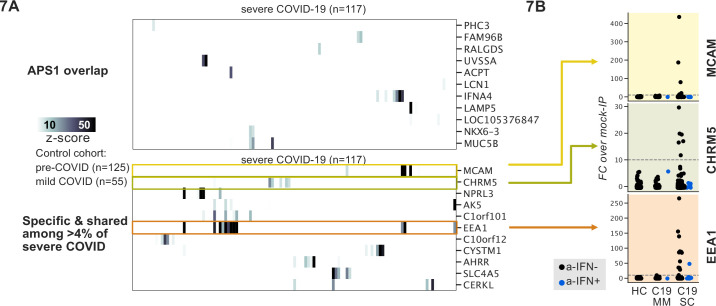
利用可扩展的 PhIP-seq 技术在单基因疾病、获得性疾病和 COVID-19 相关自身免疫病中发现自身抗体。

Autoantibody discovery across monogenic, acquired, and COVID-19-associated autoimmunity with scalable PhIP-seq.

机构信息

Department of Biochemistry and Biophysics, University of California, San Francisco, San Francisco, United States.

Diabetes Center, University of California, San Francisco, San Francisco, United States.

出版信息

Elife. 2022 Oct 27;11:e78550. doi: 10.7554/eLife.78550.

DOI:10.7554/eLife.78550
PMID:36300623
原文链接:https://pmc.ncbi.nlm.nih.gov/articles/PMC9711525/
Abstract

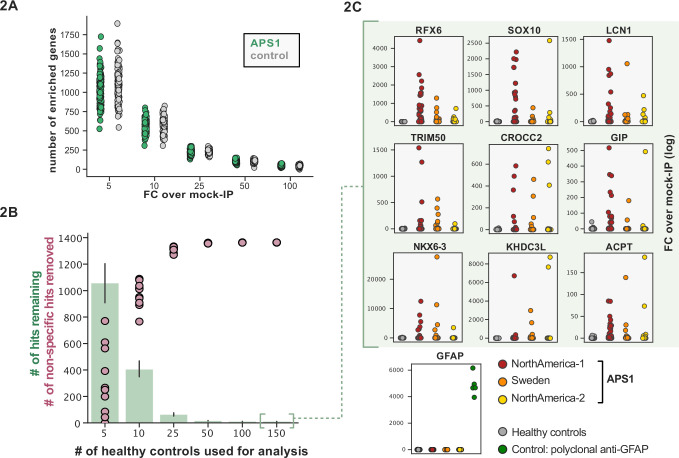
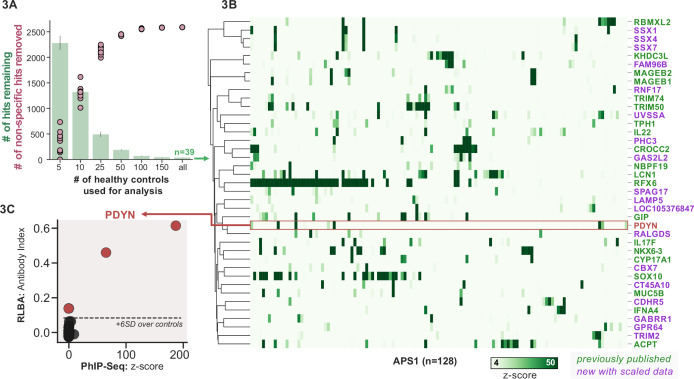
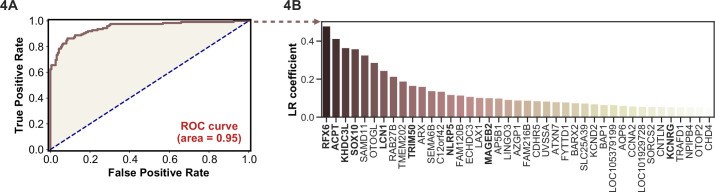
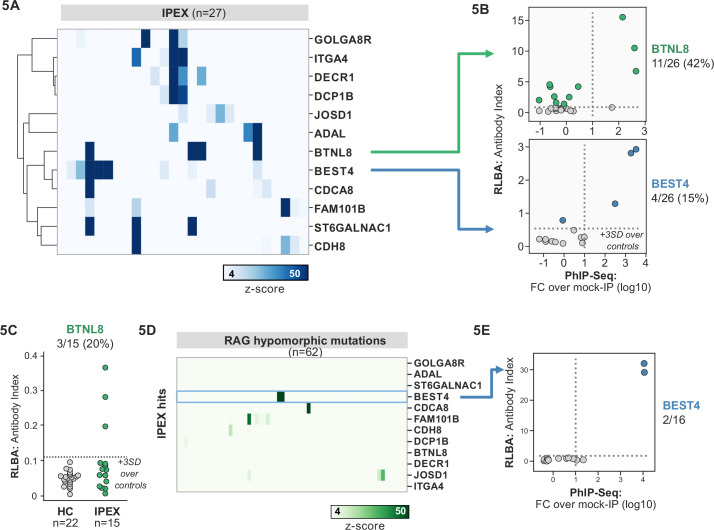
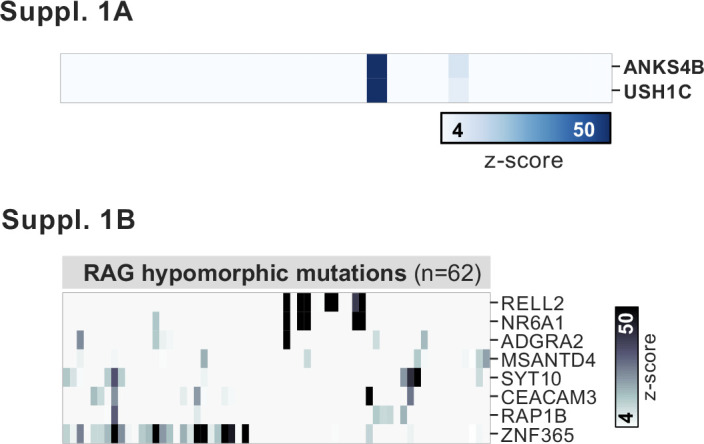
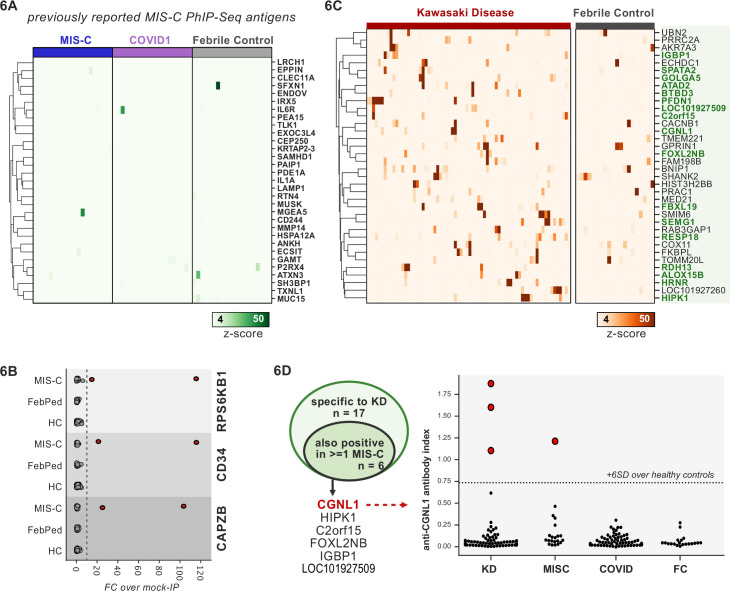
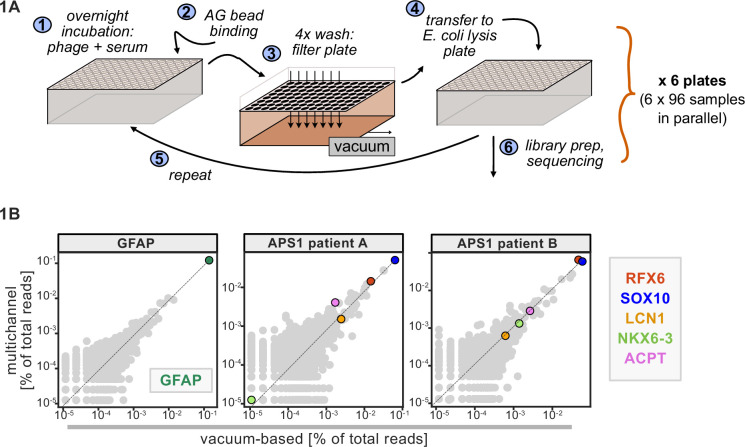
Phage immunoprecipitation sequencing (PhIP-seq) allows for unbiased, proteome-wide autoantibody discovery across a variety of disease settings, with identification of disease-specific autoantigens providing new insight into previously poorly understood forms of immune dysregulation. Despite several successful implementations of PhIP-seq for autoantigen discovery, including our previous work (Vazquez et al., 2020), current protocols are inherently difficult to scale to accommodate large cohorts of cases and importantly, healthy controls. Here, we develop and validate a high throughput extension of PhIP-seq in various etiologies of autoimmune and inflammatory diseases, including APS1, IPEX, RAG1/2 deficiency, Kawasaki disease (KD), multisystem inflammatory syndrome in children (MIS-C), and finally, mild and severe forms of COVID-19. We demonstrate that these scaled datasets enable machine-learning approaches that result in robust prediction of disease status, as well as the ability to detect both known and novel autoantigens, such as prodynorphin (PDYN) in APS1 patients, and intestinally expressed proteins BEST4 and BTNL8 in IPEX patients. Remarkably, BEST4 antibodies were also found in two patients with RAG1/2 deficiency, one of whom had very early onset IBD. Scaled PhIP-seq examination of both MIS-C and KD demonstrated rare, overlapping antigens, including CGNL1, as well as several strongly enriched putative pneumonia-associated antigens in severe COVID-19, including the endosomal protein EEA1. Together, scaled PhIP-seq provides a valuable tool for broadly assessing both rare and common autoantigen overlap between autoimmune diseases of varying origins and etiologies.

摘要

噬菌体免疫沉淀测序(PhIP-seq)允许在各种疾病环境中进行无偏、蛋白质组范围的自身抗体发现,鉴定疾病特异性自身抗原为以前理解较差的免疫失调形式提供了新的见解。尽管已经成功地实施了 PhIP-seq 用于自身抗原发现,包括我们之前的工作(Vazquez 等人,2020 年),但当前的方案本质上难以扩展以适应大量的病例和重要的健康对照。在这里,我们开发并验证了 PhIP-seq 在各种自身免疫和炎症性疾病病因中的高通量扩展,包括 APS1、IPEX、RAG1/2 缺陷、川崎病(KD)、儿童多系统炎症综合征(MIS-C),最后,轻度和重度 COVID-19。我们证明,这些扩展数据集能够支持机器学习方法,从而实现对疾病状态的稳健预测,以及检测已知和新的自身抗原的能力,例如 APS1 患者中的 prodynorphin(PDYN)和 IPEX 患者中的肠内表达蛋白 BEST4 和 BTNL8。值得注意的是,BEST4 抗体也在两名 RAG1/2 缺陷患者中发现,其中一名患者患有非常早发的 IBD。对 MIS-C 和 KD 的扩展 PhIP-seq 检查显示了罕见的重叠抗原,包括 CGNL1,以及严重 COVID-19 中几种强烈富集的假定肺炎相关抗原,包括内体蛋白 EEA1。总之,扩展的 PhIP-seq 为广泛评估不同来源和病因的自身免疫性疾病之间的罕见和常见自身抗原重叠提供了有价值的工具。
https://cdn.ncbi.nlm.nih.gov/pmc/blobs/146b/9711525/80ec30aa1b79/elife-78550-fig7.jpg
https://cdn.ncbi.nlm.nih.gov/pmc/blobs/146b/9711525/4f472b8ffe9b/elife-78550-fig1.jpg
https://cdn.ncbi.nlm.nih.gov/pmc/blobs/146b/9711525/ffeaead19b5b/elife-78550-fig2.jpg
https://cdn.ncbi.nlm.nih.gov/pmc/blobs/146b/9711525/4412c4822846/elife-78550-fig3.jpg
https://cdn.ncbi.nlm.nih.gov/pmc/blobs/146b/9711525/c62533a94a43/elife-78550-fig4.jpg
https://cdn.ncbi.nlm.nih.gov/pmc/blobs/146b/9711525/5dc5b87db570/elife-78550-fig5.jpg
https://cdn.ncbi.nlm.nih.gov/pmc/blobs/146b/9711525/031cad565b42/elife-78550-fig5-figsupp1.jpg
https://cdn.ncbi.nlm.nih.gov/pmc/blobs/146b/9711525/6edbcb7b7701/elife-78550-fig6.jpg
https://cdn.ncbi.nlm.nih.gov/pmc/blobs/146b/9711525/80ec30aa1b79/elife-78550-fig7.jpg
https://cdn.ncbi.nlm.nih.gov/pmc/blobs/146b/9711525/4f472b8ffe9b/elife-78550-fig1.jpg
https://cdn.ncbi.nlm.nih.gov/pmc/blobs/146b/9711525/ffeaead19b5b/elife-78550-fig2.jpg
https://cdn.ncbi.nlm.nih.gov/pmc/blobs/146b/9711525/4412c4822846/elife-78550-fig3.jpg
https://cdn.ncbi.nlm.nih.gov/pmc/blobs/146b/9711525/c62533a94a43/elife-78550-fig4.jpg
https://cdn.ncbi.nlm.nih.gov/pmc/blobs/146b/9711525/5dc5b87db570/elife-78550-fig5.jpg
https://cdn.ncbi.nlm.nih.gov/pmc/blobs/146b/9711525/031cad565b42/elife-78550-fig5-figsupp1.jpg
https://cdn.ncbi.nlm.nih.gov/pmc/blobs/146b/9711525/6edbcb7b7701/elife-78550-fig6.jpg
https://cdn.ncbi.nlm.nih.gov/pmc/blobs/146b/9711525/80ec30aa1b79/elife-78550-fig7.jpg

相似文献

1
Autoantibody discovery across monogenic, acquired, and COVID-19-associated autoimmunity with scalable PhIP-seq.利用可扩展的 PhIP-seq 技术在单基因疾病、获得性疾病和 COVID-19 相关自身免疫病中发现自身抗体。
Elife. 2022 Oct 27;11:e78550. doi: 10.7554/eLife.78550.
2
Autoantibody discovery across monogenic, acquired, and COVID19-associated autoimmunity with scalable PhIP-Seq.利用可扩展的噬菌体展示肽库测序技术在单基因、获得性和新冠病毒相关自身免疫中发现自身抗体。
bioRxiv. 2022 Mar 24:2022.03.23.485509. doi: 10.1101/2022.03.23.485509.
3
Identification of novel, clinically correlated autoantigens in the monogenic autoimmune syndrome APS1 by proteome-wide PhIP-Seq.通过全蛋白质组 PhIP-Seq 鉴定单基因自身免疫综合征 APS1 中的新型临床相关自身抗原。
Elife. 2020 May 15;9:e55053. doi: 10.7554/eLife.55053.
4
Validation of a murine proteome-wide phage display library for identification of autoantibody specificities.验证用于鉴定自身抗体特异性的小鼠蛋白质组全噬菌体展示文库。
JCI Insight. 2023 Dec 8;8(23):e174976. doi: 10.1172/jci.insight.174976.
5
Phage Immunoprecipitation Sequencing of Autoantigens in Autoimmune Retinopathy.自身免疫性视网膜病相关自身抗原的噬菌体免疫沉淀测序。
Ocul Immunol Inflamm. 2018;26(3):417-424. doi: 10.1080/09273948.2016.1232738. Epub 2016 Oct 11.
6
Autoantibodies Against Proteins Previously Associated With Autoimmunity in Adult and Pediatric Patients With COVID-19 and Children With MIS-C.COVID-19 成年和儿科患者以及 MIS-C 患儿中与自身免疫相关的蛋白的自身抗体。
Front Immunol. 2022 Mar 11;13:841126. doi: 10.3389/fimmu.2022.841126. eCollection 2022.
7
Validation of a murine proteome-wide phage display library for the identification of autoantibody specificities.用于鉴定自身抗体特异性的小鼠全蛋白质组噬菌体展示文库的验证
bioRxiv. 2023 Apr 7:2023.04.07.535899. doi: 10.1101/2023.04.07.535899.
8
PhIP-Seq uncovers novel autoantibodies and unique endotypes in interstitial lung disease.PhIP-Seq技术揭示了间质性肺疾病中的新型自身抗体和独特的内型。
bioRxiv. 2023 Apr 24:2023.04.24.538091. doi: 10.1101/2023.04.24.538091.
9
Phage Immunoprecipitation-Sequencing Reveals CDHR5 Autoantibodies in Select Patients With Interstitial Lung Disease.噬菌体免疫沉淀测序揭示了部分间质性肺疾病患者体内的CDHR5自身抗体。
ACR Open Rheumatol. 2024 Sep;6(9):568-580. doi: 10.1002/acr2.11696. Epub 2024 Jul 1.
10
Autoantigen profiling reveals a shared post-COVID signature in fully recovered and long COVID patients.自身抗原分析揭示了完全康复和长新冠患者的共享新冠后特征。
JCI Insight. 2023 Jun 8;8(11):e169515. doi: 10.1172/jci.insight.169515.

引用本文的文献

1
Multiomics dissection of human RAG deficiency reveals distinctive patterns of immune dysregulation but a common inflammatory signature.人类RAG缺陷的多组学剖析揭示了免疫失调的独特模式,但存在共同的炎症特征。
Sci Immunol. 2025 Jan 10;10(103):eadq1697. doi: 10.1126/sciimmunol.adq1697.
2
Ocular Mucous Membrane Pemphigoid Demonstrates a Distinct Autoantibody Profile from Those of Other Autoimmune Blistering Diseases: A Preliminary Study.眼黏膜类天疱疮与其他自身免疫性水疱病具有不同的自身抗体谱:一项初步研究。
Antibodies (Basel). 2024 Nov 14;13(4):91. doi: 10.3390/antib13040091.
3
Heterozygous BTNL8 variants in individuals with multisystem inflammatory syndrome in children (MIS-C).

本文引用的文献

1
Epigenetic and immunological indicators of IPEX disease in subjects with FOXP3 gene mutation.携带FOXP3基因突变的受试者中IPEX疾病的表观遗传学和免疫学指标
J Allergy Clin Immunol. 2023 Jan;151(1):233-246.e10. doi: 10.1016/j.jaci.2022.09.013. Epub 2022 Sep 21.
2
High-throughput identification of autoantibodies that target the human exoproteome.高通量鉴定靶向人类外蛋白质组的自身抗体。
Cell Rep Methods. 2022 Feb 28;2(2). doi: 10.1016/j.crmeth.2022.100172. Epub 2022 Feb 17.
3
Cells of the human intestinal tract mapped across space and time.
杂合性 BTNL8 变异与儿童多系统炎症综合征(MIS-C)个体相关。
J Exp Med. 2024 Dec 2;221(12). doi: 10.1084/jem.20240699. Epub 2024 Nov 22.
4
Thymic inborn errors of immunity.胸腺先天性免疫缺陷。
J Allergy Clin Immunol. 2025 Feb;155(2):368-376. doi: 10.1016/j.jaci.2024.10.009. Epub 2024 Oct 18.
5
Antibodies in neurological diseases: Established, emerging, explorative.神经疾病中的抗体:已确立的、新出现的、探索性的。
Immunol Rev. 2024 Nov;328(1):283-299. doi: 10.1111/imr.13405. Epub 2024 Oct 1.
6
Changes in Phenotypic and Molecular Features of Naïve and Central Memory T Helper Cell Subsets following SARS-CoV-2 Vaccination.SARS-CoV-2疫苗接种后初始和中枢记忆性T辅助细胞亚群的表型和分子特征变化
Vaccines (Basel). 2024 Sep 11;12(9):1040. doi: 10.3390/vaccines12091040.
7
Partial Lipodystrophy Affecting the Extremities in a Young Woman With Autoimmune Polyglandular Syndrome 1.一名患有自身免疫性多腺体综合征1型的年轻女性出现累及四肢的部分性脂肪营养不良。
JCEM Case Rep. 2024 Sep 24;2(10):luae166. doi: 10.1210/jcemcr/luae166. eCollection 2024 Oct.
8
PhIP-Seq: methods, applications and challenges.PhIP-Seq:方法、应用与挑战。
Front Bioinform. 2024 Sep 4;4:1424202. doi: 10.3389/fbinf.2024.1424202. eCollection 2024.
9
Molecular mimicry in multisystem inflammatory syndrome in children.儿童多系统炎症综合征中的分子模拟。
Nature. 2024 Aug;632(8025):622-629. doi: 10.1038/s41586-024-07722-4. Epub 2024 Aug 7.
10
B cell tolerance and autoimmunity: Lessons from repertoires.B 细胞耐受与自身免疫:从库中得到的启示。
J Exp Med. 2024 Sep 2;221(9). doi: 10.1084/jem.20231314. Epub 2024 Aug 2.
人类肠道细胞的时空图谱。
Nature. 2021 Sep;597(7875):250-255. doi: 10.1038/s41586-021-03852-1. Epub 2021 Sep 8.
4
Citrullination of a phage-displayed human peptidome library reveals the fine specificities of rheumatoid arthritis-associated autoantibodies.噬菌体展示人肽库的瓜氨酸化揭示了与类风湿关节炎相关的自身抗体的精细特异性。
EBioMedicine. 2021 Sep;71:103506. doi: 10.1016/j.ebiom.2021.103506. Epub 2021 Sep 1.
5
Type I interferon autoantibodies are associated with systemic immune alterations in patients with COVID-19.I 型干扰素自身抗体与 COVID-19 患者的全身免疫改变有关。
Sci Transl Med. 2021 Sep 22;13(612):eabh2624. doi: 10.1126/scitranslmed.abh2624. Epub 2021 Aug 24.
6
Autoantibodies neutralizing type I IFNs are present in 4% of uninfected individuals over 70 years old and account for 20% of COVID-19 deaths.在 70 岁以上未感染的人群中,有 4%存在中和 I 型干扰素的自身抗体,占 COVID-19 死亡人数的 20%。
Sci Immunol. 2021 Aug 19;6(62). doi: 10.1126/sciimmunol.abl4340.
7
Population-wide diversity and stability of serum antibody epitope repertoires against human microbiota.针对人类微生物群的血清抗体表位库在全人群中的多样性和稳定性。
Nat Med. 2021 Aug;27(8):1442-1450. doi: 10.1038/s41591-021-01409-3. Epub 2021 Jul 19.
8
Preexisting autoantibodies to type I IFNs underlie critical COVID-19 pneumonia in patients with APS-1.APS-1 患者中预先存在的 I 型干扰素自身抗体是导致严重 COVID-19 肺炎的基础。
J Exp Med. 2021 Jul 5;218(7). doi: 10.1084/jem.20210554.
9
Human gastrointestinal epithelia of the esophagus, stomach, and duodenum resolved at single-cell resolution.人类食管、胃和十二指肠的胃肠道上皮以单细胞分辨率得到解析。
Cell Rep. 2021 Mar 9;34(10):108819. doi: 10.1016/j.celrep.2021.108819.
10
Auto-antibodies to type I IFNs can underlie adverse reactions to yellow fever live attenuated vaccine.自身免疫性抗体针对 I 型干扰素可能导致黄热病减毒活疫苗的不良反应。
J Exp Med. 2021 Apr 5;218(4). doi: 10.1084/jem.20202486.