Department of Biochemistry and Biophysics.
Diabetes Center, School of Medicine.
JCI Insight. 2023 Dec 8;8(23):e174976. doi: 10.1172/jci.insight.174976.
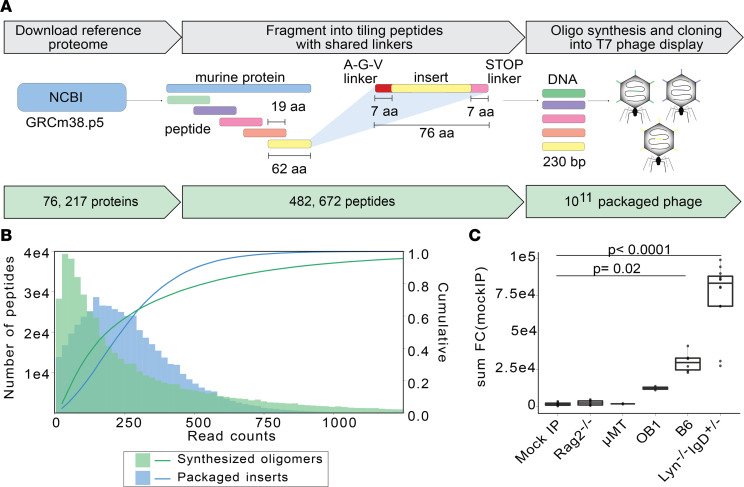
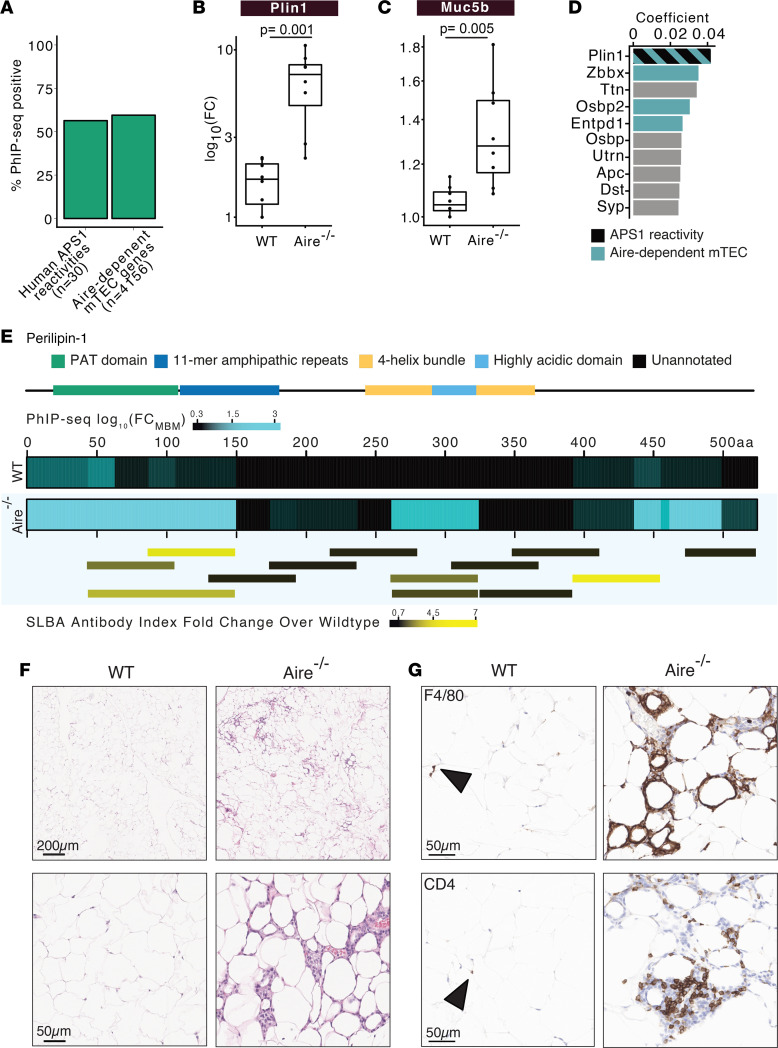
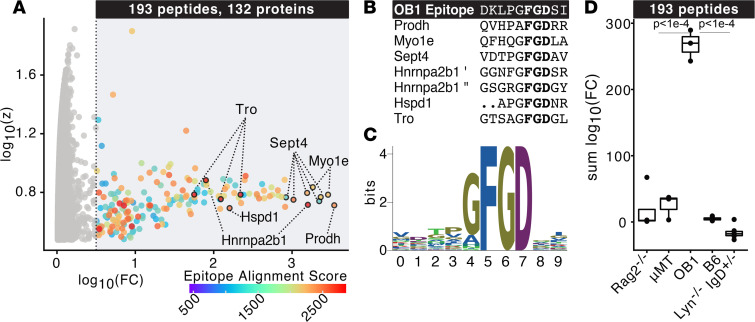
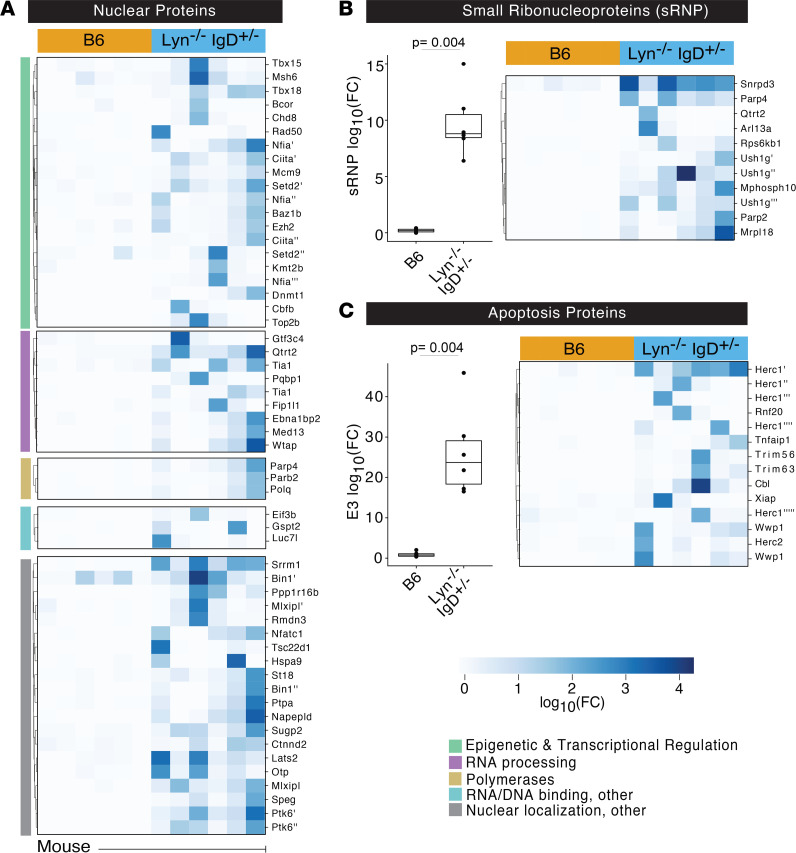
Autoimmunity is characterized by loss of tolerance to tissue-specific as well as systemic antigens, resulting in complex autoantibody landscapes. Here, we introduce and extensively validate the performance characteristics of a murine proteome-wide library for phage display immunoprecipitation and sequencing (PhIP-seq) in profiling mouse autoantibodies. This library was validated using 7 genetically distinct mouse lines across a spectrum of autoreactivity. Mice deficient in antibody production (Rag2-/- and μMT) were used to model nonspecific peptide enrichments, while cross-reactivity was evaluated using anti-ovalbumin B cell receptor-restricted OB1 mice as a proof of principle. The PhIP-seq approach was then utilized to interrogate 3 distinct autoimmune disease models. First, serum from Lyn-/- IgD+/- mice with lupus-like disease was used to identify nuclear and apoptotic bleb reactivities. Second, serum from nonobese diabetic (NOD) mice, a polygenic model of pancreas-specific autoimmunity, was enriched in peptides derived from both insulin and predicted pancreatic proteins. Lastly, Aire-/- mouse sera were used to identify numerous autoantigens, many of which were also observed in previous studies of humans with autoimmune polyendocrinopathy syndrome type 1 carrying recessive mutations in AIRE. These experiments support the use of murine proteome-wide PhIP-seq for antigenic profiling and autoantibody discovery, which may be employed to study a range of immune perturbations in mouse models of autoimmunity profiling.
自身免疫的特征是对组织特异性和系统性抗原的耐受性丧失,导致复杂的自身抗体景观。在这里,我们介绍并广泛验证了用于鉴定小鼠自身抗体的噬菌体展示免疫沉淀和测序 (PhIP-seq) 的鼠蛋白组文库的性能特征。该文库使用 7 种不同的遗传小鼠品系在自身反应谱上进行了验证。使用缺乏抗体产生的小鼠 (Rag2-/- 和 μMT) 来模拟非特异性肽富集,而使用抗卵清蛋白 B 细胞受体受限的 OB1 小鼠来评估交叉反应,作为原理证明。然后,使用 PhIP-seq 方法来研究 3 种不同的自身免疫疾病模型。首先,使用具有狼疮样疾病的 Lyn-/-IgD+/- 小鼠的血清来鉴定核和凋亡泡的反应性。其次,来自非肥胖型糖尿病 (NOD) 小鼠的血清,一种多基因胰腺特异性自身免疫模型,富含来自胰岛素和预测胰腺蛋白的肽。最后,使用 Aire-/- 小鼠血清鉴定了许多自身抗原,其中许多在以前研究携带 AIRE 隐性突变的自身免疫性多内分泌腺病综合征 1 型人类中也观察到。这些实验支持使用鼠蛋白组范围的 PhIP-seq 进行抗原鉴定和自身抗体发现,这可用于研究自身免疫性疾病模型中一系列免疫失调。