Yang Shuang, Hiotis Giorgos, Wang Yi, Chen Junjian, Wang Jia-Huai, Kim Mikyung, Reinherz Ellis L, Walz Thomas
Laboratory of Molecular Electron Microscopy, The Rockefeller University, New York, NY, USA.
Tri-Institutional PhD Program in Chemical Biology, The Rockefeller University, New York, NY, USA.
Nat Commun. 2022 Oct 27;13(1):6393. doi: 10.1038/s41467-022-34008-y.
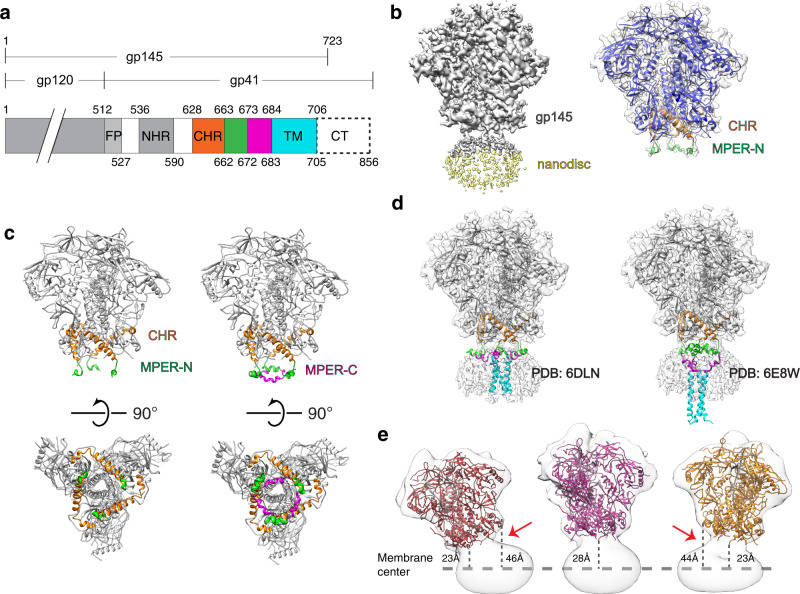
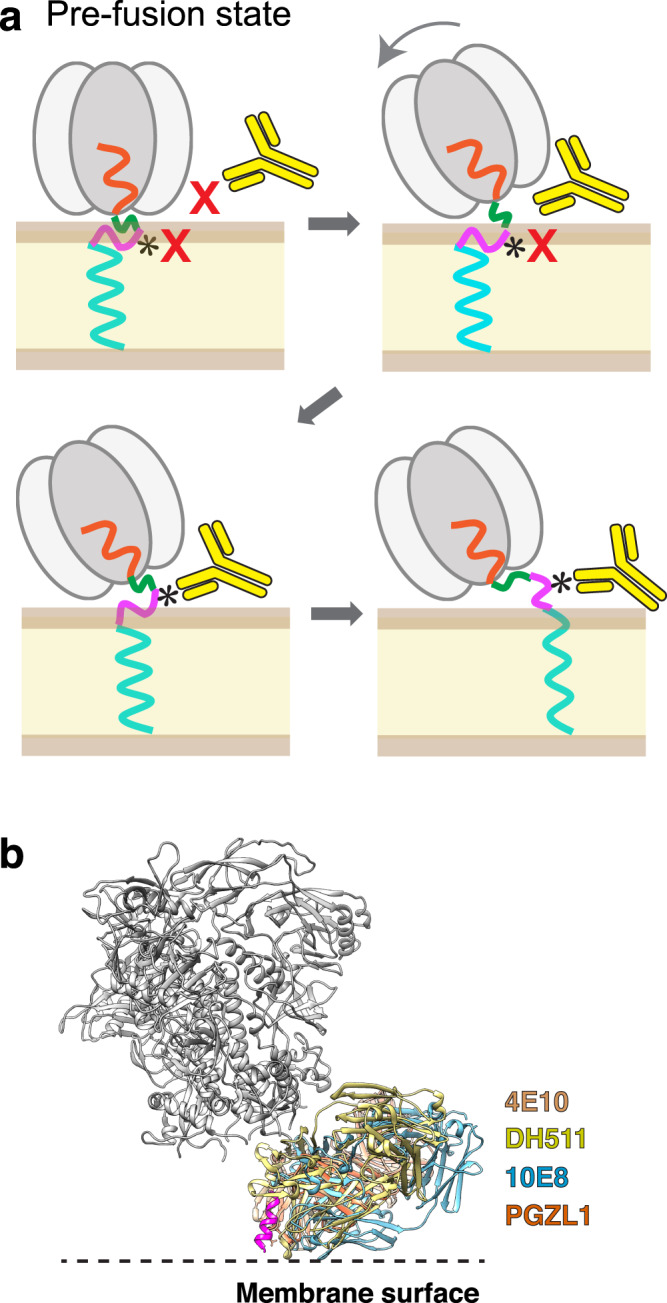
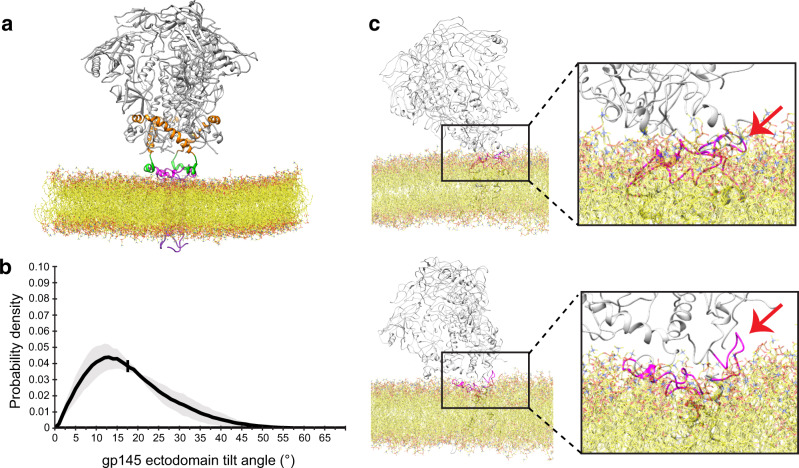
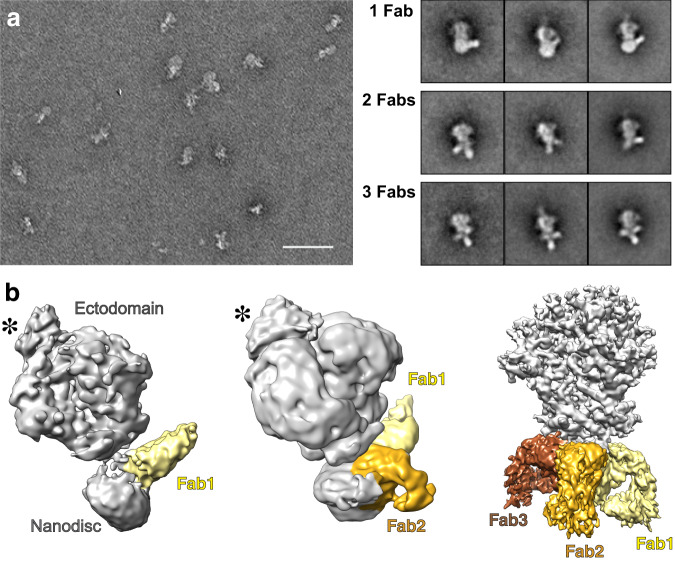
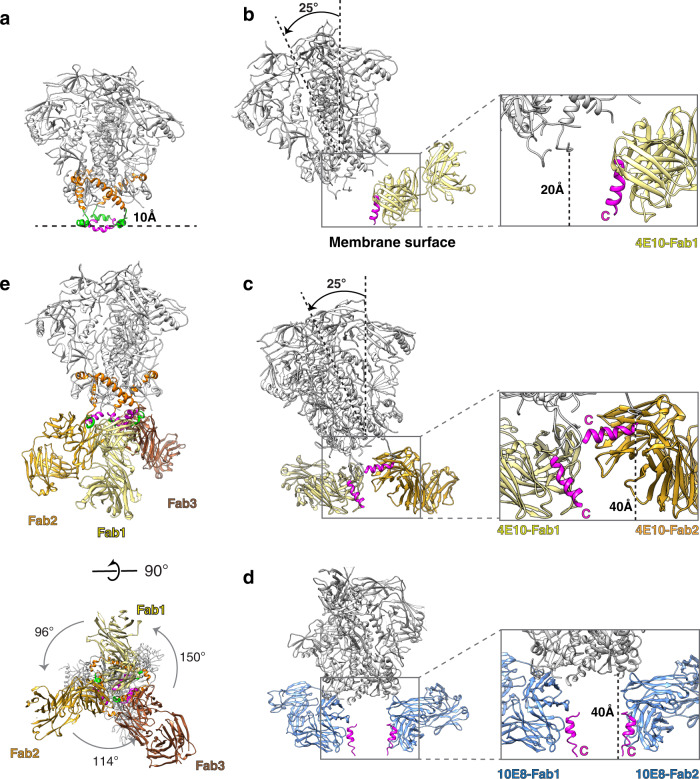
Vaccines targeting HIV-1's gp160 spike protein are stymied by high viral mutation rates and structural chicanery. gp160's membrane-proximal external region (MPER) is the target of naturally arising broadly neutralizing antibodies (bnAbs), yet MPER-based vaccines fail to generate bnAbs. Here, nanodisc-embedded spike protein was investigated by cryo-electron microscopy and molecular-dynamics simulations, revealing spontaneous ectodomain tilting that creates vulnerability for HIV-1. While each MPER protomer radiates centrally towards the three-fold axis contributing to a membrane-associated tripod structure that is occluded in the upright spike, tilting provides access to the opposing MPER. Structures of spike proteins with bound 4E10 bnAb Fabs reveal that the antibody binds exposed MPER, thereby altering MPER dynamics, modifying average ectodomain tilt, and imposing strain on the viral membrane and the spike's transmembrane segments, resulting in the abrogation of membrane fusion and informing future vaccine development.
针对HIV-1的gp160刺突蛋白的疫苗因病毒高突变率和结构欺骗而受阻。gp160的膜近端外部区域(MPER)是天然产生的广泛中和抗体(bnAbs)的靶点,但基于MPER的疫苗无法产生bnAbs。在这里,通过冷冻电子显微镜和分子动力学模拟研究了纳米盘包埋的刺突蛋白,揭示了自发的胞外域倾斜,这使得HIV-1产生了脆弱性。虽然每个MPER原体向中心辐射至三重轴,形成一个与膜相关的三脚架结构,该结构在直立的刺突中被遮挡,但倾斜提供了与相对的MPER接触的机会。结合了4E10 bnAb Fabs的刺突蛋白结构表明,该抗体结合暴露的MPER,从而改变MPER动力学,改变平均胞外域倾斜,并对病毒膜和刺突的跨膜片段施加张力,导致膜融合的废除,并为未来疫苗开发提供信息。