The Centre for Liver and Digestive Disorders, Royal Infirmary of Edinburgh, Edinburgh, EH16 4SA, United Kingdom.
General Adult Psychiatry, Royal Edinburgh Hospital, Edinburgh, EH10 5HF, United Kingdom.
World J Gastroenterol. 2022 Oct 14;28(38):5515-5529. doi: 10.3748/wjg.v28.i38.5515.
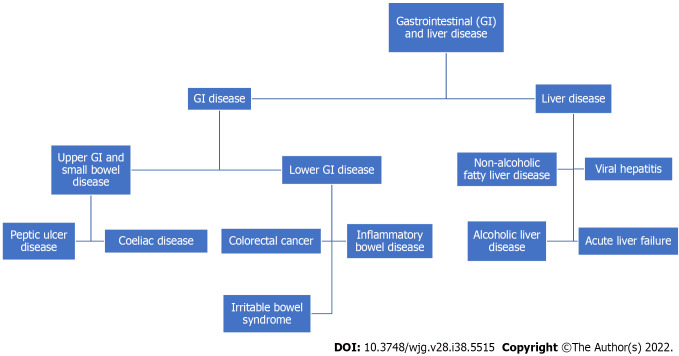
Schizophrenia is a severe mental illness which can have a devastating impact on an individual's quality of life. Comorbidities are high amongst patients and life expectancy is approximately 15 years less than the general population. Despite the well-known increased mortality, little is known about the impact of gastrointestinal and liver disease on patients with schizophrenia. We aimed to review the literature and to make recommendations regarding future care. Literature searches were performed on PubMed to identify studies related to gastrointestinal and liver disease in patients with schizophrenia. High rates of chronic liver disease were reported, with Non-Alcoholic Fatty Liver Disease being of particular concern; antipsychotics and metabolic syndrome were contributing factors. Rates of acute liver failure were low but have been associated with antipsychotic use and paracetamol overdose. Coeliac disease has historically been linked to schizophrenia; however, recent research suggests that a causal link is yet to be proven. Evidence is emerging regarding the relationships between schizophrenia and peptic ulcer disease, inflammatory bowel disease and irritable bowel syndrome; clinical vigilance regarding these conditions should be high. Patients with schizophrenia poorly engage with bowel cancer screening programmes, leading to late diagnosis and increased mortality. Clozapine induced constipation is a significant issue for many patients and requires close monitoring. There is a significant burden of gastrointestinal and liver disease amongst patients with schizophrenia. Better levels of support from all members of the medical team are essential to ensure that appropriate, timely care is provided.
精神分裂症是一种严重的精神疾病,会对个人的生活质量造成毁灭性的影响。患者共病率较高,预期寿命比普通人群短约 15 年。尽管众所周知死亡率增加,但对于胃肠道和肝脏疾病对精神分裂症患者的影响知之甚少。我们旨在回顾文献并就未来的护理提出建议。在 PubMed 上进行了文献检索,以确定与精神分裂症患者胃肠道和肝脏疾病相关的研究。报告了慢性肝病的高发病率,非酒精性脂肪性肝病尤其值得关注;抗精神病药和代谢综合征是促成因素。急性肝衰竭的发生率较低,但与抗精神病药的使用和对乙酰氨基酚过量有关。乳糜泻与精神分裂症历来有关;然而,最近的研究表明,因果关系尚未得到证实。关于精神分裂症与消化性溃疡病、炎症性肠病和肠易激综合征之间关系的证据正在出现;对这些疾病的临床警惕性应很高。精神分裂症患者参与结直肠癌筛查计划的情况较差,导致诊断延迟和死亡率增加。氯氮平引起的便秘是许多患者的一个重大问题,需要密切监测。精神分裂症患者的胃肠道和肝脏疾病负担沉重。医疗团队的所有成员都必须提供更好的支持,以确保提供适当、及时的护理。