Wang Dongmei, Liu Jieying, Zhong Ling, Ding Lu, Zhang Qian, Yu Miao, Li Ming, Xiao Xinhua
Department of Endocrinology, NHC Key Laboratory of Endocrinology, Peking Union Medical College Hospital, Peking Union Medical College and Chinese Academy of Medical Sciences, Beijing, China.
Department of Medical Research Center, Peking Union Medical College Hospital, Chinese Academy of Medical Sciences and Peking Union Medical College, Beijing, China.
Front Pharmacol. 2022 Oct 11;13:1004617. doi: 10.3389/fphar.2022.1004617. eCollection 2022.
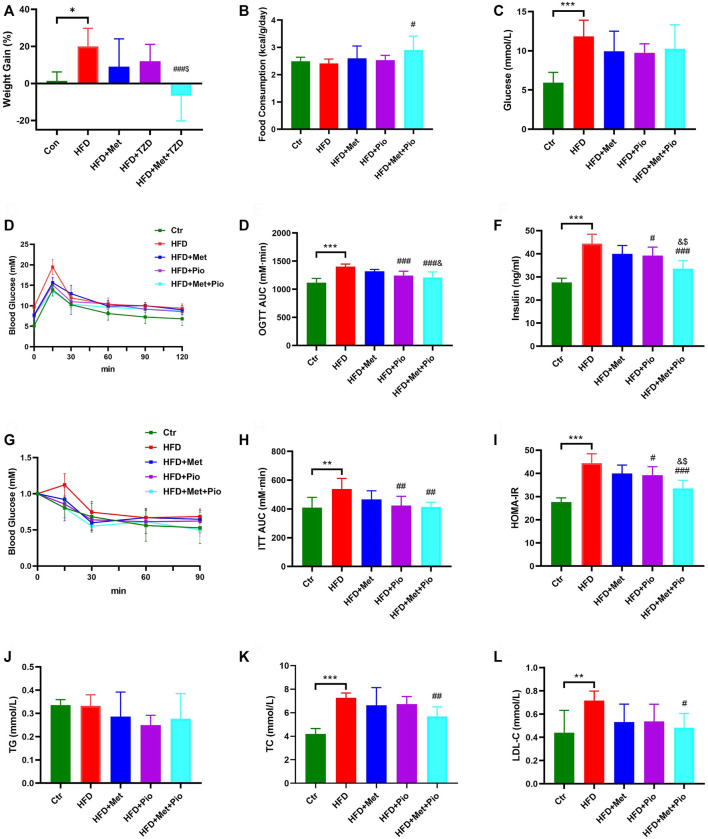
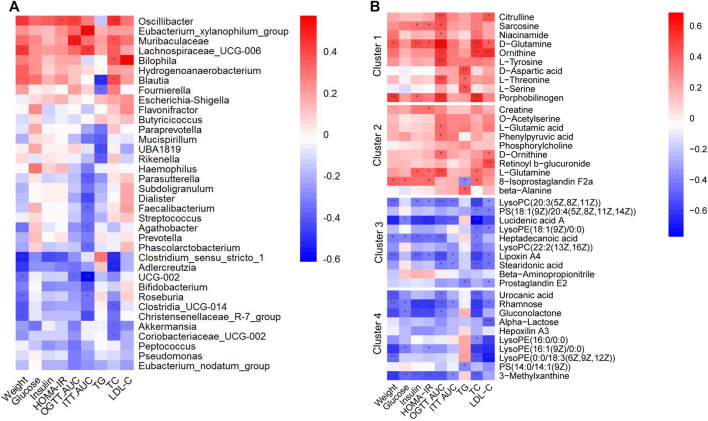
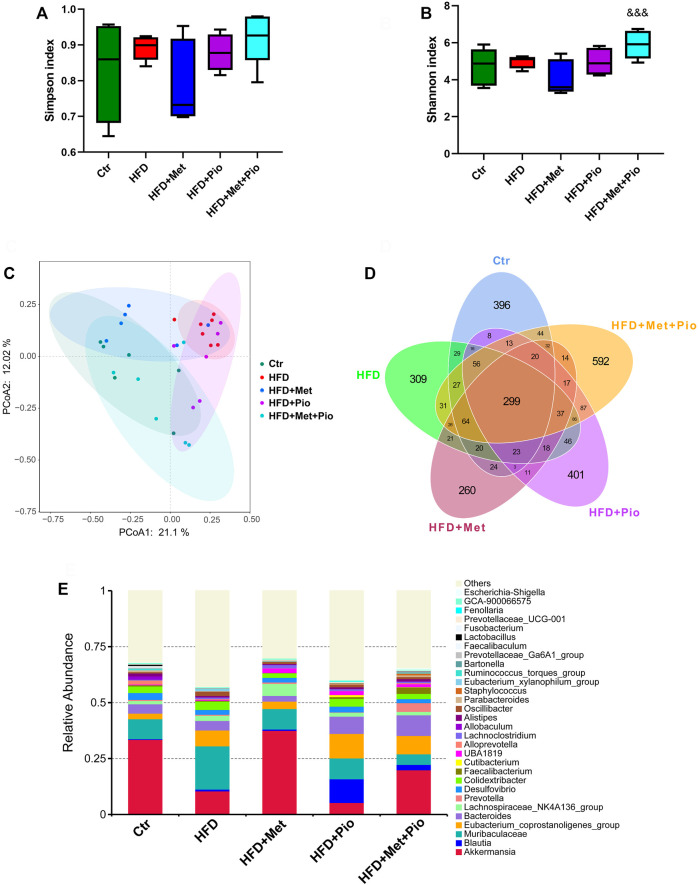
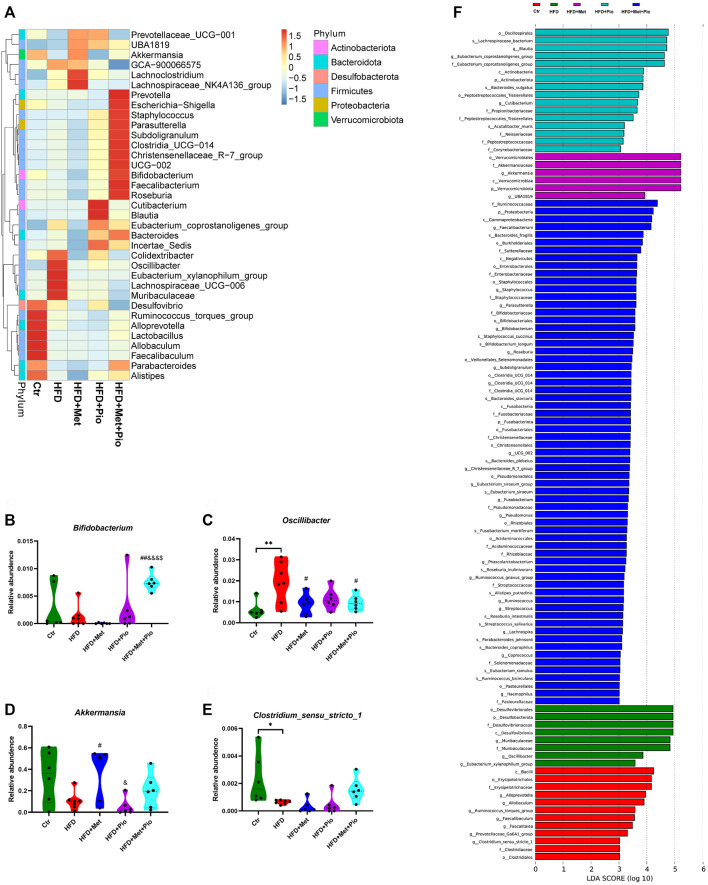
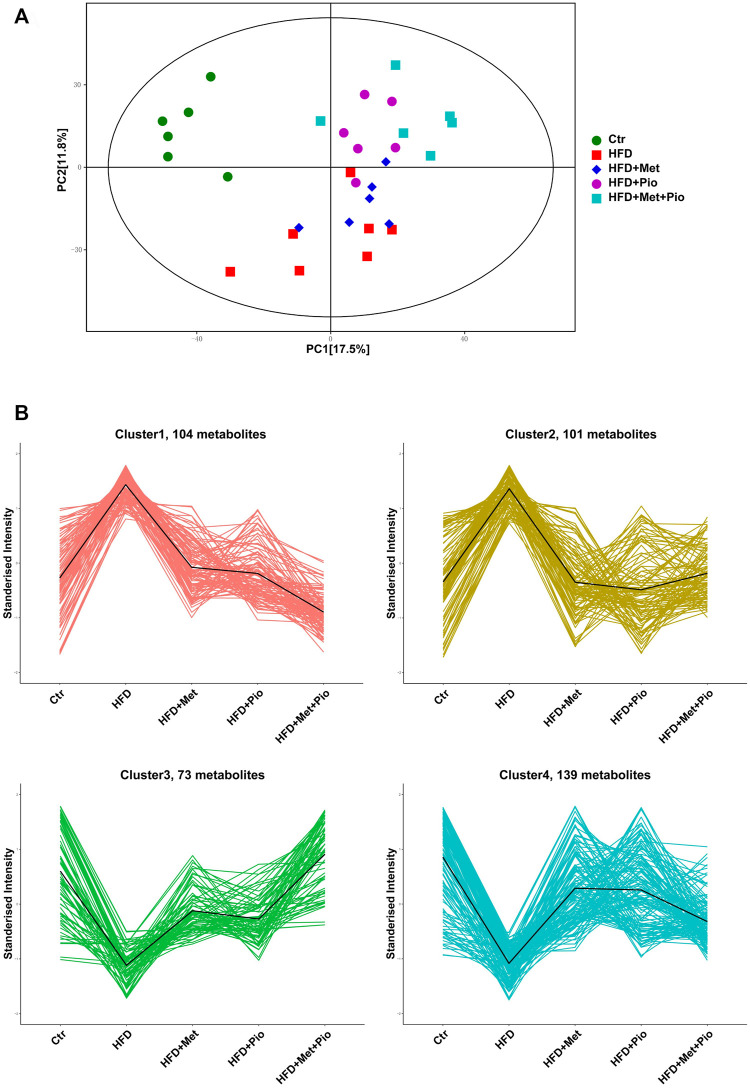
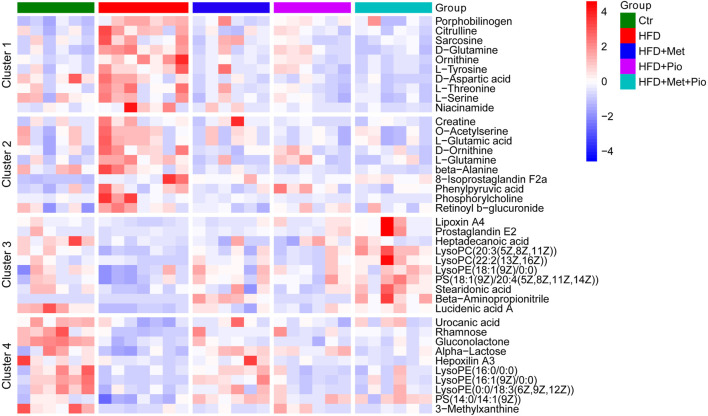
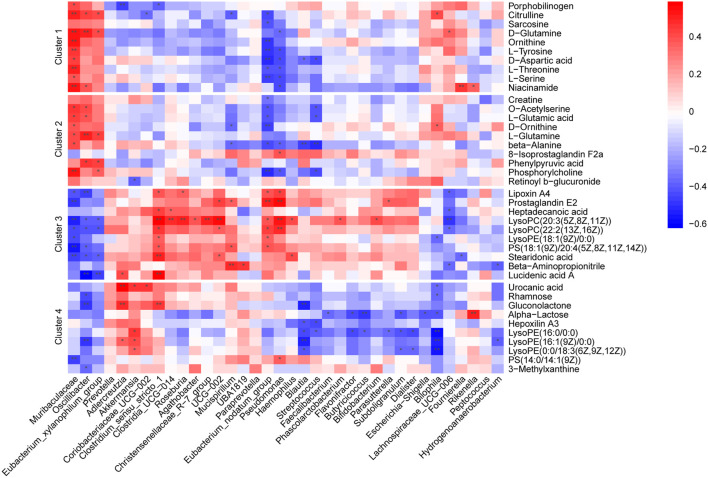
Metformin and pioglitazone monotherapy have been proven to alter gut microbiota in diabetes and obesity. The present study aimed to investigated whether the combined administration of pioglitazone and metformin achieved superior protective effects on high-fat diet (HFD)-fed obese mice and elucidated its molecular mechanism the gut microbiota and its metabolites. C57BL/6 males were randomly divided into five groups: the control group, fed a normal control diet; the HFD group, fed an HFD; the metformin monotherapy group, fed an HFD and treated with metformin; the pioglitazone monotherapy group, fed an HFD and treated with pioglitazone; and the combination therapy group, fed an HFD and treated with metformin and pioglitazone combination therapy. The cecal contents were collected for 16S rDNA amplicon sequencing and untargeted metabolomics analysis. The results showed that the combination therapy of metformin and pioglitazone significantly improved insulin sensitivity and glucolipid metabolism in HFD-fed mice. Combination therapy markedly altered gut microbiota by increasing beneficial bacteria, such as Christensenellaceae and , and decreasing harmful bacteria, such as and . Fecal metabolites were significantly changed in the combination therapy group, including a reduction in amino acid metabolism and augmentation of lipid metabolism, such as citrulline, sarcosine, D-glutamine, lipoxin A4, prostaglandin E2, stearidonic acid and lucidenic acid A. These results revealed that combined metformin and pioglitazone therapy had synergistic effects or at least have an additive effect on modifying gut microbiota and metabolites, closely associated with improved glucolipid metabolic parameters in HFD-fed mice, which provides novel evidence and promising targets for metformin and pioglitazone combination therapy in type 2 diabetes.
二甲双胍和吡格列酮单药治疗已被证明可改变糖尿病和肥胖患者的肠道微生物群。本研究旨在调查吡格列酮和二甲双胍联合给药对高脂饮食(HFD)喂养的肥胖小鼠是否具有更好的保护作用,并阐明其对肠道微生物群及其代谢产物的分子机制。将C57BL/6雄性小鼠随机分为五组:对照组,喂食正常对照饮食;HFD组,喂食HFD;二甲双胍单药治疗组,喂食HFD并接受二甲双胍治疗;吡格列酮单药治疗组,喂食HFD并接受吡格列酮治疗;联合治疗组,喂食HFD并接受二甲双胍和吡格列酮联合治疗。收集盲肠内容物进行16S rDNA扩增子测序和非靶向代谢组学分析。结果表明,二甲双胍和吡格列酮联合治疗显著改善了HFD喂养小鼠的胰岛素敏感性和糖脂代谢。联合治疗通过增加有益细菌(如科里森氏菌科等)和减少有害细菌(如等)显著改变了肠道微生物群。联合治疗组的粪便代谢产物发生了显著变化,包括氨基酸代谢减少和脂质代谢增强,如瓜氨酸、肌氨酸、D-谷氨酰胺、脂氧素A4、前列腺素E2、硬脂酸和光泽酸A。这些结果表明,二甲双胍和吡格列酮联合治疗在改变肠道微生物群和代谢产物方面具有协同作用或至少具有相加作用,这与改善HFD喂养小鼠的糖脂代谢参数密切相关,为2型糖尿病的二甲双胍和吡格列酮联合治疗提供了新的证据和有前景的靶点。