Green Jonathan
Division of Psychology and Mental Health, Faculty of Biology Medicine and Health, Manchester Academic Health Sciences Centre, Royal Manchester Children's Hospital, University of Manchester, Manchester, United Kingdom.
Front Psychiatry. 2022 Oct 7;13:988755. doi: 10.3389/fpsyt.2022.988755. eCollection 2022.
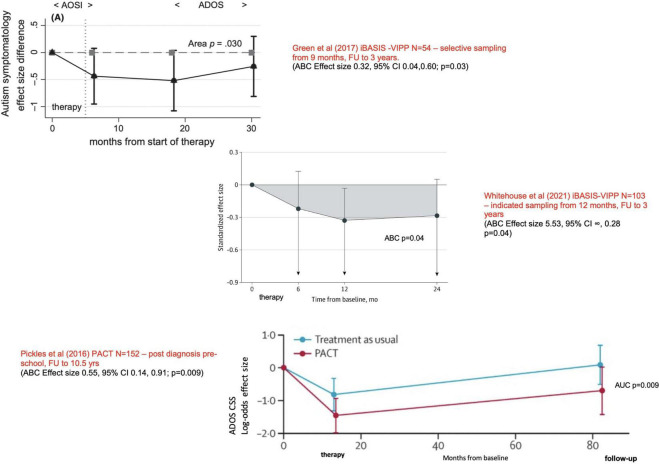
The current epistemology of autism as a phenotype derives from the consistency of historical accounts and decades of work within the tradition of descriptive epidemiology, culminating in current categorical descriptions within DSM and ICD nosologies and the concept of "prototypical autism." The demonstrated high heritability of this phenotype has led to an essentialist theory of autism as a biological entity and the concerted search within the developmental brain and genetic science for discrete biological markers. This search has not revealed simple markers explaining autistic outcomes and has led to moves towards a more dimensional account. This article proposes an alternative transactional approach. It proposes to understand autistic states as an emergent property within a complex developmental system; as the neurodivergent brain, and mind and body, encounter their social and physical environment within early development. Key evidence in support of this approach comes from random allocation intervention trials based on such transactional development theory, both in the infancy pre-diagnostic prodrome and the early post-diagnostic period. In replicated evidence, these intervention trials show that a targeted alteration in the quality of social transactional environment available for the child leads to significant, predictable, and sustained alterations in the outcome dimensional autistic phenotype over time; and further, in one prodromal trial, to a significant reduction in later categorical classification status. The inference from this evidence is that the prototypical autistic phenotype is to a degree malleable with a changed experienced social environment and that it is emergent from its constituent traits. Such a transactional approach enlarges our notion of the phenotype and brings the study of autism within mainstream individual difference developmental science. It challenges essentialist views, for instance as to intrinsic autistic "social avoidance" or theory of mind empathy deficits, integrates dimensional and categorical perspectives, and is consistent with the lived experience of autistic people and their advocacy for improved understanding within a social model.
当前将自闭症视为一种表型的认识论源于历史记载的一致性以及描述性流行病学传统下数十年的研究工作,最终形成了《精神疾病诊断与统计手册》(DSM)和《国际疾病分类》(ICD)分类体系中的当前类别描述以及“典型自闭症”的概念。这种表型所显示出的高遗传性导致了一种将自闭症视为生物实体的本质主义理论,并促使人们在发育脑科学和基因科学领域协同寻找离散的生物标志物。然而,这一寻找尚未揭示出能够解释自闭症结果的简单标志物,从而促使人们转向更具维度性的解释。本文提出了一种替代性的相互作用方法。该方法主张将自闭症状态理解为复杂发育系统中的一种涌现属性;即当神经发育不同的大脑、心智和身体在早期发育过程中与社会和物理环境相遇时所产生的属性。支持这一方法的关键证据来自基于这种相互作用发育理论的随机分配干预试验,这些试验涵盖了婴儿期诊断前的前驱期和诊断后的早期阶段。在重复验证的证据中,这些干预试验表明,针对儿童可获得的社会互动环境质量进行有针对性的改变,会随着时间的推移导致自闭症表型在维度上出现显著、可预测且持续的变化;此外,在一项前驱期试验中,还会使后期的类别分类状态显著降低。从这一证据得出的推论是,典型的自闭症表型在一定程度上会随着经历的社会环境变化而具有可塑性,并且它是由其构成特征所涌现出来的。这样一种相互作用方法扩展了我们对表型的认识,并将自闭症研究纳入主流的个体差异发育科学范畴。它挑战了本质主义观点,例如关于内在的自闭症“社交回避”或心理理论共情缺陷的观点,整合了维度和类别视角,并且与自闭症患者的生活经历以及他们倡导在社会模型下获得更好理解的诉求相一致。