Hleihil Mohammad, Balakrishnan Karthik, Benke Dietmar
Institute of Pharmacology and Toxicology, University of Zurich, Zurich, Switzerland.
Neuroscience Center Zurich, University of Zurich and ETH Zürich, Zurich, Switzerland.
Front Mol Neurosci. 2022 Oct 13;15:1015906. doi: 10.3389/fnmol.2022.1015906. eCollection 2022.
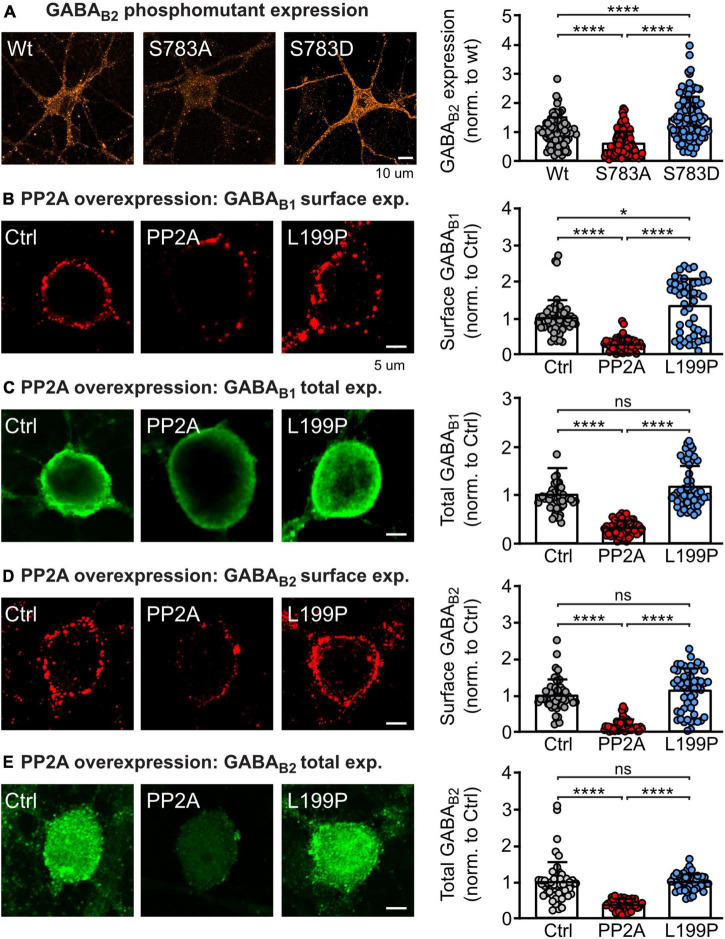
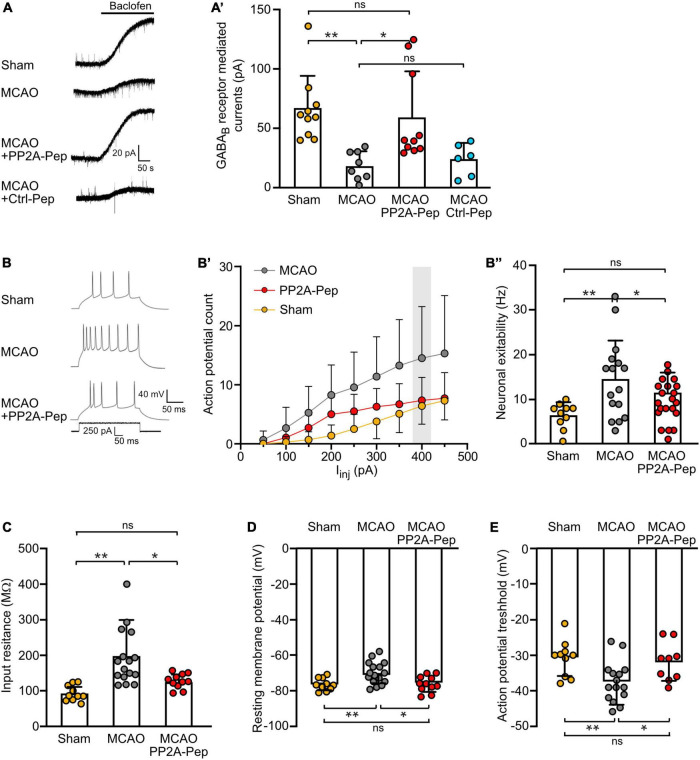
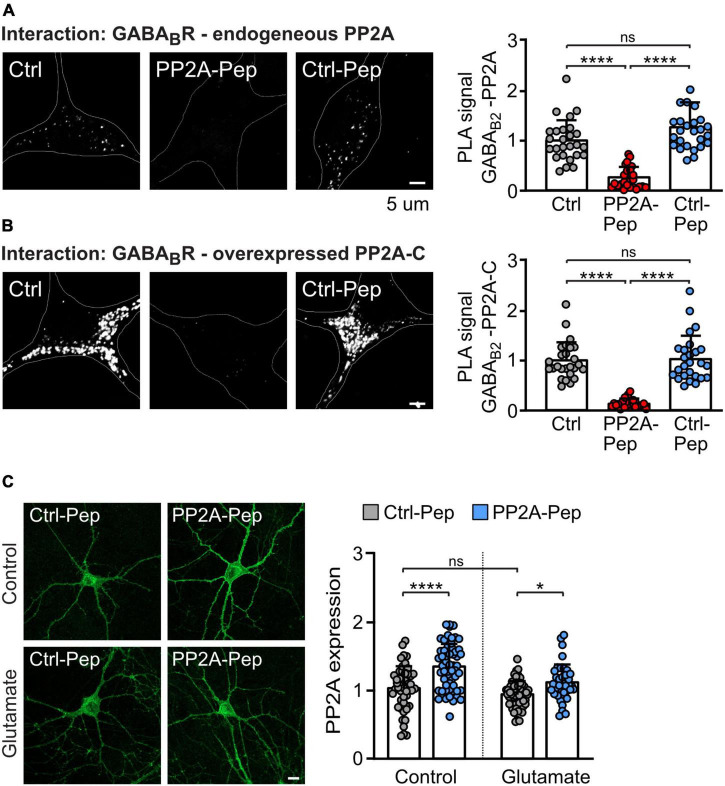
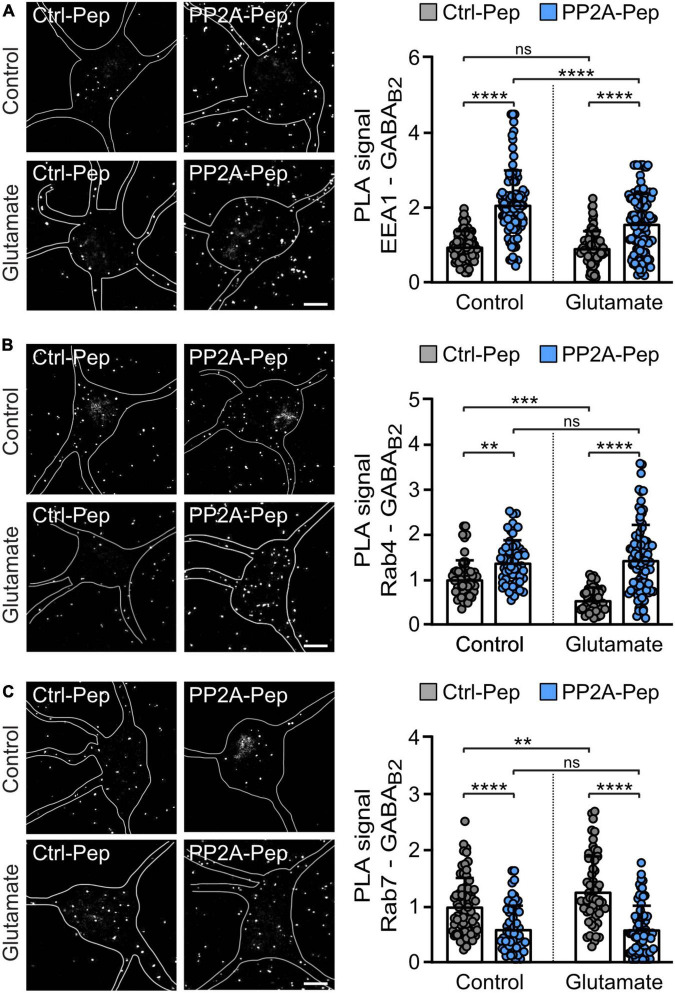
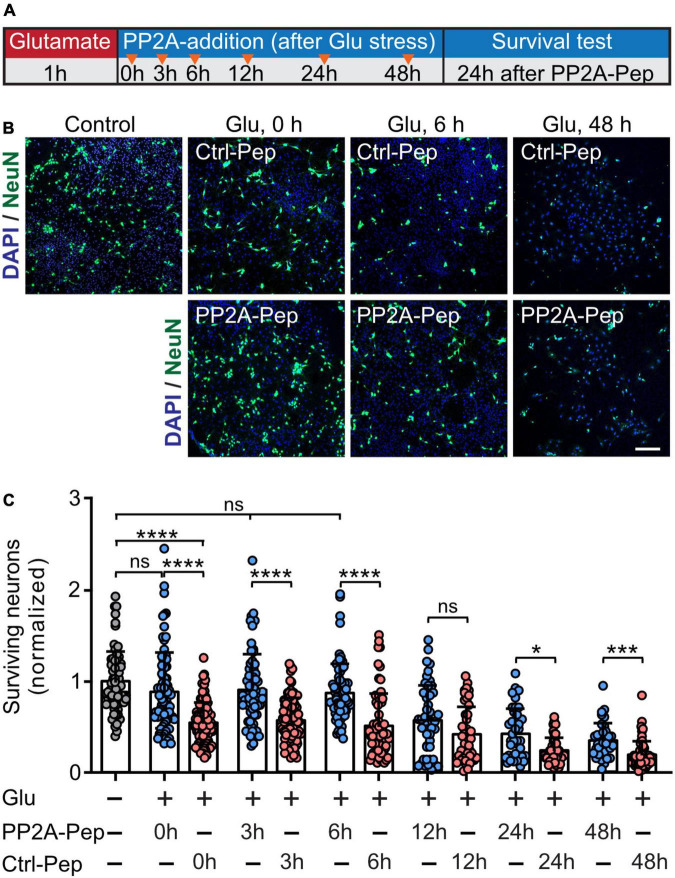
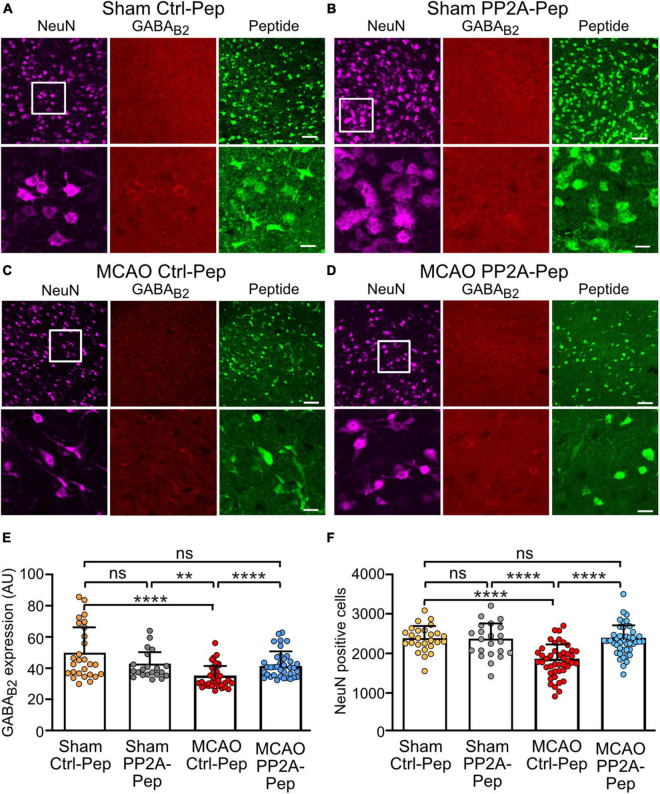
One major factor regulating the strength of GABA receptor signaling and thereby neuronal excitability is the dynamic control of their cell surface expression. GABA receptors are constitutively internalized and recycled back to the plasma membrane to maintain a stable number of receptors at cell surface for appropriate signaling. Protein phosphatase 2A (PP2A) dependent dephosphorylation of serine 783 (S783) in the GABA subunit is a key event for downregulating GABA receptor cell surface expression particularly under conditions associated with excitotoxicity. Here, we investigated the role of PP2A in regulating GABA receptor cell surface expression under physiological and excitotoxic conditions. For this purpose, we developed an interfering peptide (PP2A-Pep) that inhibits the interaction of GABA receptors with PP2A. Using cultured cortical neurons, we found that PP2A downregulates GABA receptor cell surface expression by inhibiting recycling of the receptors and thereby promoting degradation of the receptors. Inhibition of the GABA receptor/PP2A interaction by PP2A-Pep in cultured cortical neurons restored GABA receptor cell surface expression after excitotoxic stress and inhibited progressing neuronal death even when added 48 h after the insult. To explore the therapeutic potential of PP2A-Pep, we further analyzed effect of PP2A-Pep in the middle cerebral artery occlusion (MCAO) mouse model of cerebral ischemia. Incubation of brain slices prepared from MCAO-treated mice with PP2A-Pep restored normal GABA receptor expression and GABA receptor-mediated inhibition, reduced ischemic-induced overexcitability of neurons, and prevented neuronal death in the ischemic penumbra. This data illustrates the crucial role of regulating GABA receptor phosphorylation by PP2A for controlling neuronal inhibition and excitability. The results further suggest that interfering with the GABA receptor/PP2A interaction is a promising strategy for the development of specific therapeutic interventions to treat neurological diseases associated with a disturbed excitation/inhibition balance and downregulation of GABA receptors.
调节γ-氨基丁酸(GABA)受体信号强度从而调控神经元兴奋性的一个主要因素是其细胞表面表达的动态控制。GABA受体持续内化并循环回到质膜,以维持细胞表面稳定数量的受体用于适当的信号传导。GABA亚基中丝氨酸783(S783)的蛋白磷酸酶2A(PP2A)依赖性去磷酸化是下调GABA受体细胞表面表达的关键事件,特别是在与兴奋性毒性相关的条件下。在此,我们研究了PP2A在生理和兴奋性毒性条件下调节GABA受体细胞表面表达中的作用。为此,我们开发了一种干扰肽(PP2A-Pep),其可抑制GABA受体与PP2A的相互作用。利用培养的皮层神经元,我们发现PP2A通过抑制受体的循环从而促进受体的降解来下调GABA受体细胞表面表达。在培养的皮层神经元中,PP2A-Pep对GABA受体/PP2A相互作用的抑制在兴奋性毒性应激后恢复了GABA受体细胞表面表达,并且即使在损伤后48小时添加也能抑制神经元死亡的进展。为了探索PP2A-Pep的治疗潜力,我们进一步分析了PP2A-Pep在大脑中动脉闭塞(MCAO)脑缺血小鼠模型中的作用。用PP2A-Pep孵育MCAO处理小鼠制备的脑片可恢复正常的GABA受体表达和GABA受体介导的抑制作用,降低缺血诱导的神经元过度兴奋性,并防止缺血半暗带中的神经元死亡。这些数据说明了PP2A调节GABA受体磷酸化在控制神经元抑制和兴奋性中的关键作用。结果进一步表明,干扰GABA受体/PP2A相互作用是开发特异性治疗干预措施以治疗与兴奋/抑制平衡紊乱和GABA受体下调相关的神经疾病的一种有前景的策略。