Zhang Zhe, Li Xiaoran, Sun Hongzan
Department of Radiology, Shengjing Hospital of China Medical University, Shenyang, China.
Front Physiol. 2022 Oct 14;13:994304. doi: 10.3389/fphys.2022.994304. eCollection 2022.
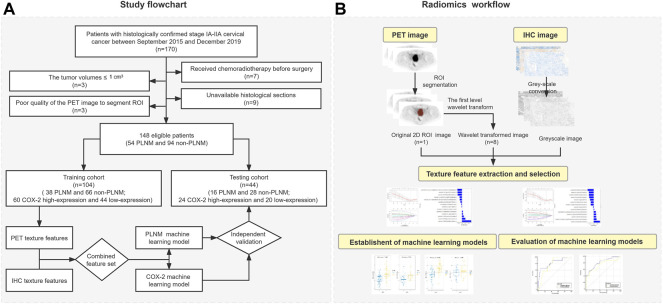
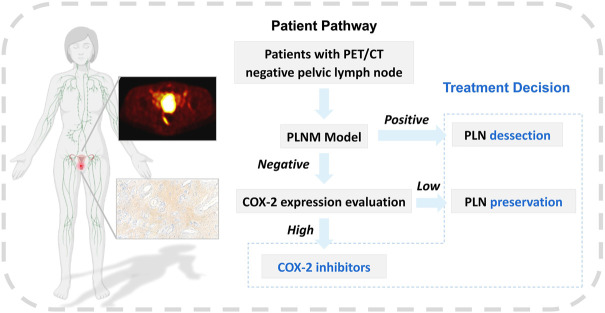
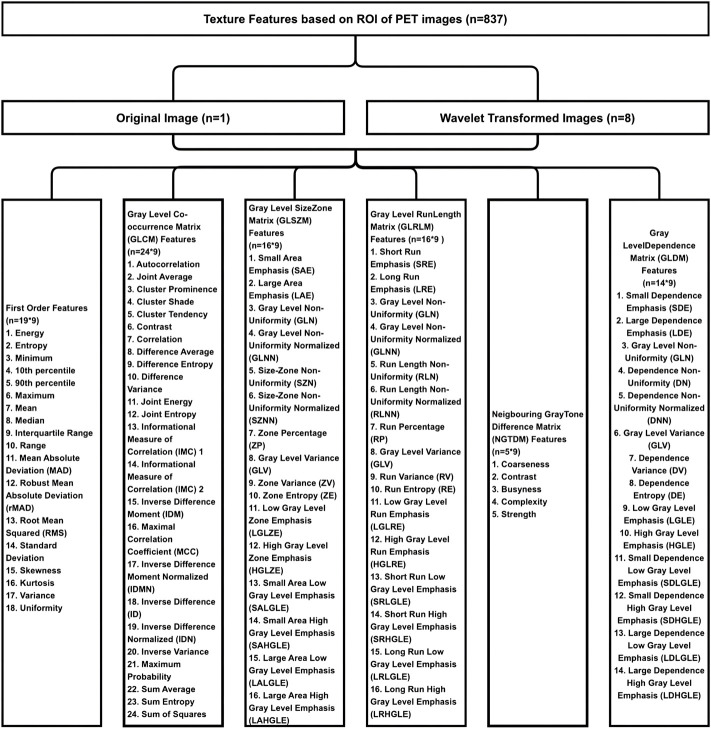
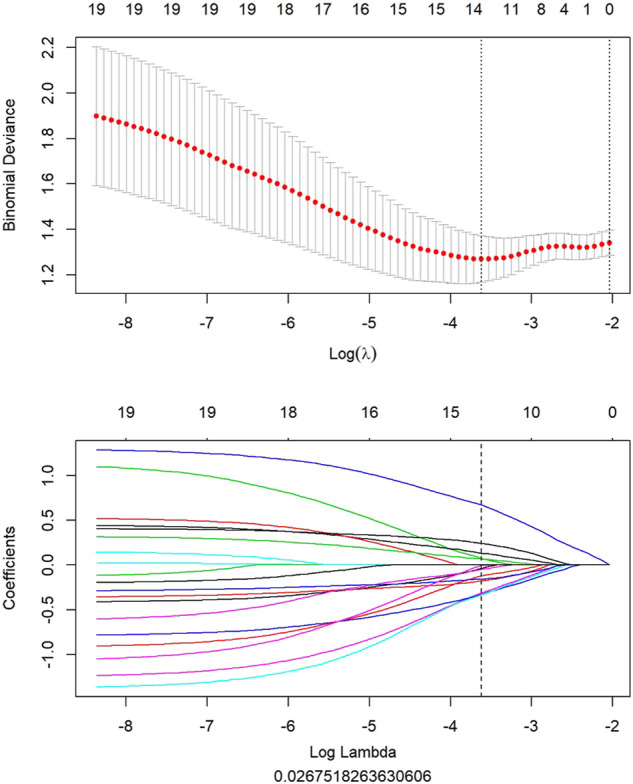
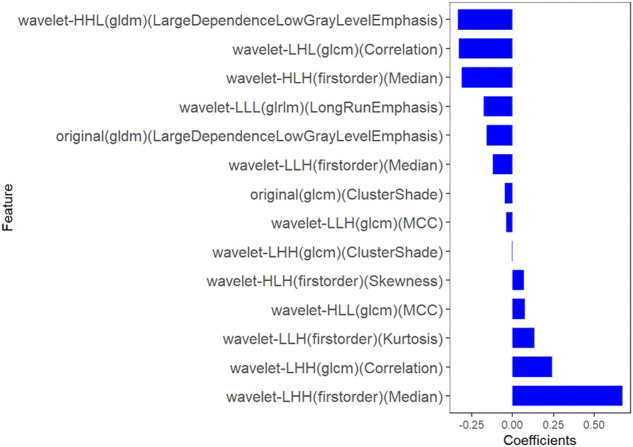
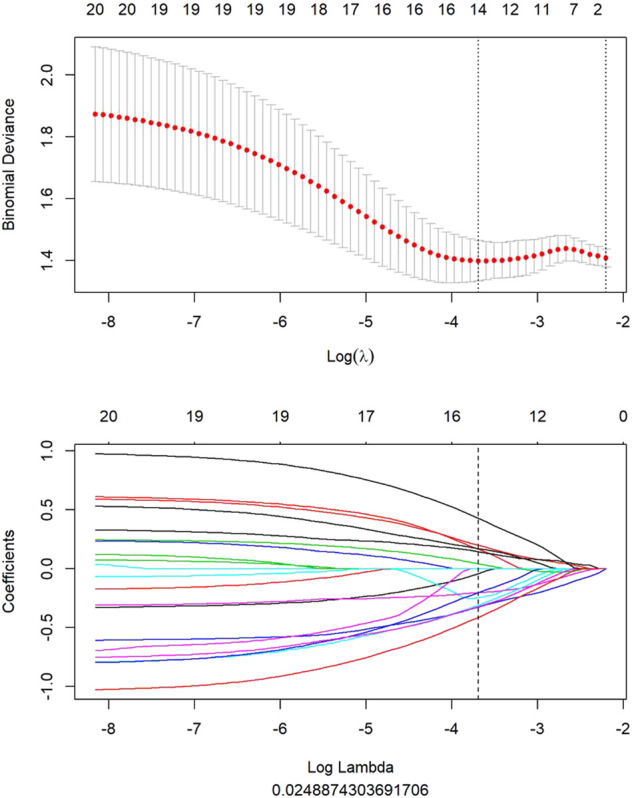
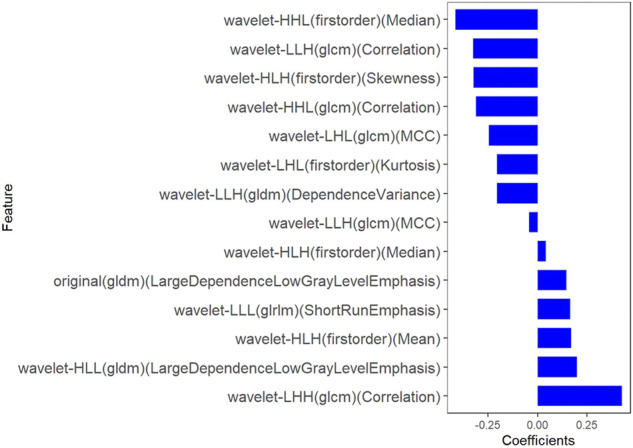
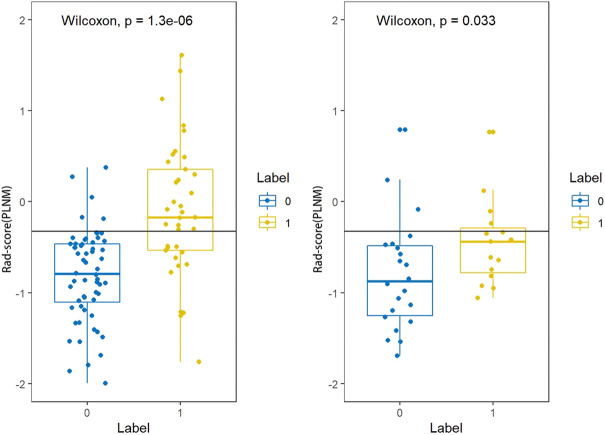
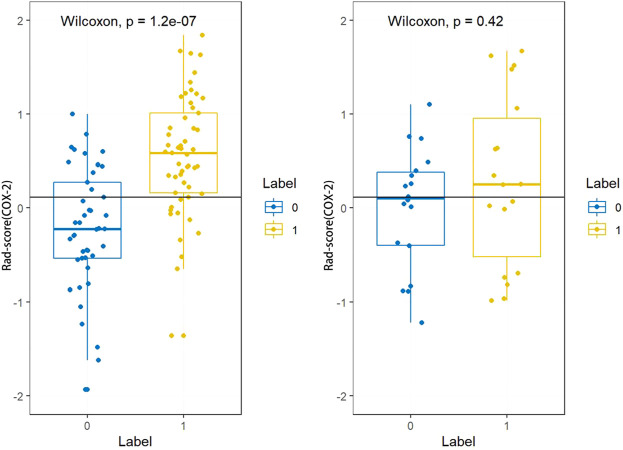
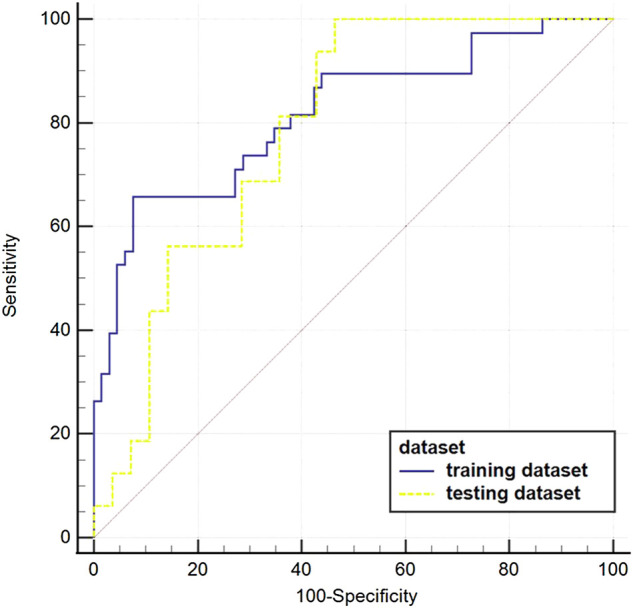
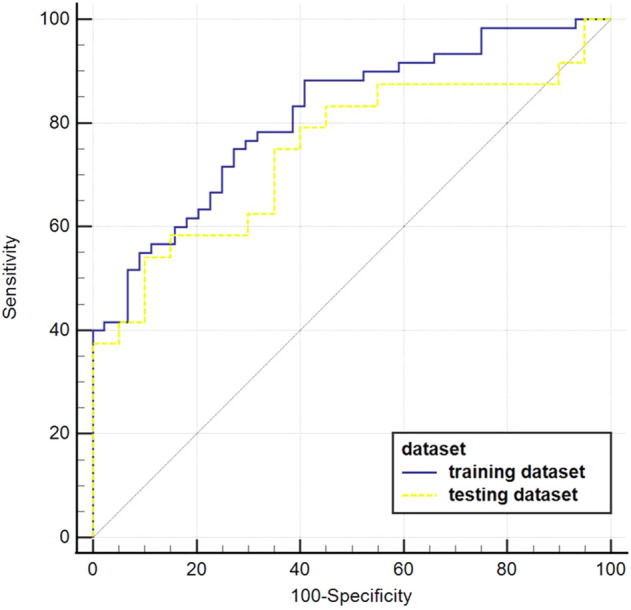
We aimed to establish machine learning models based on texture analysis predicting pelvic lymph node metastasis (PLNM) and expression of cyclooxygenase-2 (COX-2) in cervical cancer with PET/CT negative pelvic lymph node (PLN). Eight hundred and thirty-seven texture features were extracted from PET/CT images of 148 early-stage cervical cancer patients with negative PLN. The machine learning models were established by logistic regression from selected features and evaluated by the area under the curve (AUC). The correlation of selected PET/CT texture features predicting PLNM or COX-2 expression and the corresponding immunohistochemical (IHC) texture features was analyzed by the Spearman test. Fourteen texture features were reserved to calculate the Rad-score for PLNM and COX-2. The PLNM model predicting PLNM showed good prediction accuracy in the training and testing dataset (AUC = 0.817, < 0.001; AUC = 0.786, < 0.001, respectively). The COX-2 model also behaved well for predicting COX-2 expression levels in the training and testing dataset (AUC = 0.814, < 0.001; AUC = 0.748, = 0.001). The wavelet-LHH-GLCM ClusterShade of the PET image selected to predict PLNM was slightly correlated with the corresponding feature of the IHC image (r = -0.165, < 0.05). There was a weak correlation of wavelet-LLL-GLRLM LongRunEmphasis of the PET image selected to predict COX-2 correlated with the corresponding feature of the IHC image (r = 0.238, < 0.05). The correlation between PET image selected to predict COX-2 and the corresponding feature of the IHC image based on wavelet-LLL-GLRLM LongRunEmphasis is considered weak positive (r = 0.238, =<0.05). This study underlined the significant application of the machine learning models based on PET/CT texture analysis for predicting PLNM and COX-2 expression, which could be a novel tool to assist the clinical management of cervical cancer with negative PLN on PET/CT images.
我们旨在基于纹理分析建立机器学习模型,以预测PET/CT显示盆腔淋巴结阴性(PLN)的宫颈癌患者的盆腔淋巴结转移(PLNM)及环氧合酶-2(COX-2)的表达情况。从148例PLN阴性的早期宫颈癌患者的PET/CT图像中提取了837个纹理特征。通过逻辑回归从选定特征建立机器学习模型,并通过曲线下面积(AUC)进行评估。采用Spearman检验分析选定的PET/CT纹理特征预测PLNM或COX-2表达与相应免疫组织化学(IHC)纹理特征之间的相关性。保留14个纹理特征以计算PLNM和COX-2的Rad评分。预测PLNM的PLNM模型在训练和测试数据集中显示出良好的预测准确性(AUC分别为0.817,P<0.001;AUC为0.786,P<0.001)。COX-2模型在训练和测试数据集中预测COX-2表达水平时也表现良好(AUC分别为0.814,P<0.001;AUC为0.748,P = 0.001)。选择用于预测PLNM的PET图像的小波-LHH-GLCM聚类阴影与IHC图像的相应特征存在微弱相关性(r = -0.165,P<0.05)。选择用于预测COX-2的PET图像的小波-LLL-GLRLM长游程强调与IHC图像的相应特征存在弱相关性(r = 0.238,P<0.05)。基于小波-LLL-GLRLM长游程强调选择的预测COX-2的PET图像与IHC图像的相应特征之间的相关性被认为是弱正相关(r = 0.238,P<=0.05)。本研究强调了基于PET/CT纹理分析的机器学习模型在预测PLNM和COX-2表达方面的重要应用,这可能是一种辅助PET/CT图像上PLN阴性的宫颈癌临床管理的新工具。