Centre for Biodiversity Dynamics, Department of Biology, Norwegian University of Science and Technology, Trondheim, Norway.
Department of Animal Ecology, Netherlands Institute of Ecology (NIOO-KNAW), Wageningen, The Netherlands.
Ecology. 2023 Feb;104(2):e3908. doi: 10.1002/ecy.3908. Epub 2022 Dec 21.
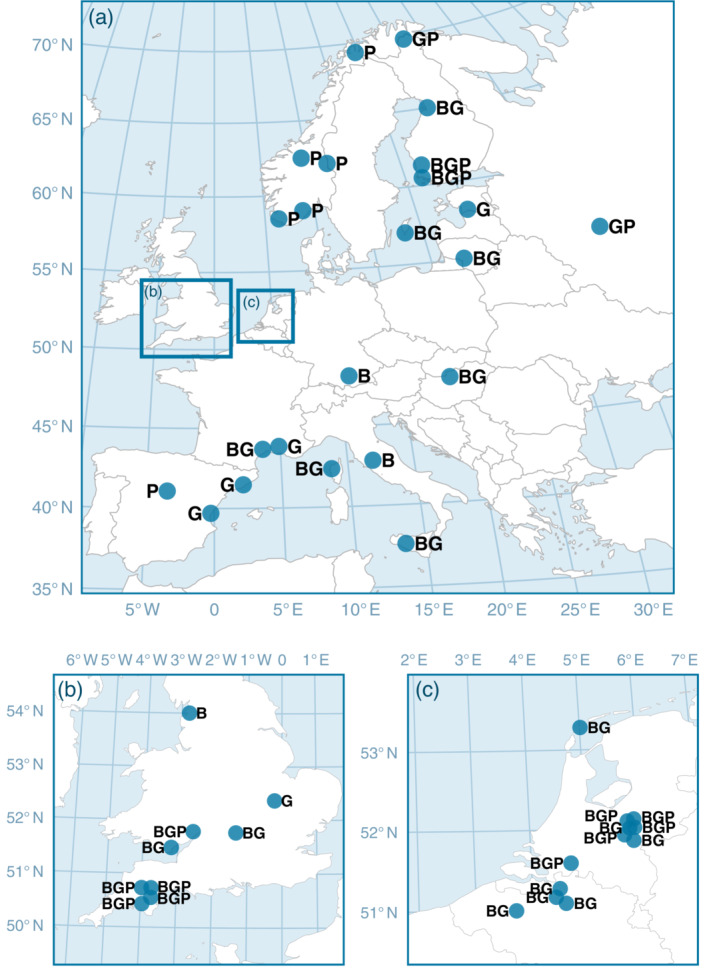
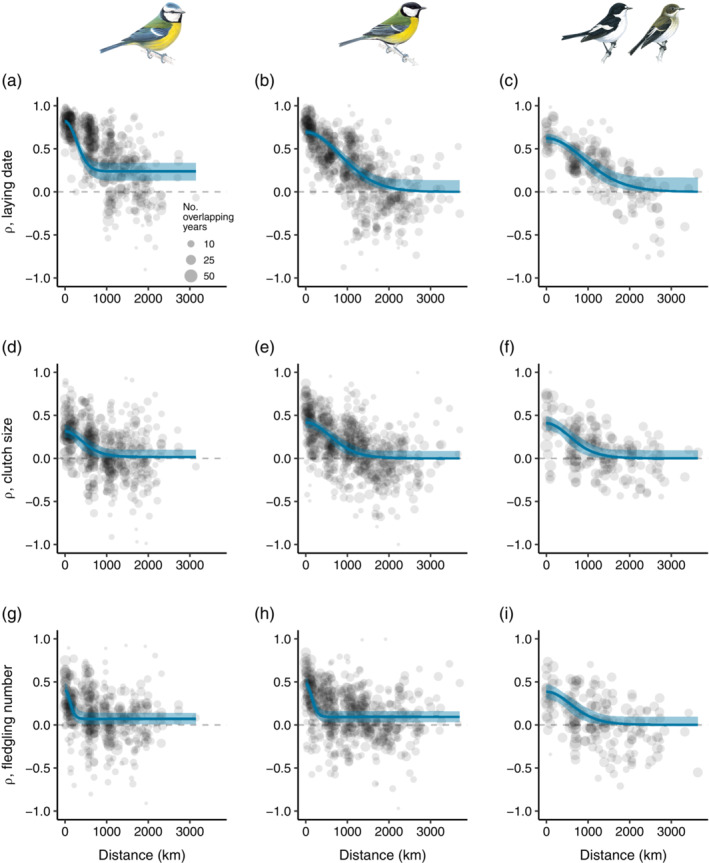
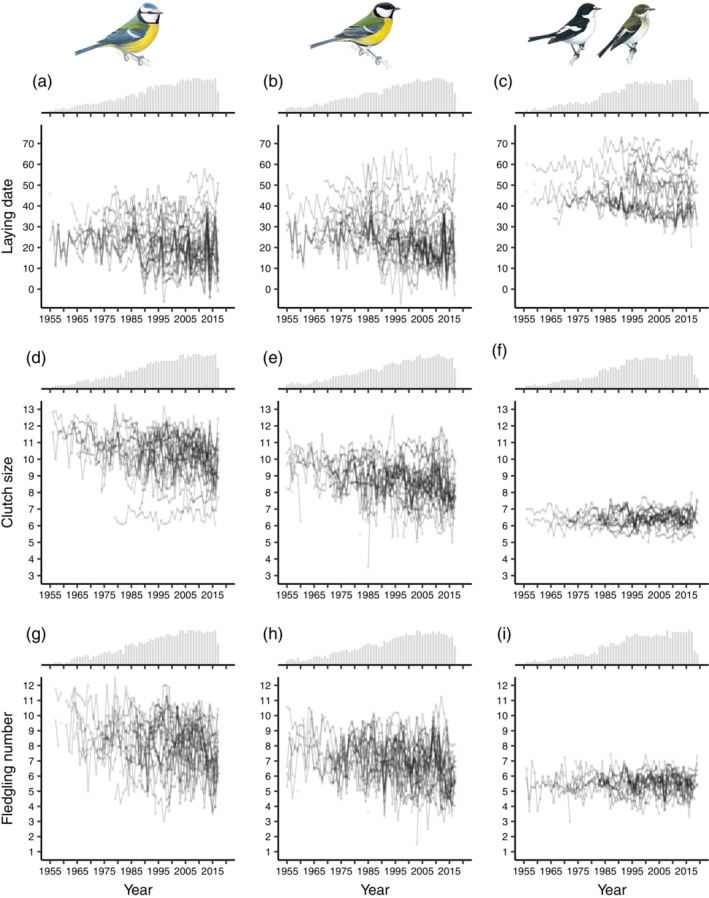
Identifying the environmental drivers of variation in fitness-related traits is a central objective in ecology and evolutionary biology. Temporal fluctuations of these environmental drivers are often synchronized at large spatial scales. Yet, whether synchronous environmental conditions can generate spatial synchrony in fitness-related trait values (i.e., correlated temporal trait fluctuations across populations) is poorly understood. Using data from long-term monitored populations of blue tits (Cyanistes caeruleus, n = 31), great tits (Parus major, n = 35), and pied flycatchers (Ficedula hypoleuca, n = 20) across Europe, we assessed the influence of two local climatic variables (mean temperature and mean precipitation in February-May) on spatial synchrony in three fitness-related traits: laying date, clutch size, and fledgling number. We found a high degree of spatial synchrony in laying date but a lower degree in clutch size and fledgling number for each species. Temperature strongly influenced spatial synchrony in laying date for resident blue tits and great tits but not for migratory pied flycatchers. This is a relevant finding in the context of environmental impacts on populations because spatial synchrony in fitness-related trait values among populations may influence fluctuations in vital rates or population abundances. If environmentally induced spatial synchrony in fitness-related traits increases the spatial synchrony in vital rates or population abundances, this will ultimately increase the risk of extinction for populations and species. Assessing how environmental conditions influence spatiotemporal variation in trait values improves our mechanistic understanding of environmental impacts on populations.
确定与适应相关的特征的变化的环境驱动因素是生态学和进化生物学的主要目标。这些环境驱动因素的时间波动通常在大的空间尺度上同步。然而,同步的环境条件是否能产生与适应相关的特征值的空间同步性(即,种群之间相关的时间特征波动)还知之甚少。利用来自欧洲长期监测的蓝山雀(Cyanistes caeruleus,n=31)、大山雀(Parus major,n=35)和白腰文鸟(Ficedula hypoleuca,n=20)的种群数据,我们评估了两个当地气候变量(2 月至 5 月的平均温度和平均降水量)对三个与适应相关的特征的空间同步性的影响:产卵日期、窝卵数和雏鸟数。我们发现,每个物种的产卵日期都具有高度的空间同步性,但窝卵数和雏鸟数的空间同步性较低。温度强烈影响居留蓝山雀和大山雀的产卵日期的空间同步性,但对迁徙的白腰文鸟没有影响。这是一个与环境对种群的影响相关的重要发现,因为种群之间与适应相关的特征值的空间同步性可能会影响关键生命率或种群丰度的波动。如果与适应相关的特征的环境诱导的空间同步性增加了关键生命率或种群丰度的空间同步性,这最终将增加种群和物种灭绝的风险。评估环境条件如何影响特征值的时空变化可以提高我们对环境对种群影响的机制理解。