Quality Management Center, Kaohsiung Veterans General Hospital, Kaohsiung, Taiwan.
Department of Business Management, National Sun Yat-sen University, Kaohsiung, Taiwan.
PLoS One. 2022 Oct 31;17(10):e0276501. doi: 10.1371/journal.pone.0276501. eCollection 2022.
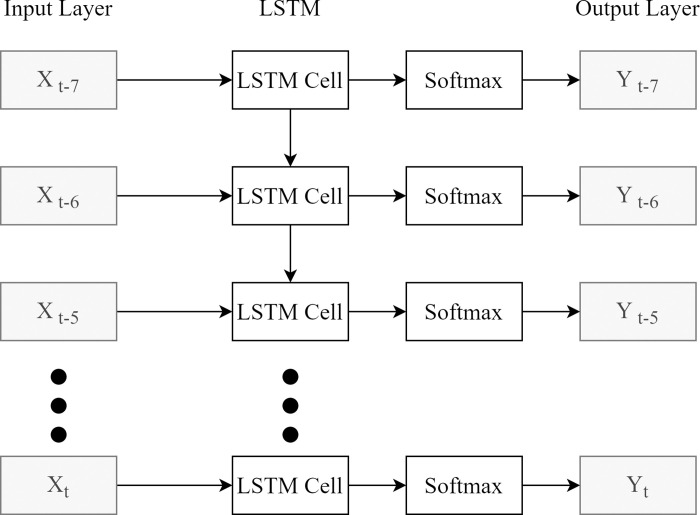
Holistic health care (HHC) is a synonym for complete patient care, and as such an efficient clinical decision support system (CDSS) for HHC is critical to support the judgement of physician's decision in response of patient's physical, emotional, social, economic, and spiritual needs. The field of artificial intelligence (AI) has evolved considerably in the past decades and many AI applications have been deployed in various contexts. Therefore, this study aims to propose an AI-assisted CDSS model that predicts patients in need of HHC and applies an improved recurrent neural network (RNN) model, long short-term memory (LSTM) for the prediction. The data sources include in-patient's comorbidity status and daily vital sign attributes such as blood pressure, heart rate, oxygen prescription, etc. A two-year dataset consisting of 121 thousand anonymized patient cases with 890 thousand physiological medical records was obtained from a medical center in Taiwan for system evaluation. Comparing with the rule-based expert system, the proposed AI-assisted CDSS improves sensitivity from 26.44% to 80.84% and specificity from 99.23% to 99.95%. The experimental results demonstrate that an AI-assisted CDSS could efficiently predict HHC patients.
整体健康医疗(HHC)是全面患者护理的代名词,因此,高效的临床决策支持系统(CDSS)对于 HHC 至关重要,可以支持医生根据患者的身体、情感、社会、经济和精神需求做出判断。在过去的几十年中,人工智能(AI)领域取得了长足的发展,许多 AI 应用已经在各种场景中得到部署。因此,本研究旨在提出一种 AI 辅助的 CDSS 模型,用于预测需要 HHC 的患者,并应用改进的递归神经网络(RNN)模型、长短期记忆(LSTM)进行预测。数据源包括住院患者的合并症状况和日常生命体征属性,如血压、心率、氧气处方等。本研究从台湾的一家医疗中心获得了一个为期两年的数据集,其中包含 121000 名匿名患者病例和 890 万份生理医疗记录,用于系统评估。与基于规则的专家系统相比,所提出的 AI 辅助 CDSS 提高了敏感性(从 26.44%提高到 80.84%)和特异性(从 99.23%提高到 99.95%)。实验结果表明,AI 辅助 CDSS 可以有效地预测 HHC 患者。