School of Human Movement and Nutrition Sciences, Faculty of Health and Behavioural Sciences, The University of Queensland, St. Lucia, QLD, Australia.
School of Health and Rehabilitation Sciences, Faculty of Health and Behavioural Sciences, The University of Queensland, St. Lucia, QLD, Australia.
J Behav Med. 2023 Jun;46(3):429-439. doi: 10.1007/s10865-022-00370-x. Epub 2022 Nov 3.
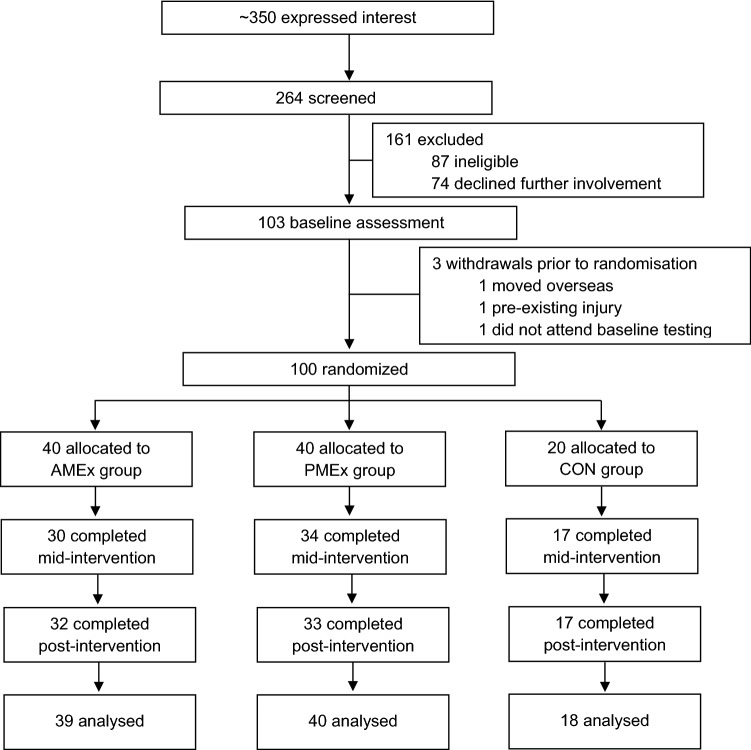
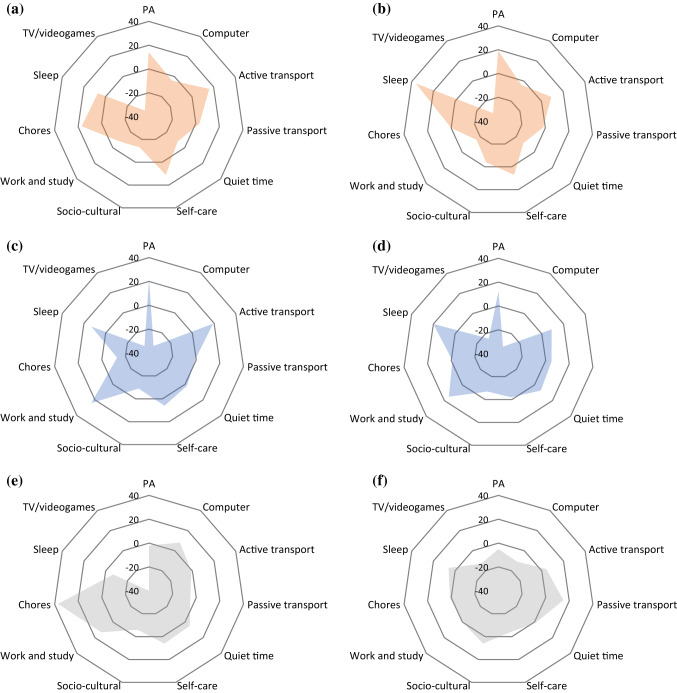
The objective of this study was to investigate changes in sedentary and active behaviors when previously inactive adults start exercising in the morning or evening. One-hundred adults with overweight or obesity (BMI ≥ 25 kg/m) were recruited for a 12-week intervention and randomized to one of three groups: (i) morning exercise (AMEx; 0600-0900); (ii) evening exercise (PMEx; 1600-1900); or (iii) waitlist control. AMEx and PMEx were prescribed self-paced aerobic exercise to achieve a weekly total of 250 min via a combination of supervised and unsupervised training. Sedentary and active behavior times were measured at baseline, mid- and post-intervention using the multimedia activity recall for children and adults. Time spent engaging in physical activity was significantly increased from baseline at both mid- (+ 14-22 min·day) and post-intervention (+ 12-19 min·day), for AMEx and PMEx. At 12-weeks, participants in both morning and evening exercise groups reported increased time spent Sleeping (+ 36 and + 20 min·day, respecitively), and reduced time spent watching TV/playing videogames (- 32 and - 25 min·day, respectively). In response to an exercise stimulus, previously inactive adults make encouraging modifications in how they use their time, and the patterns of change are similar with morning and evening exercise.
本研究旨在探讨当原本不活跃的成年人开始晨练或晚练时,久坐和活跃行为的变化。招募了 100 名超重或肥胖(BMI≥25kg/m²)的成年人进行为期 12 周的干预,并随机分为三组:(i)晨练(AMEx;0600-0900);(ii)晚练(PMEx;1600-1900);或(iii)候补对照组。AMEx 和 PMEx 被规定进行自我调节的有氧运动,通过监督和非监督训练的结合,每周总共达到 250 分钟。在基线、中期和干预后使用儿童和成人多媒体活动回忆法测量久坐和活跃行为时间。与基线相比,AMEx 和 PMEx 在中期(+14-22 分钟/天)和干预后(+12-19 分钟/天)都显著增加了体育活动时间。在 12 周时,晨练和晚练组的参与者都报告说睡眠时间增加(分别增加了 36 和 20 分钟/天),看电视/玩电子游戏的时间减少(分别减少了 32 和 25 分钟/天)。对于运动刺激,原本不活跃的成年人在如何利用时间方面做出了令人鼓舞的改变,而且晨练和晚练的变化模式相似。