School of Mathematics and Statistics, Shaanxi Normal University, Xi'an 710119, PR China.
School of Mathematics and Statistics, Xi'an Jiaotong University, Xi'an 710049, PR China.
Vaccine. 2022 Nov 22;40(49):7141-7150. doi: 10.1016/j.vaccine.2022.10.043. Epub 2022 Oct 26.
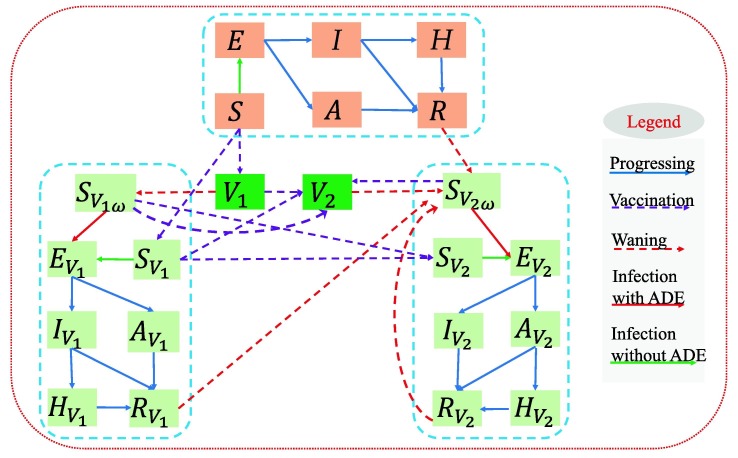
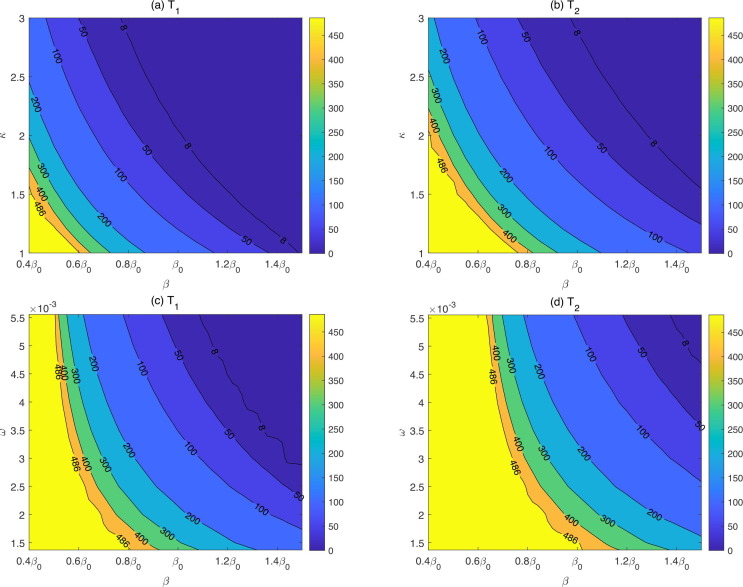
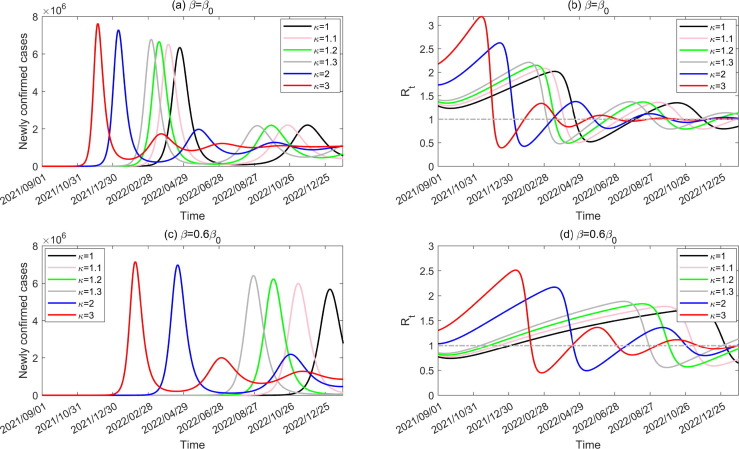
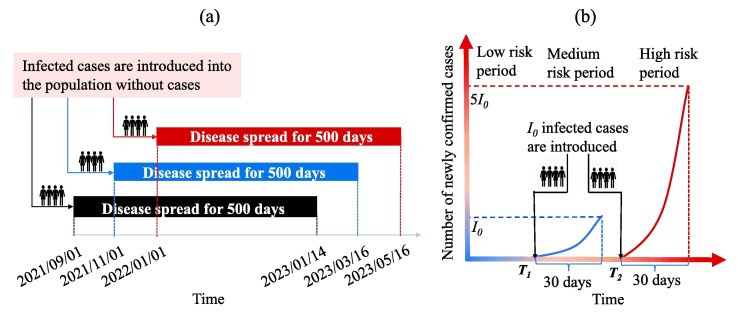
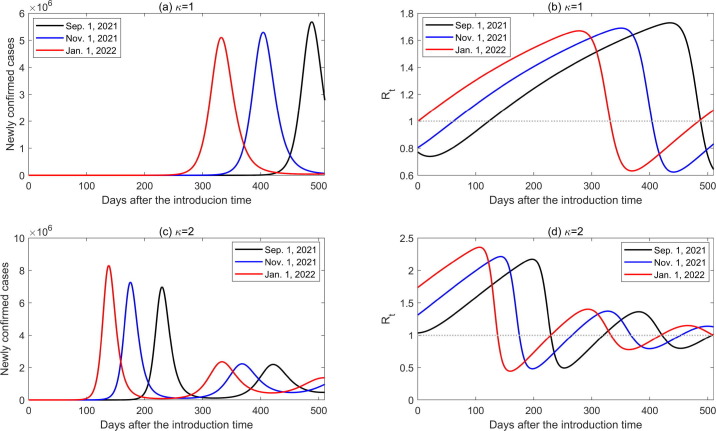
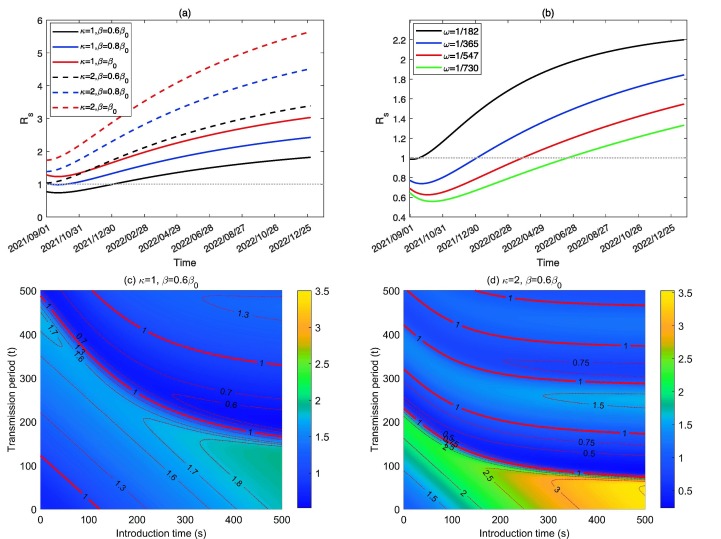
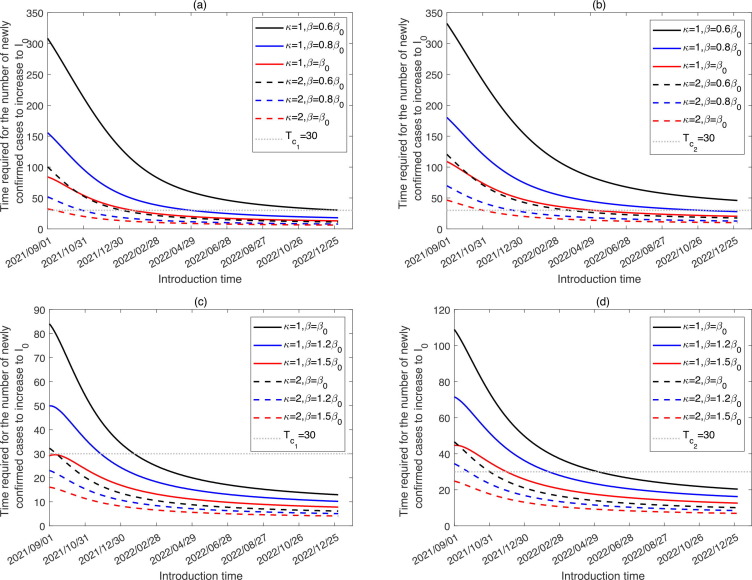
The mass vaccination program has been actively promoted since the end of 2020. However, waning immunity, antibody-dependent enhancement (ADE), and increased transmissibility of variants make the herd immunity untenable and the implementation of dynamic zero-COVID policy challenging in China. To explore how long the vaccination program can prevent China at low resurgence risk, and how these factors affect the long-term trajectory of the COVID-19 epidemics, we developed a dynamic transmission model of COVID-19 incorporating vaccination and waning immunity, calibrated using the data of accumulative vaccine doses administered and the COVID-19 epidemic in 2020 in mainland China. The prediction suggests that the vaccination coverage with at least one dose reach 95.87%, and two doses reach 77.92% on 31 August 2021. However, despite the mass vaccination, randomly introducing infected cases in the post-vaccination period causes large outbreaks quickly with waning immunity, particularly for SARS-CoV-2 variants with higher transmissibility. The results showed that with the current vaccination program and 50% of the population wearing masks, mainland China can be protected at low resurgence risk until 8 January 2023. However, ADE and higher transmissibility for variants would significantly shorten the low-risk period by over 1 year. Furthermore, intermittent outbreaks can occur while the peak values of the subsequent outbreaks decrease, indicating that subsequent outbreaks boosted immunity in the population level, further indicating that follow-up vaccination programs can help mitigate or avoid the possible outbreaks. The findings revealed that the integrated effects of multiple factors: waning immunity, ADE, relaxed interventions, and higher variant transmissibility, make controlling COVID-19 challenging. We should prepare for a long struggle with COVID-19, and not entirely rely on the COVID-19 vaccine.
自 2020 年底以来,大规模疫苗接种计划一直在积极推进。然而,免疫效力下降、抗体依赖性增强(ADE)以及变异体传播能力增强,使得群体免疫难以实现,中国实施动态零新冠政策面临挑战。为了探索疫苗接种计划能在多大程度上使中国保持低复发风险,以及这些因素如何影响新冠疫情的长期轨迹,我们开发了一个包含疫苗接种和免疫效力下降的新冠动态传播模型,该模型使用中国大陆累计接种剂量和 2020 年新冠疫情数据进行了校准。预测结果表明,截至 2021 年 8 月 31 日,至少接种一剂疫苗的覆盖率达到 95.87%,接种两剂疫苗的覆盖率达到 77.92%。然而,尽管大规模接种疫苗,但在接种后阶段随机引入感染病例会导致免疫效力下降,尤其是对传染性更强的 SARS-CoV-2 变异体,很快就会引发大规模疫情。结果表明,在当前疫苗接种计划和 50%人口戴口罩的情况下,中国大陆可以在低复发风险下得到保护,直到 2023 年 1 月 8 日。然而,ADE 和变异体的更高传染性会使低风险期显著缩短 1 年以上。此外,即使后续疫情的峰值下降,间歇性爆发仍可能发生,这表明后续疫情在人群层面上增强了免疫力,进一步表明后续的疫苗接种计划有助于减轻或避免可能的疫情爆发。研究结果表明,多种因素的综合影响:免疫效力下降、ADE、干预措施放松和更高的变异体传播能力,使得控制新冠疫情变得具有挑战性。我们应该为与新冠病毒的长期斗争做好准备,不能完全依赖新冠疫苗。