Molecular Biology Department, Hospital Provincial de Rosario (HPR), Rosario, Santa Fe, Argentina.
Instituto de Inmunología Clínica y Experimental de Rosario (IDICER-CONICET), Rosario, Santa Fe, Argentina.
PLoS One. 2022 Nov 4;17(11):e0271860. doi: 10.1371/journal.pone.0271860. eCollection 2022.
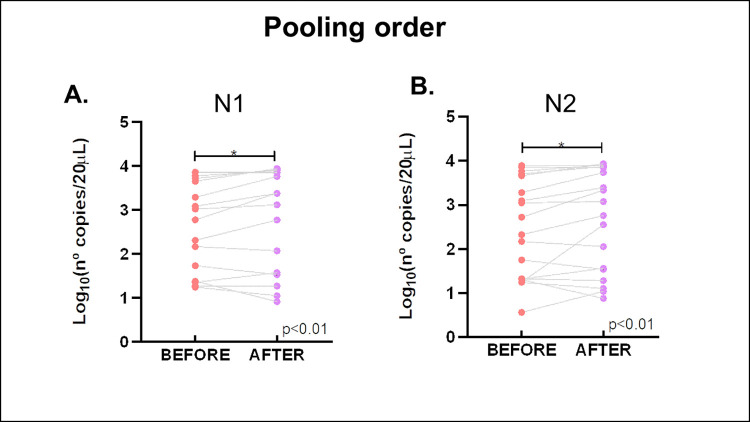
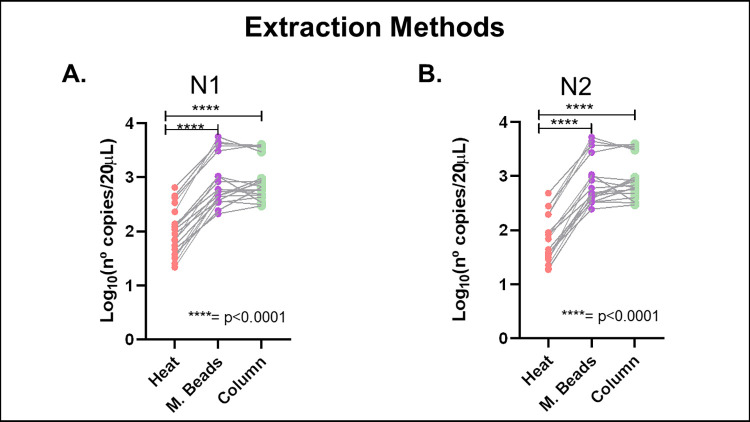
Detection of SARS-CoV-2 has created an enormous workload for laboratories worldwide resulting in a restriction at the time of massive testing. Pool testing is a strategy that reduces time and costs. However, beyond the detection of infectious diseases in blood banks, this approach is rarely implemented in routine laboratories. Therefore, what was learned from the SARS-CoV-2 pool testing should represent an opportunity to increase diagnostic capabilities. The present work, carried out in the context of a diagnostic laboratory of a public hospital during the COVID-19 pandemic, represents a contribution to this end. The main limitation of pool testing is the risk of false negatives that could have been identified by individual tests. These limitations are the dilution of samples with a low virus load during pooling and that the integrity of the sample may be affected by the quality of the sample collection. Fortunately, both limitations coincide with the main strengths of droplet digital PCR (ddPCR). ddPCR is a third-generation PCR that splits the amplification into thousands of droplets that work in parallel, increasing sensitivity and resistance to inhibitors. Therefore, ddPCR is particularly useful for pool testing. Here we show how to factor between test sensitivity and savings in test time and resources. We have identified and optimized critical parameters for pool testing. The present study, which analyzed 1000 nasopharyngeal samples, showed that the pool testing could detect even a single positive sample with a CT value of up to 30 in pools of 34 samples. This test was performed using three different standard extraction methods, the simplest being heating only, which resulted in substantial savings of extraction reagents in addition to PCR reagents. Moreover, we show that pooling can be extended to use saliva, which is less invasive and allows self-collection, reducing the risk for health personnel.
SARS-CoV-2 的检测给全球实验室带来了巨大的工作量,导致在大规模检测时受到限制。混合检测是一种可以减少时间和成本的策略。然而,除了在血库中检测传染病外,这种方法在常规实验室中很少实施。因此,从 SARS-CoV-2 混合检测中获得的经验应该为提高诊断能力提供机会。本工作在 COVID-19 大流行期间在一家公立医院的诊断实验室中进行,代表了为此目的做出的贡献。混合检测的主要限制是假阴性的风险,这些风险可以通过单独的测试来识别。这些限制是在混合过程中稀释低病毒载量的样本,以及样本的完整性可能受到样本采集质量的影响。幸运的是,这两个限制都与滴液数字 PCR(ddPCR)的主要优势相吻合。ddPCR 是一种第三代 PCR,它将扩增分成数千个同时工作的液滴,从而提高了灵敏度和对抑制剂的抵抗力。因此,ddPCR 特别适用于混合检测。在这里,我们展示如何在测试灵敏度和节省测试时间和资源之间进行权衡。我们已经确定并优化了混合检测的关键参数。本研究分析了 1000 个鼻咽样本,结果表明,混合检测即使在 34 个样本的混合池中,也可以检测到 CT 值高达 30 的单个阳性样本。该测试使用三种不同的标准提取方法进行,最简单的方法是仅加热,除了 PCR 试剂外,还可以大量节省提取试剂。此外,我们还表明,混合检测可以扩展到使用唾液,唾液采集更具侵入性,允许自我采集,从而降低了对卫生人员的风险。