Department of Otolaryngology, Hannover Medical School (MHH), Hannover, Germany.
Cluster of Excellence Hearing4all, Hannover, Germany.
J Assoc Res Otolaryngol. 2022 Dec;23(6):835-858. doi: 10.1007/s10162-022-00870-2. Epub 2022 Nov 4.
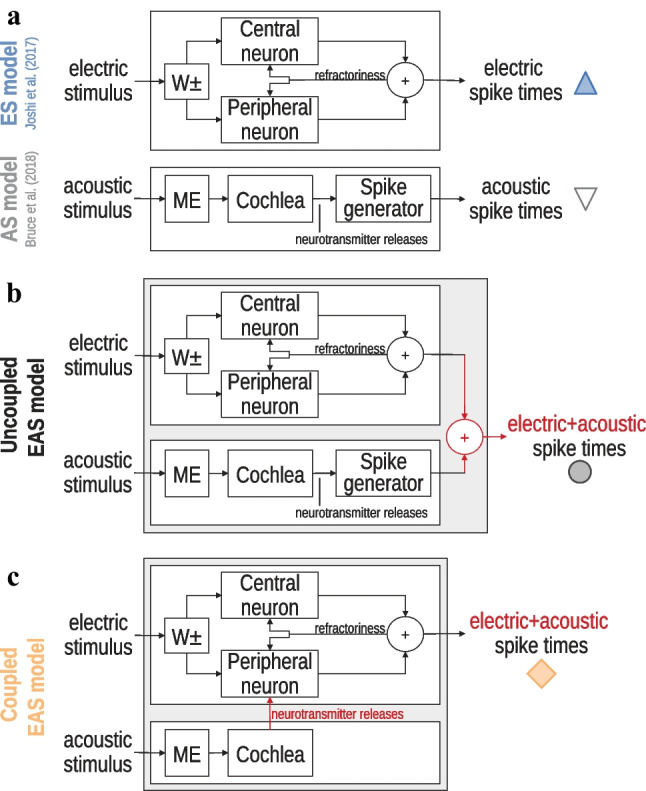
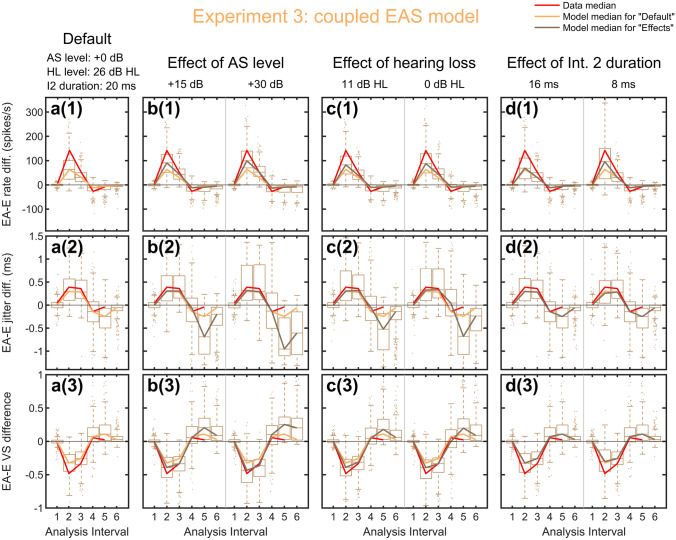
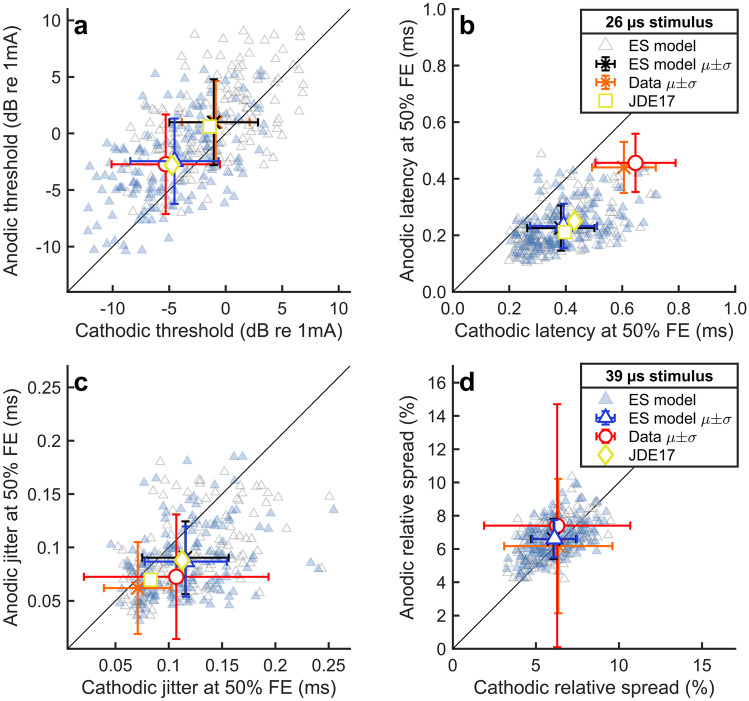
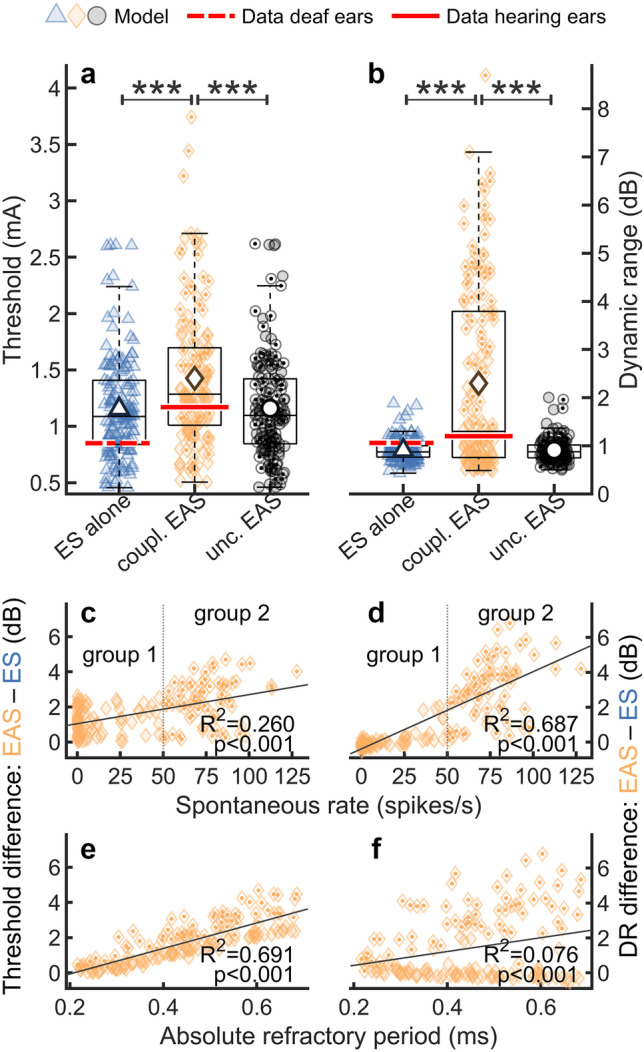
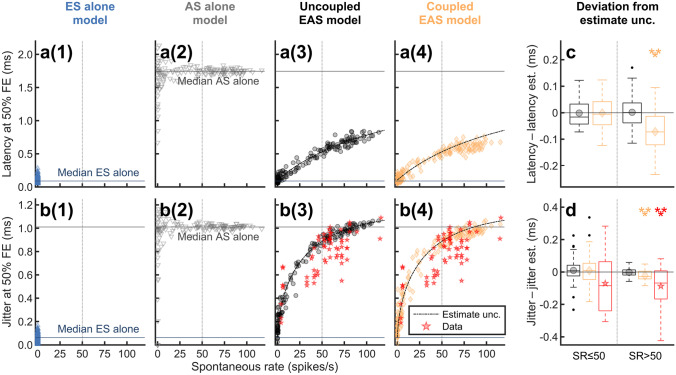
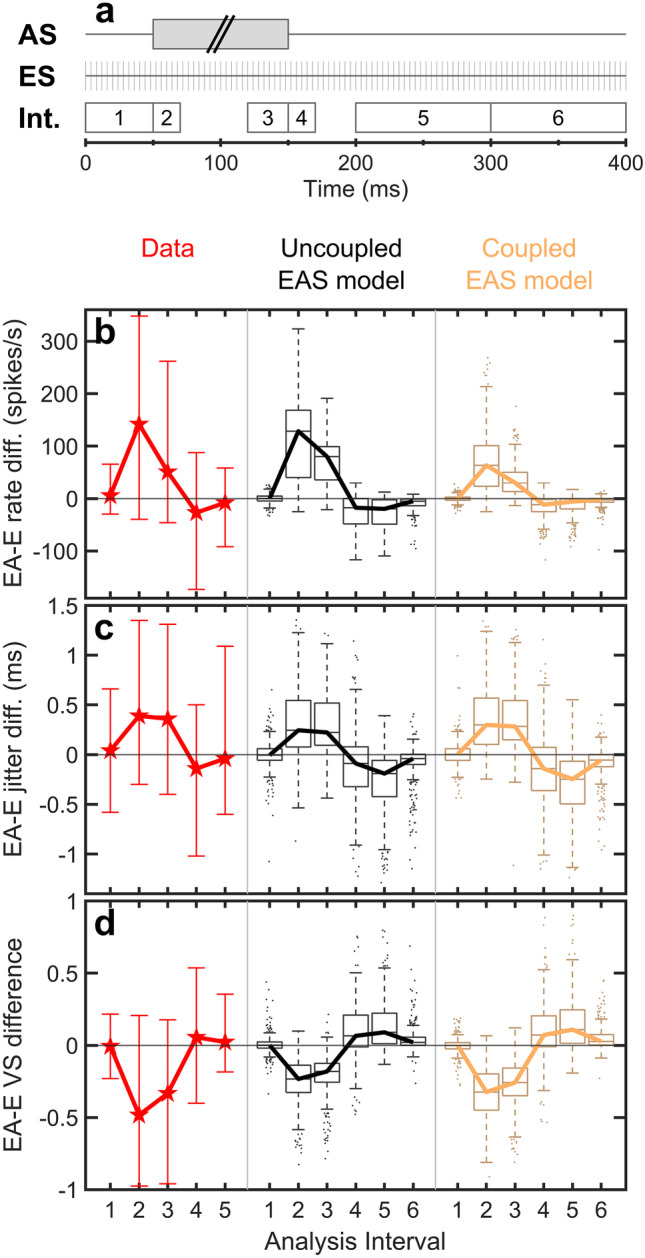
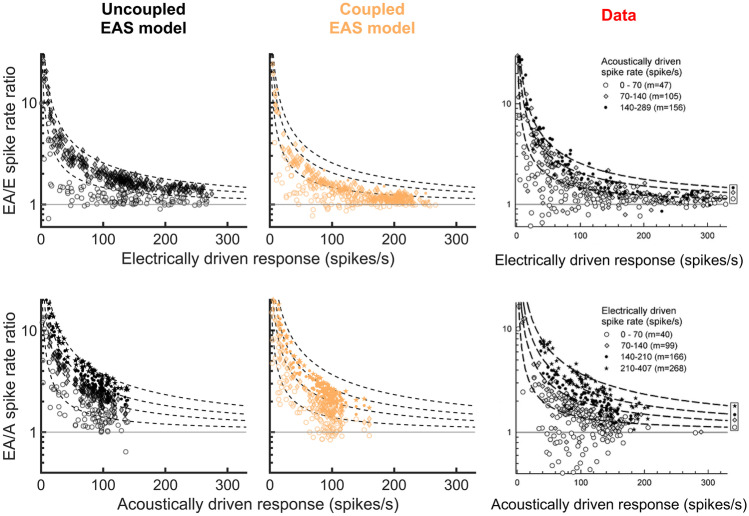
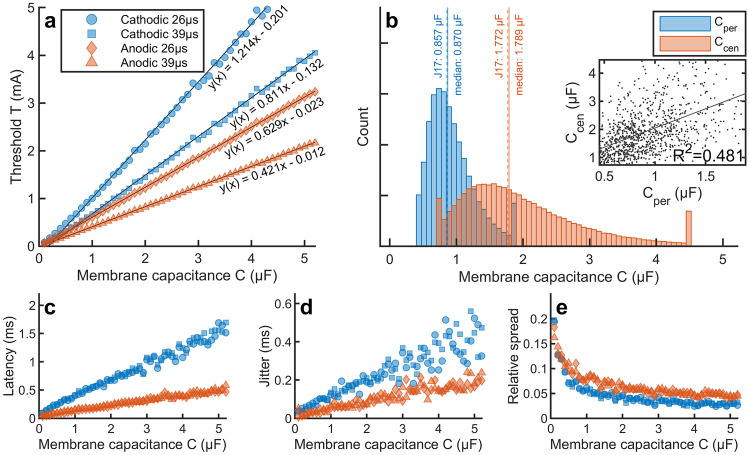
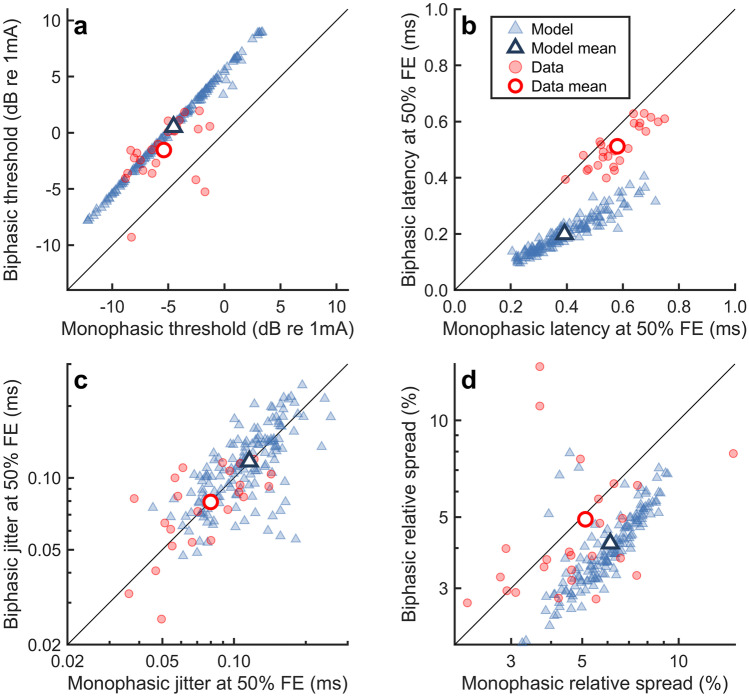
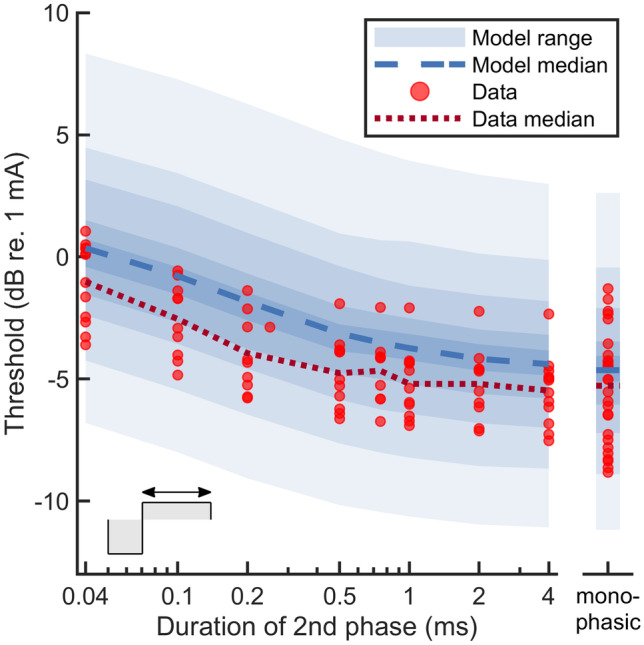
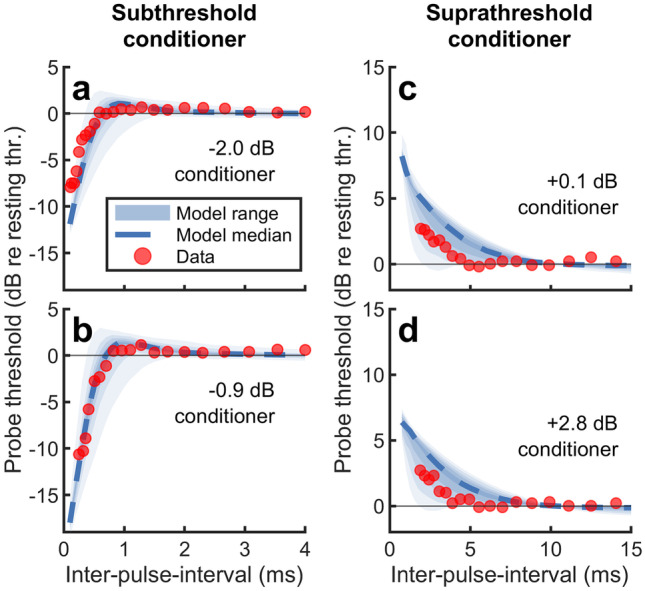
Cochlear implant (CI) recipients with preserved acoustic low-frequency hearing in the implanted ear are a growing group among traditional CI users who benefit from hybrid electric-acoustic stimulation (EAS). However, combined ipsilateral electric and acoustic stimulation also introduces interactions between the two modalities that can affect the performance of EAS users. A computational model of a single auditory nerve fiber that is excited by EAS was developed to study the interaction between electric and acoustic stimulation. Two existing models of sole electric or acoustic stimulation were coupled to simulate responses to combined EAS. Different methods of combining both models were implemented. In the coupled model variant, the refractoriness of the simulated fiber leads to suppressive interaction between electrically evoked and acoustically evoked spikes as well as spontaneous activity. The second model variant is an uncoupled EAS model without electric-acoustic interaction. By comparing predictions between the coupled and the noninteracting EAS model, it was possible to infer electric-acoustic interaction at the level of the auditory nerve. The EAS model was used to simulate fiber populations with realistic inter-unit variability, where each unit was represented by the single-fiber model. Predicted thresholds and dynamic ranges, spike rates, latencies, jitter, and vector strengths were compared to empirical data. The presented EAS model provides a framework for future studies of peripheral electric-acoustic interaction.
人工耳蜗(CI)使用者中,越来越多的患者在植入耳中保留了低频听觉,他们受益于混合电-声刺激(EAS)。然而,同侧电刺激和声学刺激的联合也会引入两种模式之间的相互作用,从而影响 EAS 用户的性能。本文开发了一种受 EAS 刺激的单个听觉神经纤维的计算模型,以研究电刺激和声学刺激之间的相互作用。将现有的两种单一电刺激或声学刺激模型耦合起来,以模拟对联合 EAS 的反应。实施了两种不同的组合模型的方法。在耦合模型变体中,模拟纤维的不应期导致电诱发和声诱发尖峰以及自发活动之间产生抑制性相互作用。第二种模型变体是没有电声相互作用的非耦合 EAS 模型。通过比较耦合和非相互作用的 EAS 模型的预测,可以推断出听觉神经水平的电声相互作用。使用 EAS 模型模拟了具有现实单元间可变性的纤维群体,其中每个单元都由单个纤维模型表示。预测的阈值和动态范围、尖峰率、潜伏期、抖动和向量强度与经验数据进行了比较。所提出的 EAS 模型为未来研究外周电声相互作用提供了一个框架。