Department of Biomedical Engineering, Johns Hopkins School of Medicine, Baltimore, MD, USA.
Center for Theoretical Neuroscience, Columbia University, New York, NY, USA.
Nat Commun. 2024 Jul 12;15(1):5861. doi: 10.1038/s41467-024-49900-y.
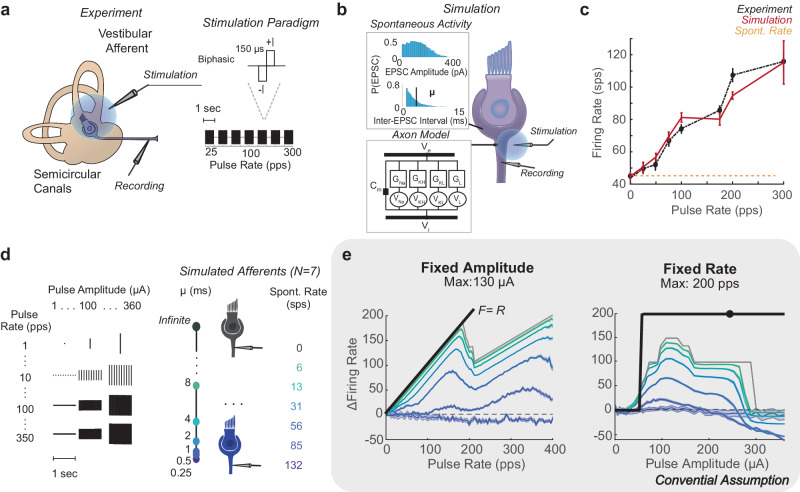
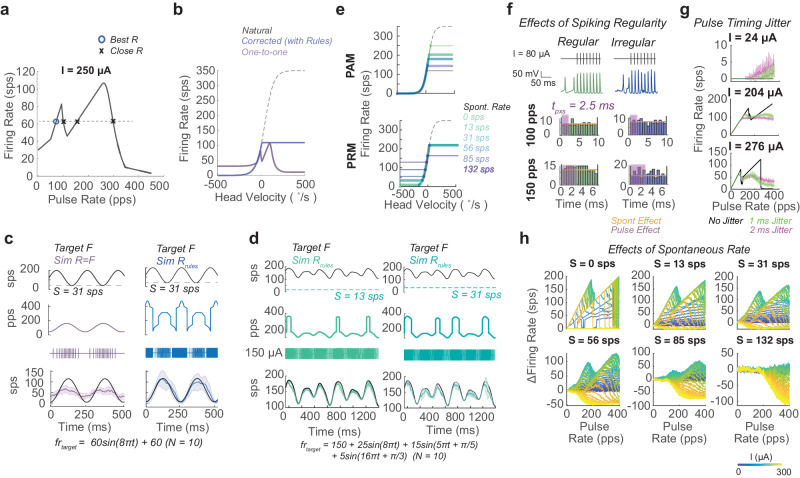
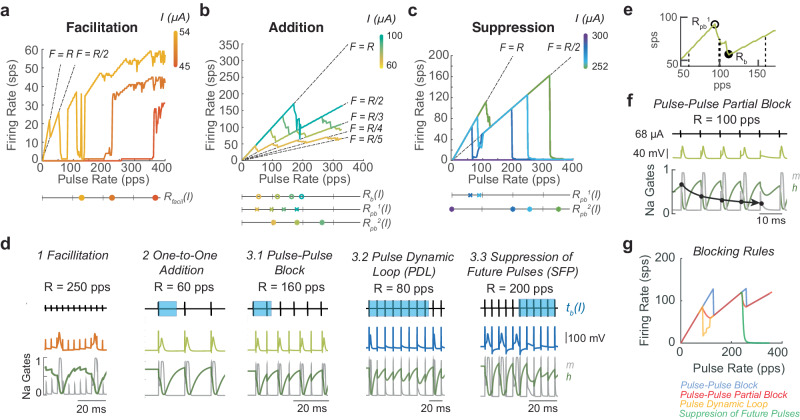
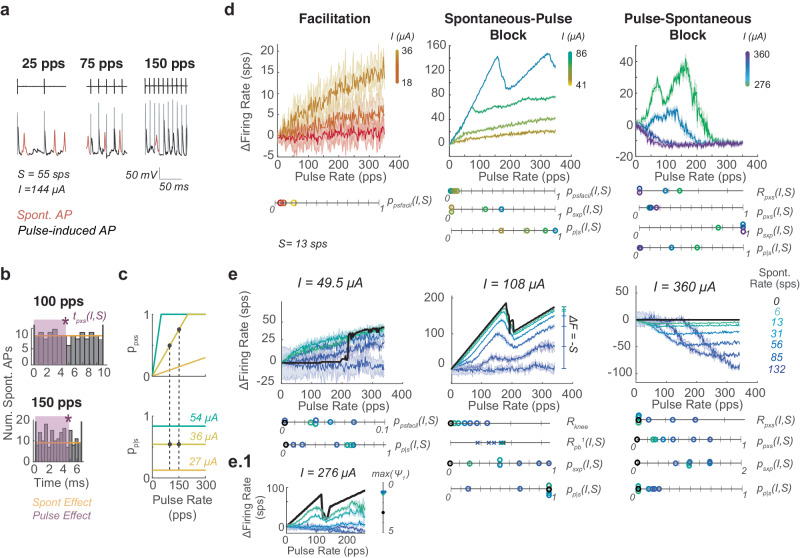
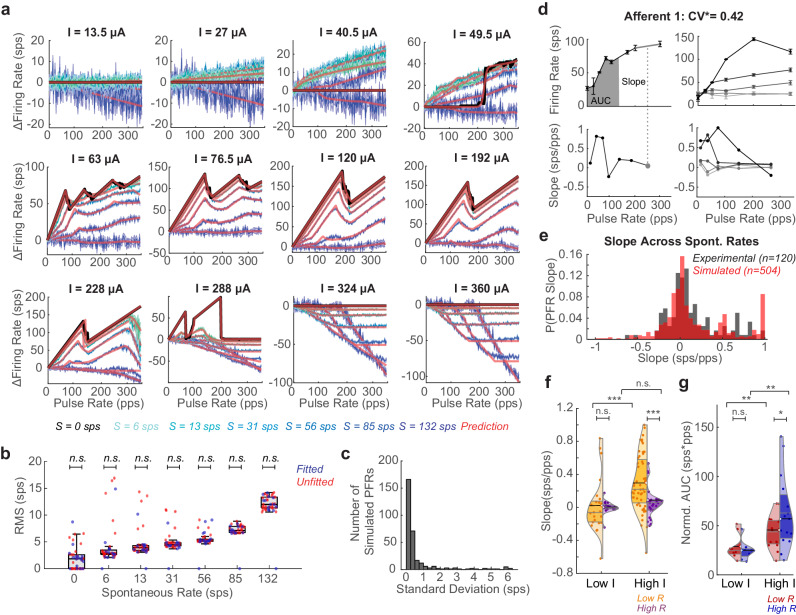
Electrical stimulation is a key tool in neuroscience, both in brain mapping studies and in many therapeutic applications such as cochlear, vestibular, and retinal neural implants. Due to safety considerations, stimulation is restricted to short biphasic pulses. Despite decades of research and development, neural implants lead to varying restoration of function in patients. In this study, we use computational modeling to provide an explanation for how pulsatile stimulation affects axonal channels and therefore leads to variability in restoration of neural responses. The phenomenological explanation is transformed into equations that predict induced firing rate as a function of pulse rate, pulse amplitude, and spontaneous firing rate. We show that these equations predict simulated responses to pulsatile stimulation with a variety of parameters as well as several features of experimentally recorded primate vestibular afferent responses to pulsatile stimulation. We then discuss the implications of these effects for improving clinical stimulation paradigms and electrical stimulation-based experiments.
电刺激是神经科学中的一个关键工具,无论是在大脑映射研究中,还是在许多治疗应用中,如耳蜗、前庭和视网膜神经植入物。由于安全考虑,刺激仅限于短双相脉冲。尽管经过几十年的研究和开发,神经植入物在患者中的功能恢复效果各不相同。在这项研究中,我们使用计算建模来解释脉冲刺激如何影响轴突通道,从而导致神经反应恢复的变异性。我们将现象学解释转化为方程,预测诱导的放电率作为脉冲率、脉冲幅度和自发放电率的函数。我们表明,这些方程可以预测各种参数下的模拟脉冲刺激反应,以及实验记录的灵长类前庭传入对脉冲刺激的反应的几个特征。然后,我们讨论了这些效应对于改进临床刺激方案和基于电刺激的实验的意义。