Serrano-Contreras José Iván, Meléndez-Camargo María Estela, Márquez-Flores Yazmín Karina, Soria-Serrano Martha Patricia, Campos-Aldrete María Elena
Departamento de Química Orgánica, Escuela Nacional de Ciencias Biológicas, Instituto Politécnico Nacional, Prolongación de Carpio y Plan de Ayala s/n, Col. Santo Tomas, C.P. 11340, Delegación Miguel Hidalgo, Ciudad de México, México.
Departamento de Farmacia, Escuela Nacional de Ciencias Biológicas, Instituto Politécnico Nacional, Av. Wilfrido Massieu 399, Unidad Profesional Adolfo López Mateos, Col. Nueva Industrial Vallejo, C.P. 07738, Delegación Gustavo A. Madero, Ciudad de México, México.
Toxicol Res (Camb). 2022 Aug 9;11(5):730-742. doi: 10.1093/toxres/tfac046. eCollection 2022 Oct.
Trichomoniasis and amoebiasis are neglected diseases and still remain as a global health burden not only for developing countries, from where are endemic, but also for the developed world. Previously, we tested the antiparasitic activity of a number of imidazo[1,2-]pyridine derivatives (IMPYs) on metronidazole-resistant strains of (HM1:IMSS), and (GT3). Their anti-inflammatory activity was also evaluated.
The present work is a part of a project whose aim is to find new alternatives to standard treatments for these maladies, and to address the current concern of emerging resistant parasite strains. Here we report a non-clinical study focused on exploratory toxicology assays of seven IMPYs that showed the best antiparasitic and/or anti-inflammatory properties.
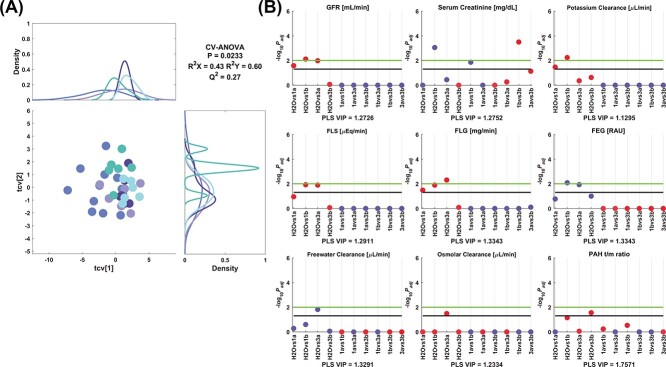
Acute, and subacute toxicity tests were carried out. After 14-day oral treatment, liver and kidney functionality assays in combination with chemometric methods were implemented to detect hepatic and/or kidney damage.
Some compounds produced off-target effects. Vehicle effects were also detected. However, no signs of hepatic or renal toxicity were observed for any IMPY.
These compounds can continue non-clinical evaluations, and if possible, clinical trials as new candidates to treat trichomoniasis and amoebiasis, and inflammatory diseases. Further studies are also needed to fully elucidate a proposed dual effect that may exert these molecules against trichomoniasis and amoebiasis, which may also signify a novel mechanism of action to treat these infections.
滴虫病和阿米巴病是被忽视的疾病,不仅在其流行的发展中国家,而且在发达国家,仍然是全球健康负担。此前,我们测试了多种咪唑并[1,2 - ]吡啶衍生物(IMPYs)对甲硝唑耐药的阴道毛滴虫菌株(HM1:IMSS)和溶组织内阿米巴(GT3)的抗寄生虫活性。还评估了它们的抗炎活性。
本研究是一个项目的一部分,该项目旨在寻找这些疾病标准治疗方法的新替代方案,并应对当前新出现的耐药寄生虫菌株的问题。在此,我们报告一项非临床研究,重点是对七种表现出最佳抗寄生虫和/或抗炎特性的IMPYs进行探索性毒理学分析。
进行了急性和亚急性毒性试验。在14天口服治疗后,结合化学计量学方法进行肝脏和肾脏功能检测,以检测肝脏和/或肾脏损伤。
一些化合物产生了脱靶效应。还检测到了赋形剂效应。然而,未观察到任何IMPY有肝脏或肾脏毒性迹象。
这些化合物可继续进行非临床评估,如有可能,作为治疗滴虫病、阿米巴病和炎症性疾病的新候选药物进行临床试验。还需要进一步研究,以充分阐明这些分子可能对滴虫病和阿米巴病产生的双重作用,这也可能代表一种治疗这些感染的新作用机制。