Laudanska Zuzanna, López Pérez David, Kozioł Agata, Radkowska Alicja, Babis Karolina, Malinowska-Korczak Anna, Tomalski Przemysław
Neurocognitive Development Lab, Institute of Psychology, Polish Academy of Sciences, Warsaw, Poland.
Front Psychol. 2022 Oct 21;13:896319. doi: 10.3389/fpsyg.2022.896319. eCollection 2022.
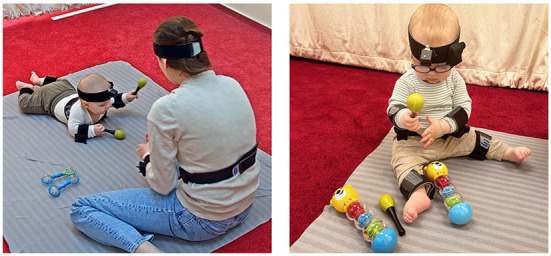
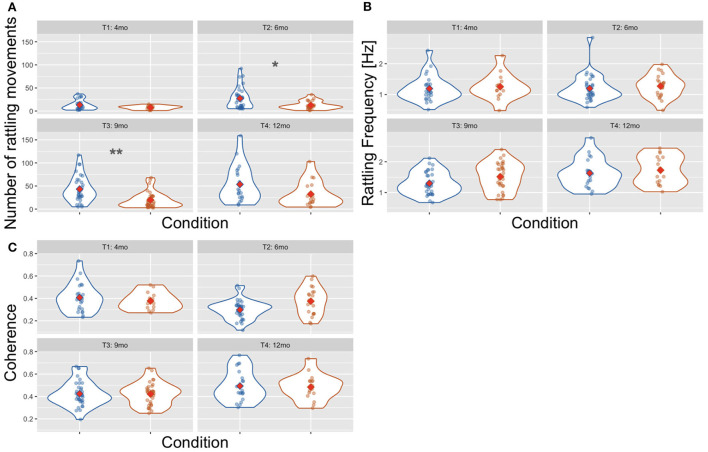
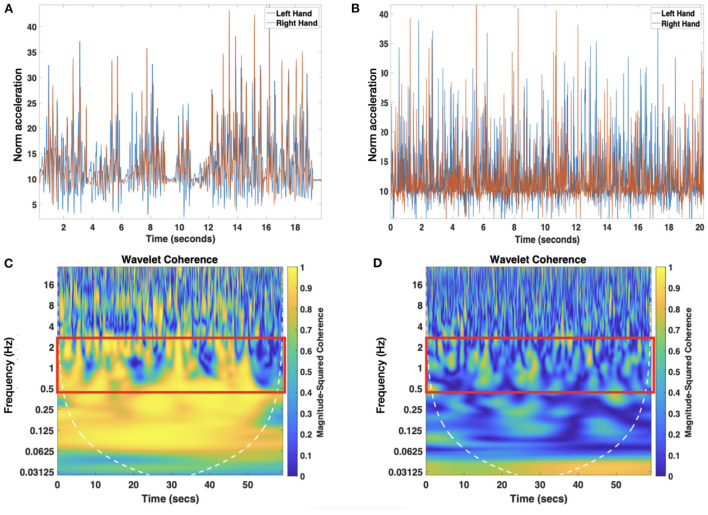
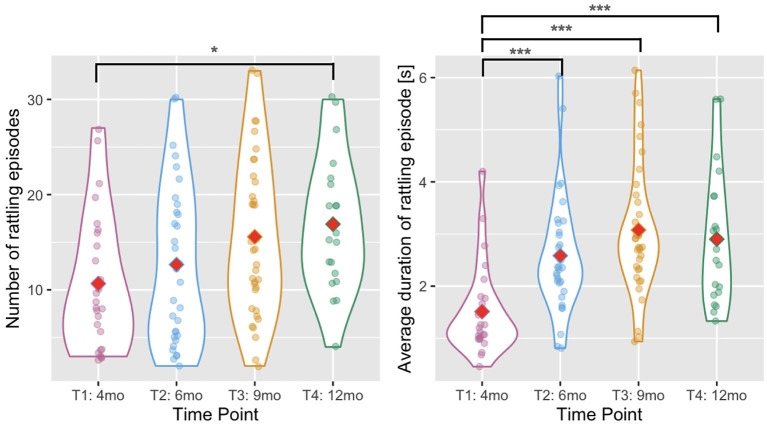
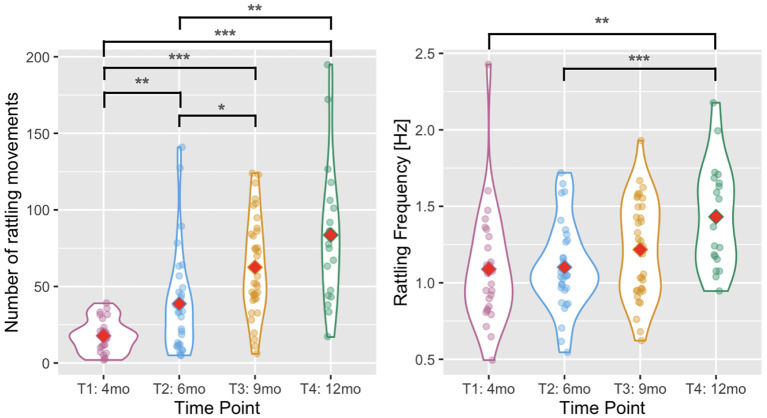
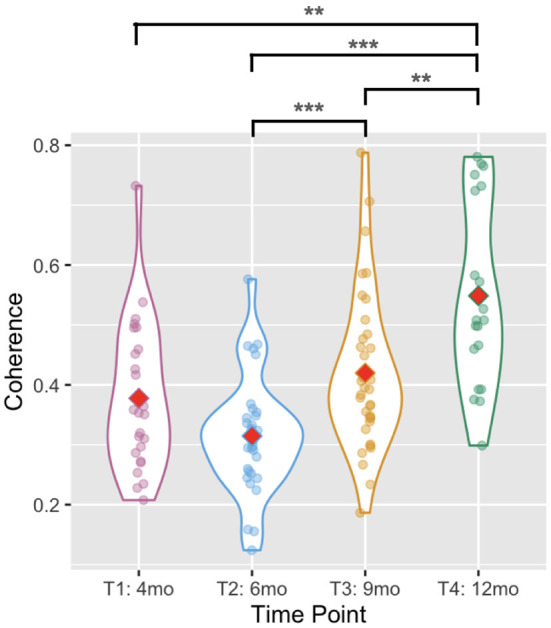
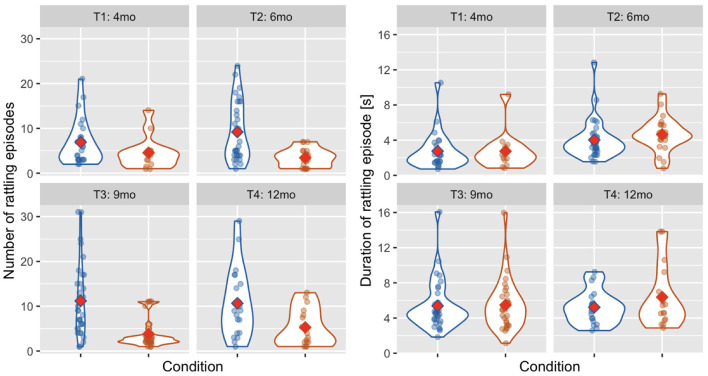
From early on, infants produce a variety of rhythmic behaviors-an ability that likely supports later social communication. However, it is unclear, how this rhythmic motor production changes with age. Here, we investigated the coupling between infants' arm movements across the first year of life in a social context of a rattle-shaking play with their mothers. Through longitudinal measurements at 4, 6, 9, and 12 months of age using wearable motion trackers placed on infants' arms, we show that infants ( = 40) are similarly motivated to attempt rattle-shaking across the first year of life. However, with age, they make more rattling movements with an increased frequency. Their left and right arm movements become more coupled during rattle-shaking, as shown by an increase in wavelet coherence. Infants produced more rattling movements when they were rattling alone than when their mothers were rattling or singing simultaneously. There were no differences between infants' individual and social rattling in between-arms coherence. Our results may help to understand rhythmic arm movements as precursors of motor social coordination.
从早期开始,婴儿就会产生各种有节奏的行为——这种能力可能会支持日后的社交沟通。然而,目前尚不清楚这种有节奏的运动产生是如何随年龄变化的。在这里,我们研究了在与母亲进行摇拨浪鼓游戏的社交情境中,婴儿在一岁内手臂运动之间的耦合情况。通过在4、6、9和12个月大时使用佩戴在婴儿手臂上的可穿戴运动追踪器进行纵向测量,我们发现40名婴儿在一岁内尝试摇拨浪鼓的动机相似。然而,随着年龄的增长,他们摇拨浪鼓的动作更多,频率也更高。如小波相干性增加所示,他们在摇拨浪鼓时左右手臂的运动耦合性更强。婴儿独自摇拨浪鼓时比母亲同时摇拨浪鼓或唱歌时产生的摇拨浪鼓动作更多。婴儿个体摇拨浪鼓和社交摇拨浪鼓时手臂间的相干性没有差异。我们的研究结果可能有助于将有节奏的手臂运动理解为运动社交协调的前兆。