School of Health, Fujian Medical University, Fuzhou, China.
Fujian Provincial Collaborative Innovation Center of Geriatric Rehabilitation and Industry Promotion, Fuzhou, China.
BMC Complement Med Ther. 2022 Nov 8;22(1):287. doi: 10.1186/s12906-022-03760-5.
Physical and mental health problems are becoming more serious among college students due to lifestyle changes and increased academic stress. Qigong exercise has been regarded as a potentially effective intervention to improve the physical and mental health of college students.
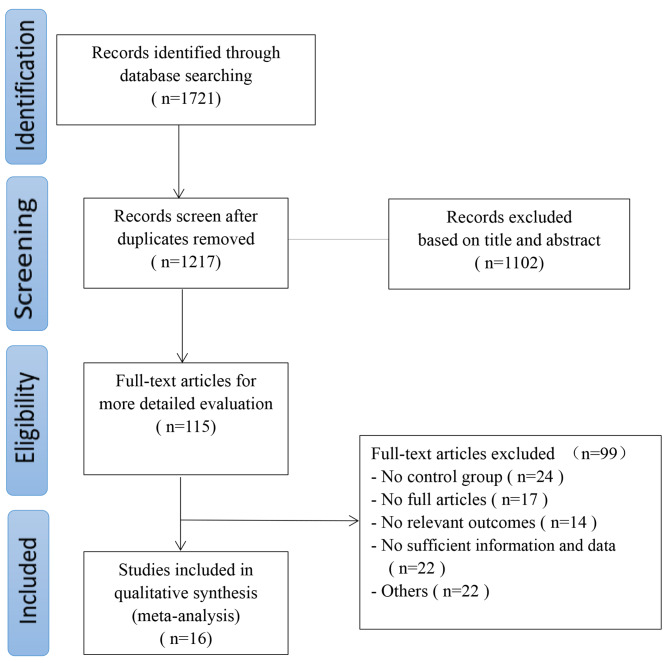
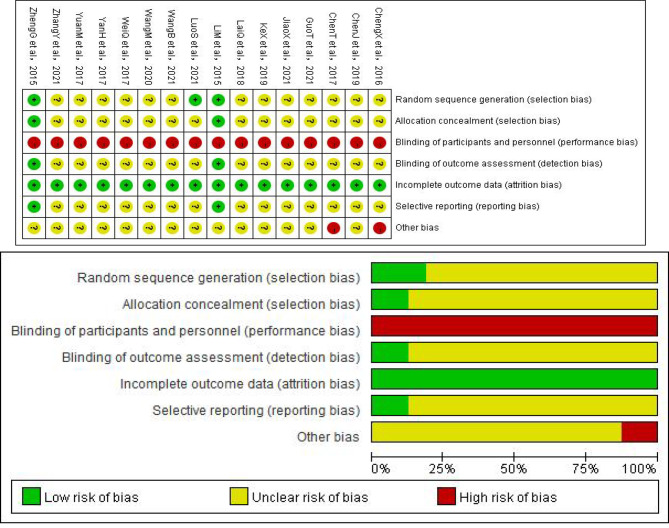
Eleven databases were searched from their respective inception dates to April 2022. Relevant randomized controlled trials (RCTs) were included. Physical and psychological conditions, including limb muscle strength, flexibility, cardiorespiratory endurance, vital capacity, blood pressure and heart rate, as well as depression, anxiety and mood, were evaluated. The risk of bias was assessed with the Cochrane Collaboration tool.
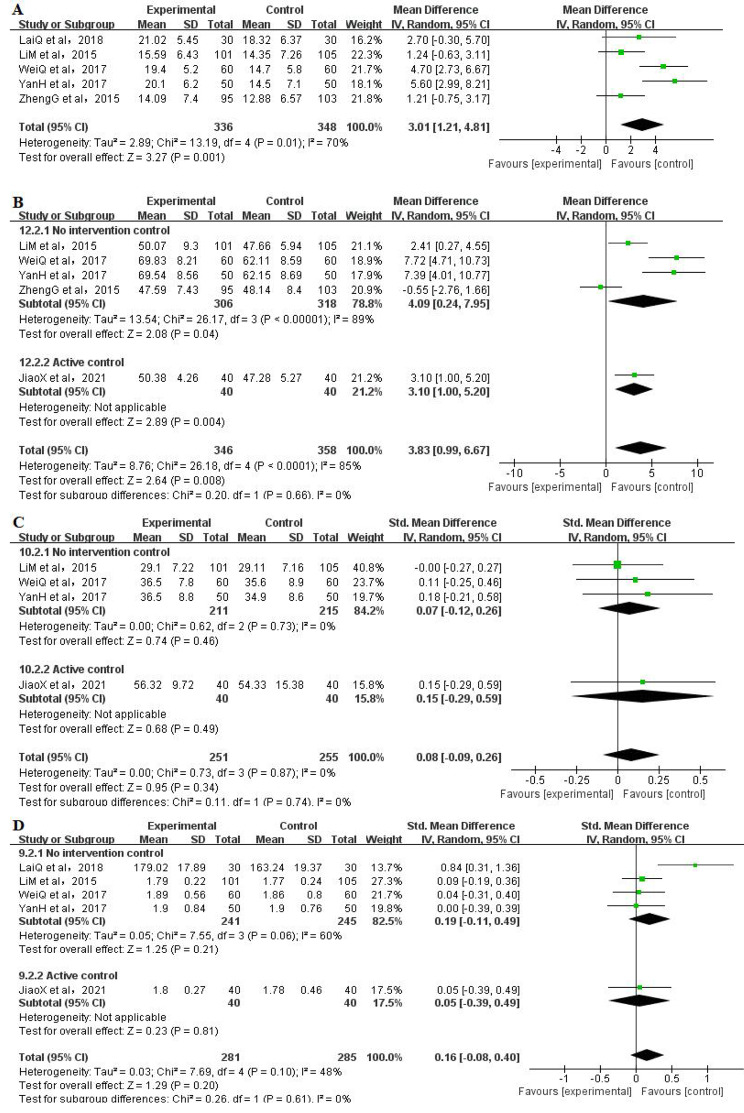
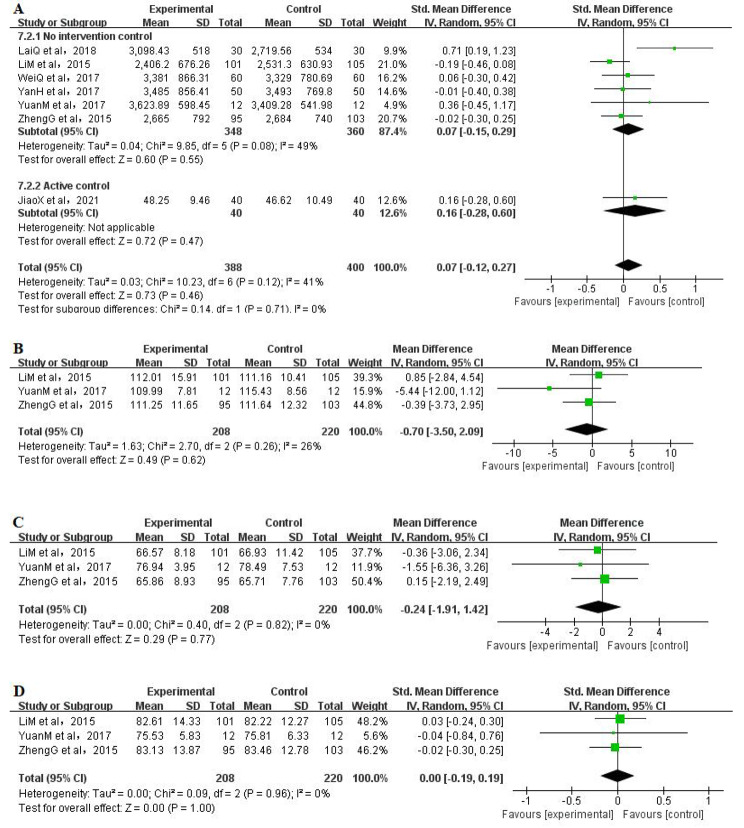
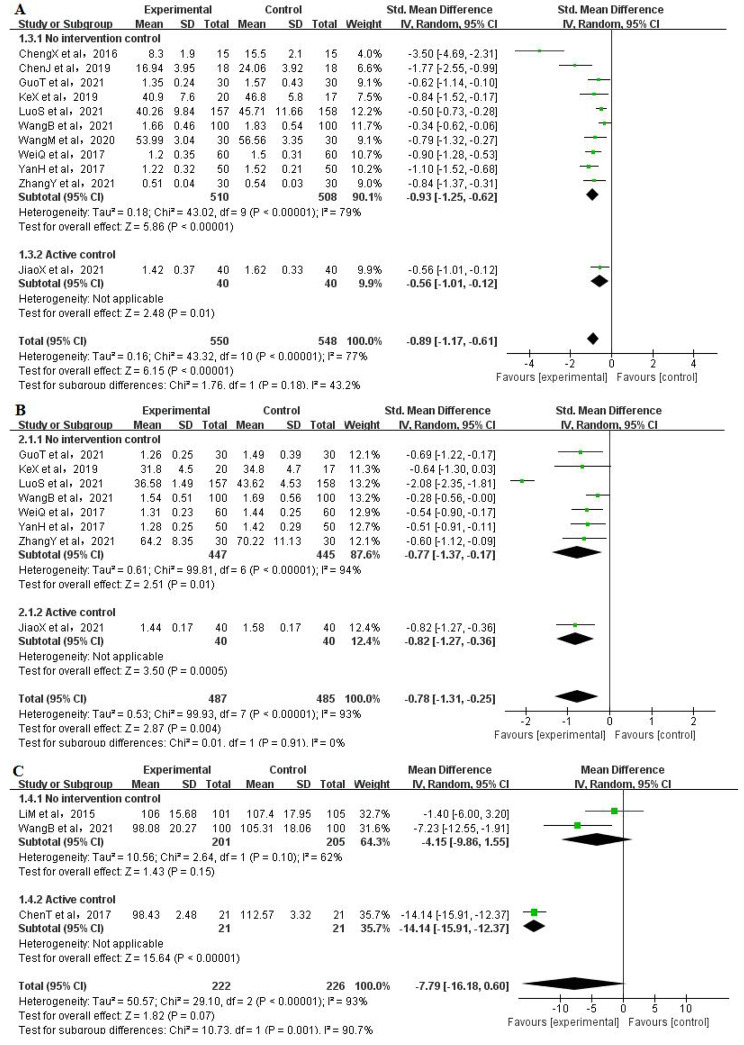
Sixteen randomized controlled trials were included in the meta-analysis. Significant improvements in cardiorespiratory endurance (MD = 3.83, 95% CI: 0.99 to 6.67, P = 0.008) and flexibility (MD = 3.01, 95% CI: 1.21 to 4.81, P = 0.001) were observed. We also observed that Qigong exercise significantly reduced depression and anxiety symptoms (SMD=-0.89, 95% CI: -1.17 to -0.61, P < 0.00001; SMD=-0.78, 95% CI: -1.31 to -0.25, P = 0.004). Nevertheless, no significant effects on muscle strength, vital capacity, blood pressure, heart rate or mood were found.
Qigong exercise was advantageous for college students in terms of improving flexibility and cardiorespiratory endurance and alleviating depression and anxiety to some extent. However, due to the limited number of eligible trials and the low methodological quality, more well-designed RCTs are needed in the future.
由于生活方式的改变和学业压力的增加,大学生的身心健康问题变得更加严重。气功锻炼被认为是改善大学生身心健康的一种潜在有效干预措施。
从建库日期至 2022 年 4 月,检索了 11 个数据库。纳入相关的随机对照试验(RCT)。评估了肢体肌肉力量、柔韧性、心肺耐力、肺活量、血压和心率以及抑郁、焦虑和情绪等身体和心理状况。使用 Cochrane 协作工具评估偏倚风险。
纳入了 16 项随机对照试验进行荟萃分析。心肺耐力(MD=3.83,95%CI:0.99 至 6.67,P=0.008)和柔韧性(MD=3.01,95%CI:1.21 至 4.81,P=0.001)有显著改善。我们还发现气功锻炼可显著减轻抑郁和焦虑症状(SMD=-0.89,95%CI:-1.17 至 -0.61,P<0.00001;SMD=-0.78,95%CI:-1.31 至 -0.25,P=0.004)。然而,在肌肉力量、肺活量、血压、心率或情绪方面未发现显著影响。
气功锻炼在改善柔韧性和心肺耐力以及在一定程度上缓解抑郁和焦虑方面对大学生有益。然而,由于合格试验数量有限且方法学质量较低,未来需要更多设计良好的 RCT。