European Molecular Biology Laboratory, European Bioinformatics Institute (EMBL-EBI), Hinxton, UK.
Wellcome Sanger Institute, Hinxton, UK.
Nature. 2022 Nov;611(7936):594-602. doi: 10.1038/s41586-022-05425-2. Epub 2022 Nov 9.
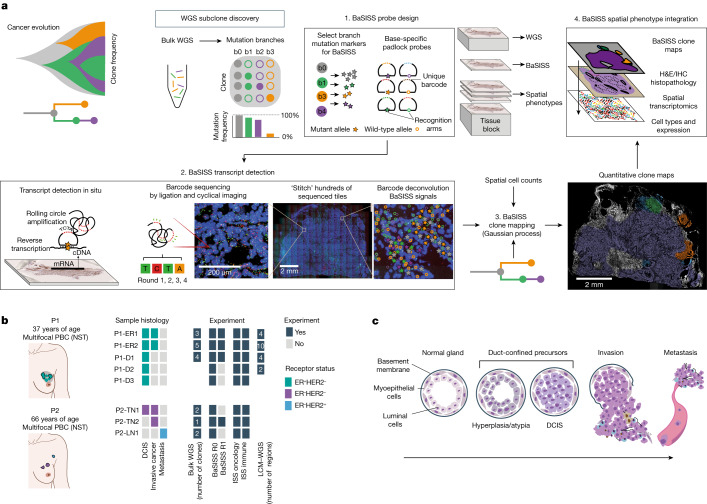
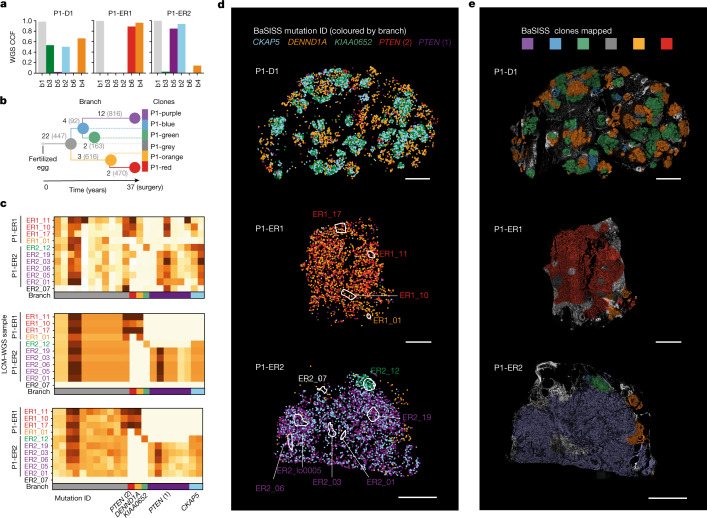
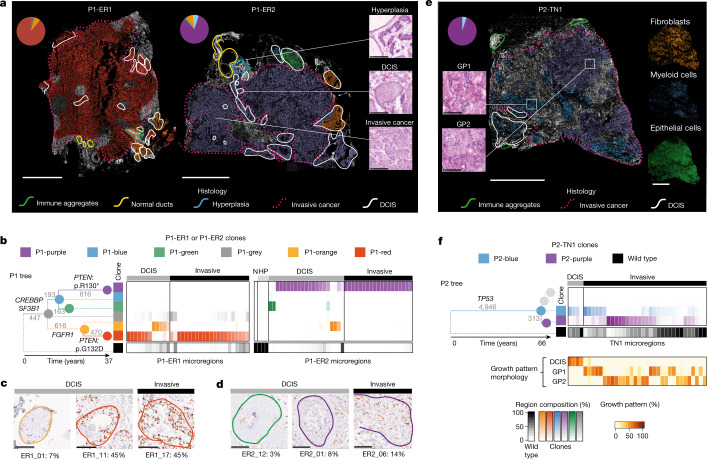
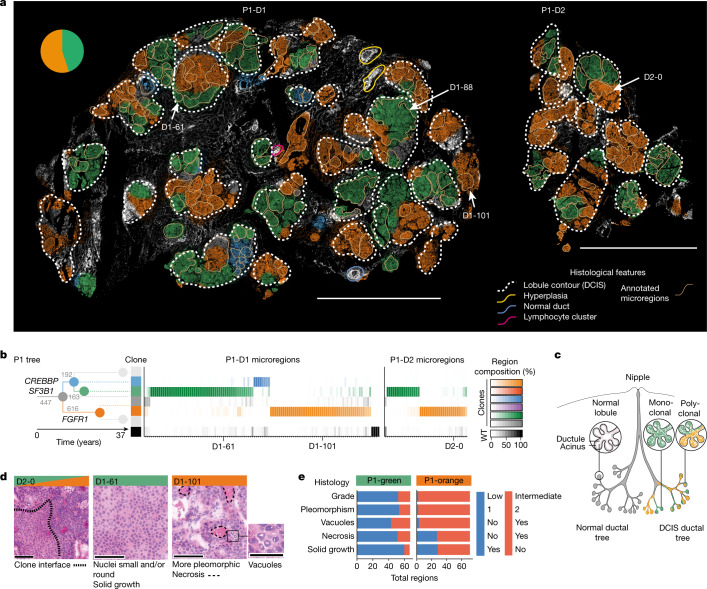
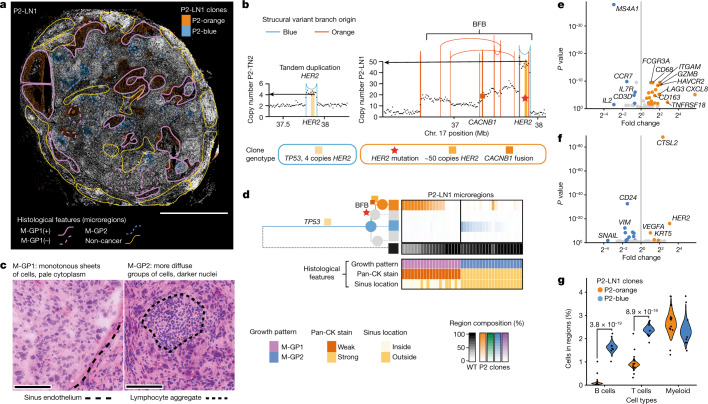
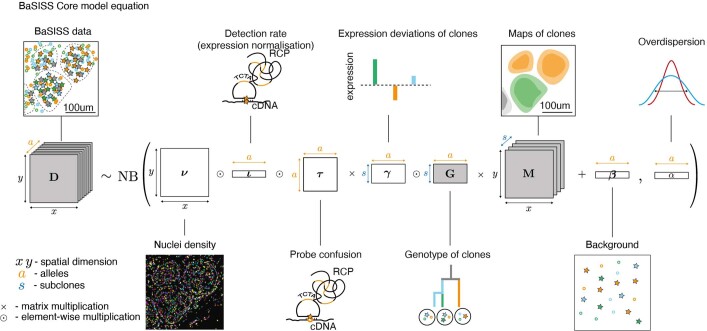
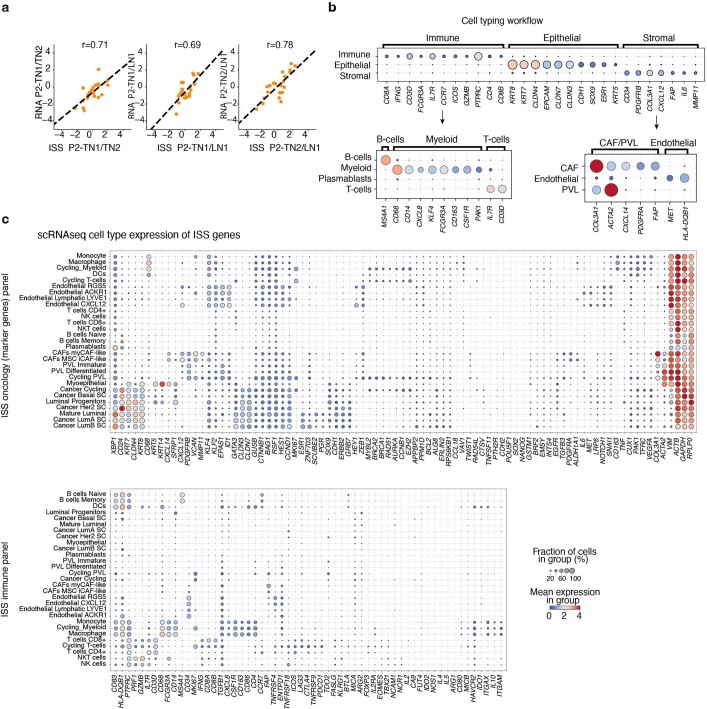
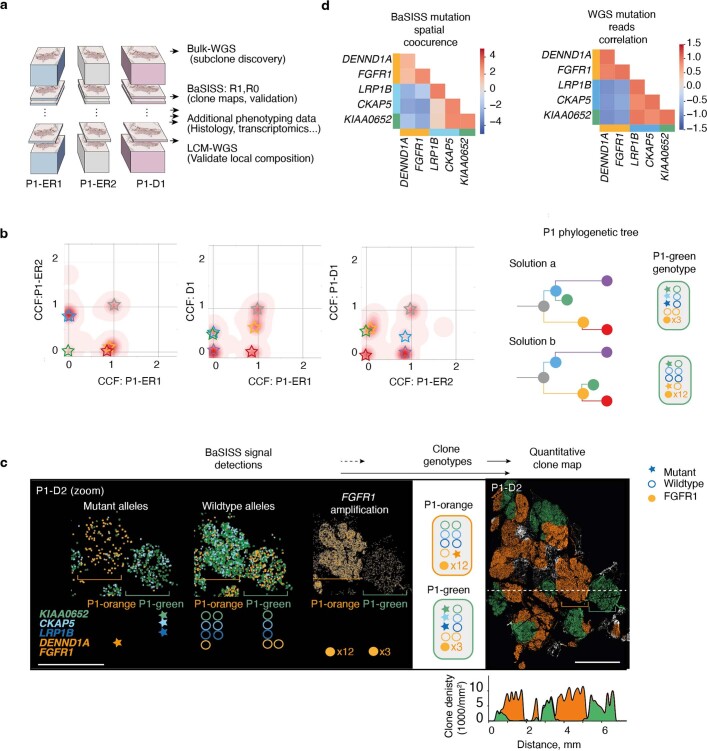
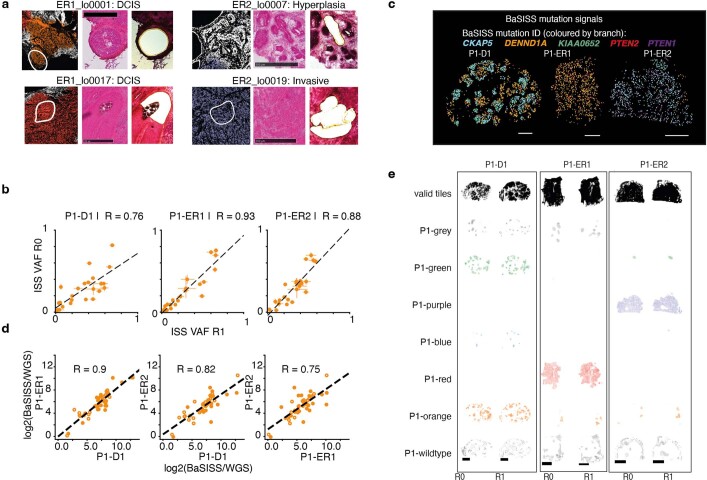
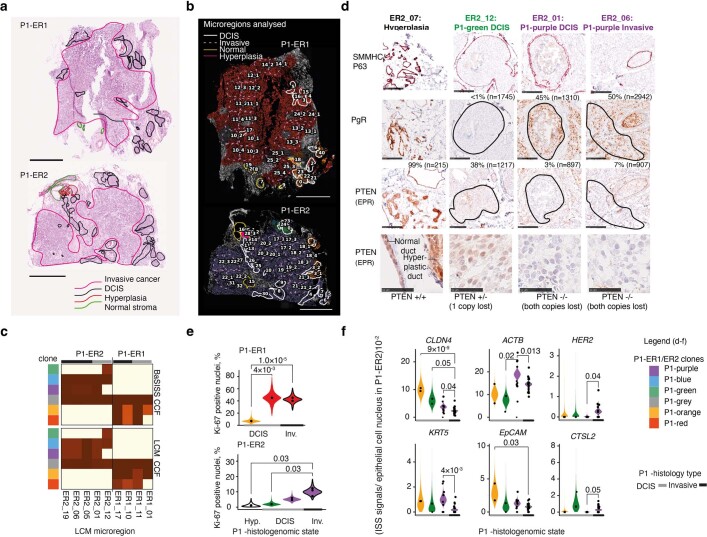
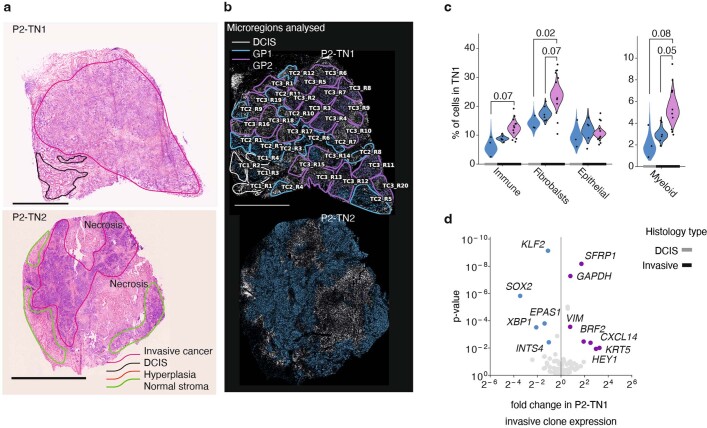
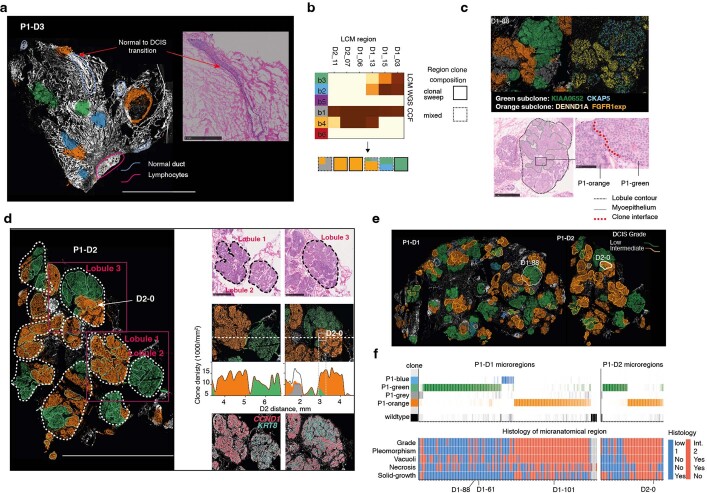
Genome sequencing of cancers often reveals mosaics of different subclones present in the same tumour. Although these are believed to arise according to the principles of somatic evolution, the exact spatial growth patterns and underlying mechanisms remain elusive. Here, to address this need, we developed a workflow that generates detailed quantitative maps of genetic subclone composition across whole-tumour sections. These provide the basis for studying clonal growth patterns, and the histological characteristics, microanatomy and microenvironmental composition of each clone. The approach rests on whole-genome sequencing, followed by highly multiplexed base-specific in situ sequencing, single-cell resolved transcriptomics and dedicated algorithms to link these layers. Applying the base-specific in situ sequencing workflow to eight tissue sections from two multifocal primary breast cancers revealed intricate subclonal growth patterns that were validated by microdissection. In a case of ductal carcinoma in situ, polyclonal neoplastic expansions occurred at the macroscopic scale but segregated within microanatomical structures. Across the stages of ductal carcinoma in situ, invasive cancer and lymph node metastasis, subclone territories are shown to exhibit distinct transcriptional and histological features and cellular microenvironments. These results provide examples of the benefits afforded by spatial genomics for deciphering the mechanisms underlying cancer evolution and microenvironmental ecology.
癌症的基因组测序通常揭示出同一肿瘤中存在的不同亚克隆的嵌合体。尽管这些亚克隆被认为是根据体细胞进化的原则产生的,但确切的空间生长模式和潜在的机制仍然难以捉摸。在这里,为了解决这一需求,我们开发了一种工作流程,可以生成整个肿瘤切片中遗传亚克隆组成的详细定量图谱。这些图谱为研究克隆生长模式以及每个克隆的组织学特征、微解剖结构和微环境组成提供了基础。该方法依赖于全基因组测序,随后是高度多重化的基于碱基的原位测序、单细胞分辨率的转录组学以及专门的算法来连接这些层。将基于碱基的原位测序工作流程应用于两个多灶性原发性乳腺癌的八个组织切片,揭示了复杂的亚克隆生长模式,这些模式通过显微切割得到了验证。在原位导管癌的情况下,多克隆肿瘤扩张发生在宏观尺度上,但在微解剖结构中分离。在原位导管癌、浸润性癌和淋巴结转移的各个阶段,亚克隆区域表现出不同的转录和组织学特征以及细胞微环境。这些结果提供了空间基因组学在解析癌症进化和微环境生态学背后机制方面的优势的例子。