Department of Biology, University of Nairobi, Nairobi, 00100, Kenya.
Sub-Saharan Africa International Center of Excellence for Malaria Research, Tom Mboya University, Homa Bay, 40300, Kenya.
Parasit Vectors. 2022 Nov 9;15(1):416. doi: 10.1186/s13071-022-05503-4.
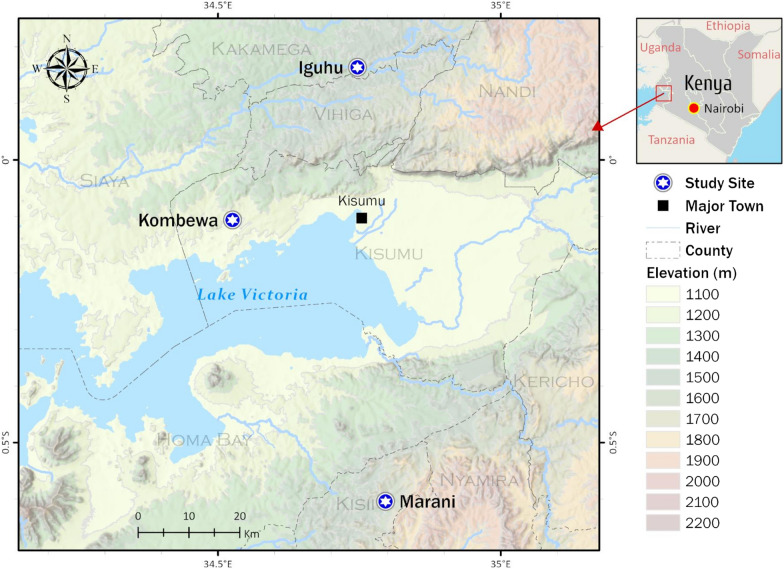
Malaria in western Kenya is currently characterized by sustained high Plasmodial transmission and infection resurgence, despite positive responses in some areas following intensified malaria control interventions since 2006. This study aimed to evaluate long-term changes in malaria transmission profiles and to assess patterns of asymptomatic malaria infections in school children aged 5-15 years at three sites in western Kenya with heterogeneous malaria transmission and simultaneous malaria control interventions.
The study was conducted from 2018 to 2019 and is based on data taken every third year from 2005 to 2014 during a longitudinal parasitological and mosquito adult surveillance and malaria control programme that was initiated in 2002 in the villages of Kombewa, Iguhu, and Marani. Plasmodium spp. infections were determined using microscopy. Mosquito samples were identified to species and host blood meal source and sporozoite infections were assayed using polymerase chain reaction.
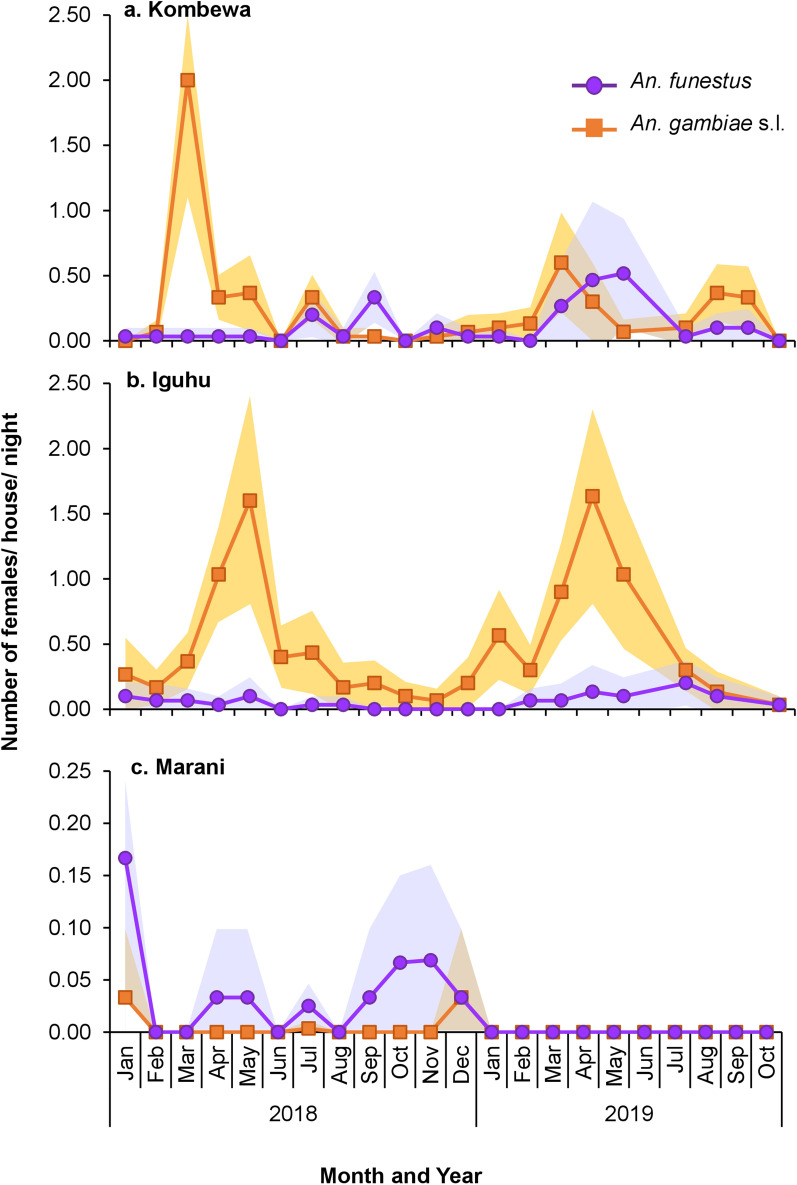
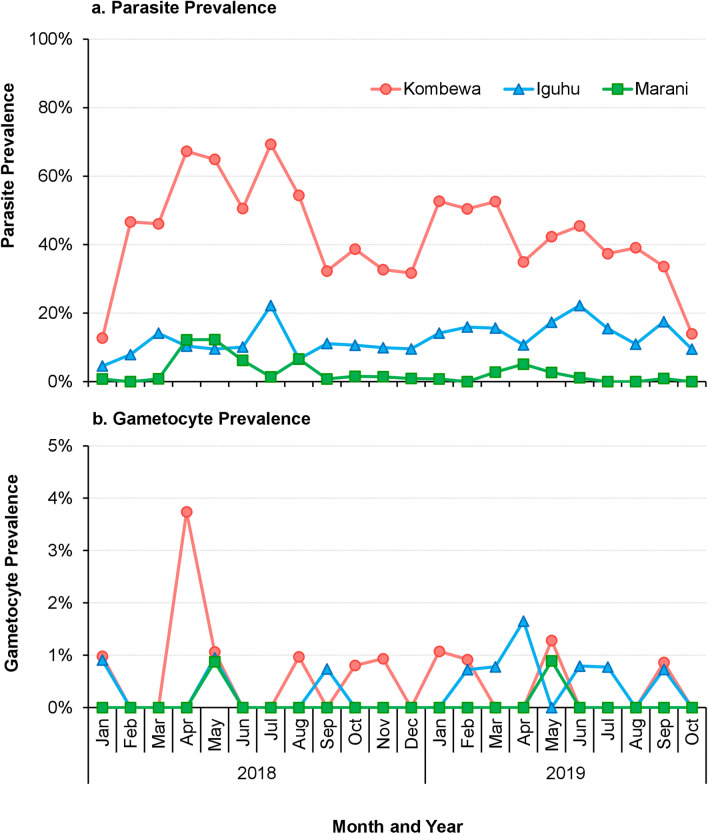
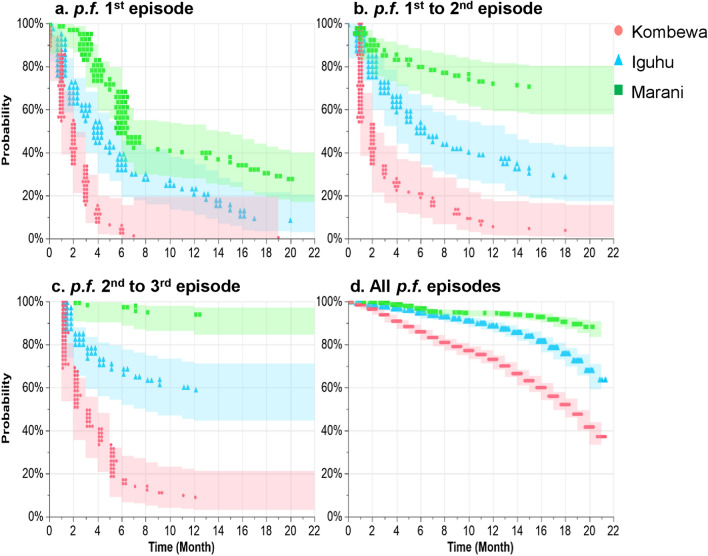
Plasmodium falciparum was the only malaria parasite evaluated during this study (2018-2019). Asymptomatic malaria parasite prevalence in school children decreased in all sites from 2005 to 2008. However, since 2011, parasite prevalence has resurged by > 40% in Kombewa and Marani. Malaria vector densities showed similar reductions from 2005 to 2008 in all sites, rose steadily until 2014, and decreased again. Overall, Kombewa had a higher risk of infection compared to Iguhu (χ = 552.52, df = 1, P < 0.0001) and Marani (χ = 1127.99, df = 1, P < 0.0001). There was a significant difference in probability of non-infection during malaria episodes (log-rank test, χ = 617.59, df = 2, P < 0.0001) in the study sites, with Kombewa having the least median time of non-infection during malaria episodes. Gender bias toward males in infection was observed (χ = 27.17, df = 1, P < 0.0001). The annual entomological inoculation rates were 5.12, 3.65, and 0.50 infective bites/person/year at Kombewa, Iguhu, and Marani, respectively, during 2018 to 2019.
Malaria prevalence in western Kenya remains high and has resurged in some sites despite continuous intervention efforts. Targeting malaria interventions to those with asymptomatic infections who serve as human reservoirs might decrease malaria transmission and prevent resurgences. Longitudinal monitoring enables detection of changes in parasitological and entomological profiles and provides core baseline data for the evaluation of vector interventions and guidance for future planning of malaria control.
尽管自 2006 年以来加强疟疾控制干预措施后,肯尼亚西部的一些地区出现了积极反应,但目前该地区仍存在疟疾持续高度传播和感染回升的情况。本研究旨在评估疟疾传播特征的长期变化,并评估肯尼亚西部三个地点(Kombewa、Iguhu 和 Marani)5-15 岁在校儿童无症状疟疾感染的模式,这些地点的疟疾传播存在异质性且同时进行疟疾控制干预。
该研究于 2018 年至 2019 年进行,基于 2005 年至 2014 年期间每隔三年进行的纵向寄生虫学和成年蚊子监测以及疟疾控制计划的数据,该计划于 2002 年在 Kombewa、Iguhu 和 Marani 村开始。使用显微镜确定疟原虫感染。鉴定蚊子样本的种类和宿主血液来源,并使用聚合酶链反应检测孢子虫感染。
在本研究期间(2018-2019 年),仅评估了疟原虫 falciparum。所有地点的在校儿童无症状疟原虫感染率从 2005 年至 2008 年下降。然而,自 2011 年以来, Kombewa 和 Marani 的寄生虫感染率已回升超过 40%。所有地点的疟疾媒介密度从 2005 年至 2008 年也呈现出类似的下降趋势,直到 2014 年才稳步上升,然后再次下降。总体而言,Kombewa 比 Iguhu(χ²=552.52,df=1,P<0.0001)和 Marani(χ²=1127.99,df=1,P<0.0001)的感染风险更高。在研究地点中,疟疾发作期间非感染的概率存在显著差异(对数秩检验,χ²=617.59,df=2,P<0.0001),Kombewa 在校期间非感染的中位数时间最短。观察到感染中男性偏倚(χ²=27.17,df=1,P<0.0001)。2018 年至 2019 年期间,Kombewa、Iguhu 和 Marani 的年昆虫接种率分别为 5.12、3.65 和 0.50 感染性叮咬/人/年。
尽管持续进行干预措施,但肯尼亚西部的疟疾流行率仍然很高,并且在一些地区出现了回升。针对无症状感染的疟疾干预措施可能会减少疟疾传播并防止再次爆发,这些感染的人是疟疾的人类储存宿主。纵向监测可以检测寄生虫学和昆虫学特征的变化,并为评估媒介干预措施提供核心基线数据,并为未来的疟疾控制规划提供指导。