• 文献检索
  • 文档翻译
  • 深度研究
  • 学术资讯
  • Suppr Zotero 插件Zotero 插件
  • 邀请有礼
  • 套餐&价格
  • 历史记录
应用&插件
Suppr Zotero 插件Zotero 插件浏览器插件Mac 客户端Windows 客户端微信小程序
定价
高级版会员购买积分包购买API积分包
服务
文献检索文档翻译深度研究API 文档MCP 服务
关于我们
关于 Suppr公司介绍联系我们用户协议隐私条款
关注我们

Suppr 超能文献

核心技术专利:CN118964589B侵权必究
粤ICP备2023148730 号-1Suppr @ 2026

文献检索

告别复杂PubMed语法,用中文像聊天一样搜索,搜遍4000万医学文献。AI智能推荐,让科研检索更轻松。

立即免费搜索

文件翻译

保留排版,准确专业,支持PDF/Word/PPT等文件格式,支持 12+语言互译。

免费翻译文档

深度研究

AI帮你快速写综述,25分钟生成高质量综述,智能提取关键信息,辅助科研写作。

立即免费体验

用于监测呼吸活动、可重复使用工业呼吸器贴合和过滤堵塞的嵌入式电子传感器。

Embedded Electronic Sensor for Monitoring of Breathing Activity, Fitting and Filter Clogging in Reusable Industrial Respirators.

机构信息

Department of Electrical Engineering, Faculty of Engineering, Universidad de Concepción, 219 Edmundo Larenas St., Concepción 4030000, Chile.

Department of Multidisciplinary Engineering, Faculty of Engineering, Universidad de Santiago de Chile, Libertador Bernardo O'Higgins Av., Santiago 9170022, Chile.

出版信息

Biosensors (Basel). 2022 Nov 8;12(11):991. doi: 10.3390/bios12110991.

DOI:10.3390/bios12110991
PMID:36354500
原文链接:https://pmc.ncbi.nlm.nih.gov/articles/PMC9688112/
Abstract

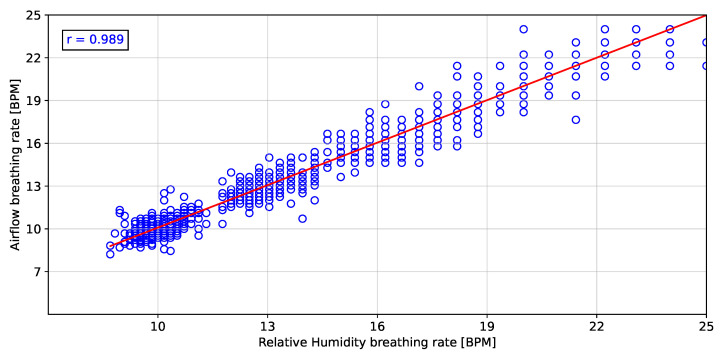
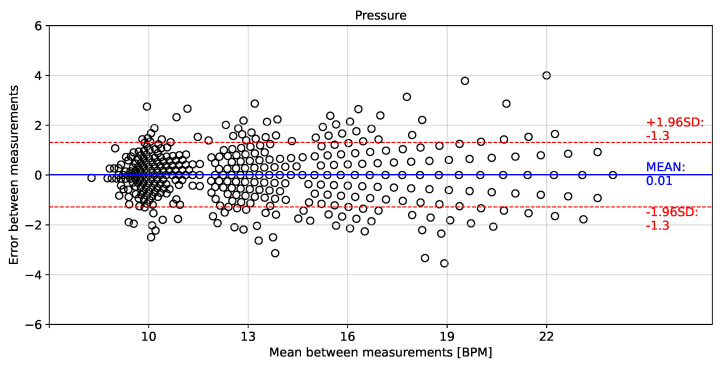
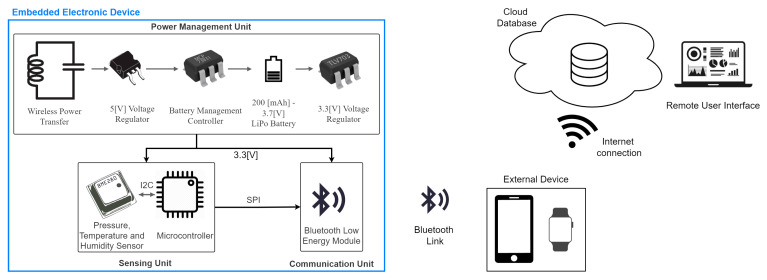
Millions of workers are required to wear reusable respirators in several industries worldwide. Reusable respirators include filters that protect workers against harmful dust, smoke, gases, and vapors. These hazards may cause cancer, lung impairment, and diseases. Respiratory protection is prone to failure or misuse, such as wearing respirators with filters out of service life and employees wearing respirators loosely. Currently, there are no commercial systems capable of reliably alerting of misuse of respiratory protective equipment during the workday shifts or provide early information about dangerous clogging levels of filters. This paper proposes a low energy and non-obtrusive functional building block with embedded electronics that enable breathing monitoring inside an industrial reusable respirator. The embedded electronic device collects multidimensional data from an integrated pressure, temperature, and relative humidity sensor inside a reusable industrial respirator in real time and sends it wirelessly to an external platform for further processing. Here, the calculation of instantaneous breathing rate and estimation of the filter's respirator fitting and clogging level is performed. The device was tested with ten healthy subjects in laboratory trials. The subjects were asked to wear industrial reusable respirator with the embedded electronic device attached inside. The signals measured with the system were compared with airflow signals measured with calibrated transducers for validation purposes. The correlation between the estimated breathing rates using pressure, temperature, and relative humidity with the reference signal (airflow) is 0.987, 0.988 and 0.989 respectively, showing that instantaneous breathing rate can be calculated accurately using the information from the embedded device. Moreover, respirator fitting (well-fitted or loose condition) and filter's clogging levels (≤60%, 80% and 100% clogging) also can be estimated using features extracted from absolute pressure measurements combined to statistical analysis ANOVA models. These experimental outputs represent promising results for further development of data-driven prediction models using machine learning techniques to determine filters end-of-service life. Furthermore, the proposed system would collect relevant data for real-time monitoring of workers' breathing conditions and respirator usage, helping to improve occupational safety and health in the workplace.

摘要

全球有数百万人需要在多个行业中佩戴可重复使用的呼吸器。可重复使用的呼吸器包括过滤器,可以保护工人免受有害粉尘、烟雾、气体和蒸气的侵害。这些危害可能导致癌症、肺部损伤和疾病。呼吸防护设备容易出现故障或使用不当,例如佩戴已过使用寿命的呼吸器过滤器和员工佩戴呼吸器不紧。目前,没有商用系统能够可靠地提醒工人在工作日班次中错误使用呼吸防护设备,也无法提供有关过滤器危险堵塞程度的早期信息。本文提出了一种低能耗且非侵入式的功能构建模块,具有嵌入式电子设备,可实现工业可重复使用呼吸器内的呼吸监测。嵌入式电子设备实时从可重复使用工业呼吸器内的集成压力、温度和相对湿度传感器中收集多维数据,并将其无线发送到外部平台进行进一步处理。在这里,计算了瞬时呼吸率,并估计了过滤器的呼吸器适配和堵塞程度。该设备已在实验室试验中使用 10 名健康受试者进行了测试。要求受试者佩戴附有嵌入式电子设备的工业可重复使用呼吸器。为了验证目的,将系统测量的信号与经过校准的换能器测量的气流信号进行了比较。使用压力、温度和相对湿度估计的呼吸率与参考信号(气流)之间的相关性分别为 0.987、0.988 和 0.989,表明可以使用嵌入式设备中的信息准确计算瞬时呼吸率。此外,还可以使用从绝对压力测量中提取的特征并结合统计分析 ANOVA 模型来估计呼吸器适配(贴合良好或贴合不良)和过滤器堵塞程度(≤60%、80%和 100%堵塞)。这些实验结果为使用机器学习技术进一步开发数据驱动的预测模型以确定过滤器的使用寿命结束提供了有希望的结果。此外,所提出的系统将收集有关工人呼吸状况和呼吸器使用情况的实时监测数据,有助于改善工作场所的职业安全和健康。
https://cdn.ncbi.nlm.nih.gov/pmc/blobs/e500/9688112/a9a5bf3df0b6/biosensors-12-00991-g024.jpg
https://cdn.ncbi.nlm.nih.gov/pmc/blobs/e500/9688112/42071e5813ca/biosensors-12-00991-g001.jpg
https://cdn.ncbi.nlm.nih.gov/pmc/blobs/e500/9688112/8c0ef84000fc/biosensors-12-00991-g002.jpg
https://cdn.ncbi.nlm.nih.gov/pmc/blobs/e500/9688112/0707f3c1e9e0/biosensors-12-00991-g003.jpg
https://cdn.ncbi.nlm.nih.gov/pmc/blobs/e500/9688112/aad0640c30aa/biosensors-12-00991-g004.jpg
https://cdn.ncbi.nlm.nih.gov/pmc/blobs/e500/9688112/57a52629782e/biosensors-12-00991-g005.jpg
https://cdn.ncbi.nlm.nih.gov/pmc/blobs/e500/9688112/07fd24b1f399/biosensors-12-00991-g006.jpg
https://cdn.ncbi.nlm.nih.gov/pmc/blobs/e500/9688112/cf8ef90959ee/biosensors-12-00991-g007.jpg
https://cdn.ncbi.nlm.nih.gov/pmc/blobs/e500/9688112/b7c4484f4ba4/biosensors-12-00991-g008.jpg
https://cdn.ncbi.nlm.nih.gov/pmc/blobs/e500/9688112/2a1c0a316799/biosensors-12-00991-g009.jpg
https://cdn.ncbi.nlm.nih.gov/pmc/blobs/e500/9688112/567a0310a576/biosensors-12-00991-g010.jpg
https://cdn.ncbi.nlm.nih.gov/pmc/blobs/e500/9688112/fcf97c0bf78a/biosensors-12-00991-g011.jpg
https://cdn.ncbi.nlm.nih.gov/pmc/blobs/e500/9688112/e9e2491b9e65/biosensors-12-00991-g012.jpg
https://cdn.ncbi.nlm.nih.gov/pmc/blobs/e500/9688112/6b7528e3feea/biosensors-12-00991-g013.jpg
https://cdn.ncbi.nlm.nih.gov/pmc/blobs/e500/9688112/70a9bb40299e/biosensors-12-00991-g014.jpg
https://cdn.ncbi.nlm.nih.gov/pmc/blobs/e500/9688112/e3ae94697154/biosensors-12-00991-g015.jpg
https://cdn.ncbi.nlm.nih.gov/pmc/blobs/e500/9688112/c4f5e3dbe36f/biosensors-12-00991-g016.jpg
https://cdn.ncbi.nlm.nih.gov/pmc/blobs/e500/9688112/d912e1a6d20d/biosensors-12-00991-g017.jpg
https://cdn.ncbi.nlm.nih.gov/pmc/blobs/e500/9688112/51ee8e1ac6b5/biosensors-12-00991-g018.jpg
https://cdn.ncbi.nlm.nih.gov/pmc/blobs/e500/9688112/d474611de7f9/biosensors-12-00991-g019.jpg
https://cdn.ncbi.nlm.nih.gov/pmc/blobs/e500/9688112/d8ed330267fd/biosensors-12-00991-g020.jpg
https://cdn.ncbi.nlm.nih.gov/pmc/blobs/e500/9688112/8669e2f49e79/biosensors-12-00991-g021.jpg
https://cdn.ncbi.nlm.nih.gov/pmc/blobs/e500/9688112/a643cd513de0/biosensors-12-00991-g022.jpg
https://cdn.ncbi.nlm.nih.gov/pmc/blobs/e500/9688112/318c70c931b5/biosensors-12-00991-g023.jpg
https://cdn.ncbi.nlm.nih.gov/pmc/blobs/e500/9688112/a9a5bf3df0b6/biosensors-12-00991-g024.jpg
https://cdn.ncbi.nlm.nih.gov/pmc/blobs/e500/9688112/42071e5813ca/biosensors-12-00991-g001.jpg
https://cdn.ncbi.nlm.nih.gov/pmc/blobs/e500/9688112/8c0ef84000fc/biosensors-12-00991-g002.jpg
https://cdn.ncbi.nlm.nih.gov/pmc/blobs/e500/9688112/0707f3c1e9e0/biosensors-12-00991-g003.jpg
https://cdn.ncbi.nlm.nih.gov/pmc/blobs/e500/9688112/aad0640c30aa/biosensors-12-00991-g004.jpg
https://cdn.ncbi.nlm.nih.gov/pmc/blobs/e500/9688112/57a52629782e/biosensors-12-00991-g005.jpg
https://cdn.ncbi.nlm.nih.gov/pmc/blobs/e500/9688112/07fd24b1f399/biosensors-12-00991-g006.jpg
https://cdn.ncbi.nlm.nih.gov/pmc/blobs/e500/9688112/cf8ef90959ee/biosensors-12-00991-g007.jpg
https://cdn.ncbi.nlm.nih.gov/pmc/blobs/e500/9688112/b7c4484f4ba4/biosensors-12-00991-g008.jpg
https://cdn.ncbi.nlm.nih.gov/pmc/blobs/e500/9688112/2a1c0a316799/biosensors-12-00991-g009.jpg
https://cdn.ncbi.nlm.nih.gov/pmc/blobs/e500/9688112/567a0310a576/biosensors-12-00991-g010.jpg
https://cdn.ncbi.nlm.nih.gov/pmc/blobs/e500/9688112/fcf97c0bf78a/biosensors-12-00991-g011.jpg
https://cdn.ncbi.nlm.nih.gov/pmc/blobs/e500/9688112/e9e2491b9e65/biosensors-12-00991-g012.jpg
https://cdn.ncbi.nlm.nih.gov/pmc/blobs/e500/9688112/6b7528e3feea/biosensors-12-00991-g013.jpg
https://cdn.ncbi.nlm.nih.gov/pmc/blobs/e500/9688112/70a9bb40299e/biosensors-12-00991-g014.jpg
https://cdn.ncbi.nlm.nih.gov/pmc/blobs/e500/9688112/e3ae94697154/biosensors-12-00991-g015.jpg
https://cdn.ncbi.nlm.nih.gov/pmc/blobs/e500/9688112/c4f5e3dbe36f/biosensors-12-00991-g016.jpg
https://cdn.ncbi.nlm.nih.gov/pmc/blobs/e500/9688112/d912e1a6d20d/biosensors-12-00991-g017.jpg
https://cdn.ncbi.nlm.nih.gov/pmc/blobs/e500/9688112/51ee8e1ac6b5/biosensors-12-00991-g018.jpg
https://cdn.ncbi.nlm.nih.gov/pmc/blobs/e500/9688112/d474611de7f9/biosensors-12-00991-g019.jpg
https://cdn.ncbi.nlm.nih.gov/pmc/blobs/e500/9688112/d8ed330267fd/biosensors-12-00991-g020.jpg
https://cdn.ncbi.nlm.nih.gov/pmc/blobs/e500/9688112/8669e2f49e79/biosensors-12-00991-g021.jpg
https://cdn.ncbi.nlm.nih.gov/pmc/blobs/e500/9688112/a643cd513de0/biosensors-12-00991-g022.jpg
https://cdn.ncbi.nlm.nih.gov/pmc/blobs/e500/9688112/318c70c931b5/biosensors-12-00991-g023.jpg
https://cdn.ncbi.nlm.nih.gov/pmc/blobs/e500/9688112/a9a5bf3df0b6/biosensors-12-00991-g024.jpg

相似文献

1
Embedded Electronic Sensor for Monitoring of Breathing Activity, Fitting and Filter Clogging in Reusable Industrial Respirators.用于监测呼吸活动、可重复使用工业呼吸器贴合和过滤堵塞的嵌入式电子传感器。
Biosensors (Basel). 2022 Nov 8;12(11):991. doi: 10.3390/bios12110991.
2
Respiratory protective device: One size to fit them all?呼吸防护装置:一种尺寸适合所有人?
J Occup Environ Hyg. 2023 May-Jun;20(5-6):226-239. doi: 10.1080/15459624.2023.2205466. Epub 2023 May 31.
3
Prototype sampling system for measuring workplace protection factors for gases and vapors.用于测量工作场所气体和蒸气防护因数的原型采样系统。
Appl Occup Environ Hyg. 2003 May;18(5):394-402. doi: 10.1080/10473220301360.
4
Respiratory protection against Mycobacterium tuberculosis: quantitative fit test outcomes for five type N95 filtering-facepiece respirators.针对结核分枝杆菌的呼吸防护:五种N95型过滤式面罩呼吸器的定量适合性测试结果
J Occup Environ Hyg. 2004 Jan;1(1):22-8. doi: 10.1080/15459620490250026.
5
Nanoparticle penetration through filter media and leakage through face seal interface of N95 filtering facepiece respirators.纳米颗粒穿透N95过滤式面罩呼吸器的过滤介质及通过面罩密封接口的泄漏情况。
Ann Occup Hyg. 2012 Jul;56(5):568-80. doi: 10.1093/annhyg/mer122. Epub 2012 Jan 31.
6
Respirator Performance against Nanoparticles under Simulated Workplace Activities.模拟工作场所活动下呼吸器对纳米颗粒的防护性能
Ann Occup Hyg. 2015 Oct;59(8):1012-21. doi: 10.1093/annhyg/mev042. Epub 2015 Jul 15.
7
The effect of inhalation resistance on facepiece leakage.吸气阻力对面罩泄漏的影响。
AIHAJ. 2000 Jan-Feb;61(1):102-5.
8
Integrated unit performance testing of powered, air-purifying particulate respirators using a DOP challenge aerosol.使用邻苯二甲酸二辛酯(DOP)挑战气雾剂对电动空气净化微粒呼吸器进行综合单元性能测试。
J Occup Environ Hyg. 2006 Nov;3(11):631-41. doi: 10.1080/15459620600954365.
9
Respiratory protection and the risk of Mycobacterium tuberculosis infection.呼吸防护与结核分枝杆菌感染风险
Am J Ind Med. 1995 Mar;27(3):317-33. doi: 10.1002/ajim.4700270302.
10
Reusable elastomeric air-purifying respirators: physiologic impact on health care workers.可重复使用的弹性体空气净化呼吸器:对医护人员的生理影响。
Am J Infect Control. 2010 Jun;38(5):381-6. doi: 10.1016/j.ajic.2009.11.006. Epub 2010 Mar 1.

引用本文的文献

1
Advances in Respiratory Monitoring: A Comprehensive Review of Wearable and Remote Technologies.呼吸监测技术的新进展:可穿戴和远程技术的综合综述。
Biosensors (Basel). 2024 Feb 6;14(2):90. doi: 10.3390/bios14020090.

本文引用的文献

1
Towards Accurate, Cost-Effective, Ultra-Low-Power and Non-Invasive Respiration Monitoring: A Reusable Wireless Wearable Sensor for an Off-the-Shelf KN95 Mask.实现准确、经济高效、超低功耗和非侵入式呼吸监测:一种可重复使用的无线可穿戴传感器,用于现成的 KN95 口罩。
Sensors (Basel). 2021 Oct 9;21(20):6698. doi: 10.3390/s21206698.
2
Enhanced Breathing Pattern Detection during Running Using Wearable Sensors.利用可穿戴传感器增强跑步时的呼吸模式检测。
Sensors (Basel). 2021 Aug 20;21(16):5606. doi: 10.3390/s21165606.
3
A Wearable Capacitive Sensor Based on Ring/Disk-Shaped Electrode and Porous Dielectric for Noncontact Healthcare Monitoring.
一种基于环形/盘形电极和多孔电介质的可穿戴电容式传感器,用于非接触式医疗监测。
Glob Chall. 2020 Mar 18;4(5):1900079. doi: 10.1002/gch2.201900079. eCollection 2020 May.
4
Occupational exposure and respiratory health of workers at small scale industries.小规模工业企业工人的职业暴露与呼吸健康。
Saudi J Biol Sci. 2020 Mar;27(3):985-990. doi: 10.1016/j.sjbs.2020.01.019. Epub 2020 Jan 27.
5
Clinical evaluation of stretchable and wearable inkjet-printed strain gauge sensor for respiratory rate monitoring at different measurements locations.用于不同测量位置的呼吸率监测的可拉伸和可穿戴喷墨打印应变计传感器的临床评估。
J Clin Monit Comput. 2021 May;35(3):453-462. doi: 10.1007/s10877-020-00481-3. Epub 2020 Feb 22.
6
Non-invasive continuous respiratory monitoring using temperature-based sensors.基于温度传感器的无创连续呼吸监测。
J Clin Monit Comput. 2020 Apr;34(2):223-231. doi: 10.1007/s10877-019-00329-5. Epub 2019 Jun 3.
7
Respiratory Rate Estimation by Using ECG, Impedance, and Motion Sensing in Smart Clothing.利用智能服装中的心电图、阻抗和运动传感技术进行呼吸率估计。
J Med Biol Eng. 2017;37(6):826-842. doi: 10.1007/s40846-017-0247-z. Epub 2017 Jul 1.
8
Smart Sensing Strip Using Monolithically Integrated Flexible Flow Sensor for Noninvasively Monitoring Respiratory Flow.采用单片集成柔性流量传感器的智能传感条,用于无创监测呼吸流量。
Sensors (Basel). 2015 Dec 15;15(12):31738-50. doi: 10.3390/s151229881.
9
Design and implementation of a smart sensor for respiratory rate monitoring.智能呼吸频率监测传感器的设计与实现。
Sensors (Basel). 2014 Feb 14;14(2):3019-32. doi: 10.3390/s140203019.
10
Clinical review: Respiratory monitoring in the ICU - a consensus of 16.临床综述:重症监护病房的呼吸监测——16项共识
Crit Care. 2012 Dec 12;16(2):219. doi: 10.1186/cc11146.