Attia Houneida, Rebah Fedia, Ouhibi Chayma, Saleh Muneera A, Althobaiti Ashwaq T, Alamer Khalid H, Ben Nasri Mouhiba, Lachaâl Mokhtar
Department of Biology, College of Sciences, Taif University, P.O. Box 11099, Taif 21944, Saudi Arabia.
Laboratory of Vegetable Productivity and Environmental Constraint LR18ES04, Department of Biology, University Tunis El Manar II, Tunis 1060, Tunisia.
Biology (Basel). 2022 Oct 24;11(11):1557. doi: 10.3390/biology11111557.
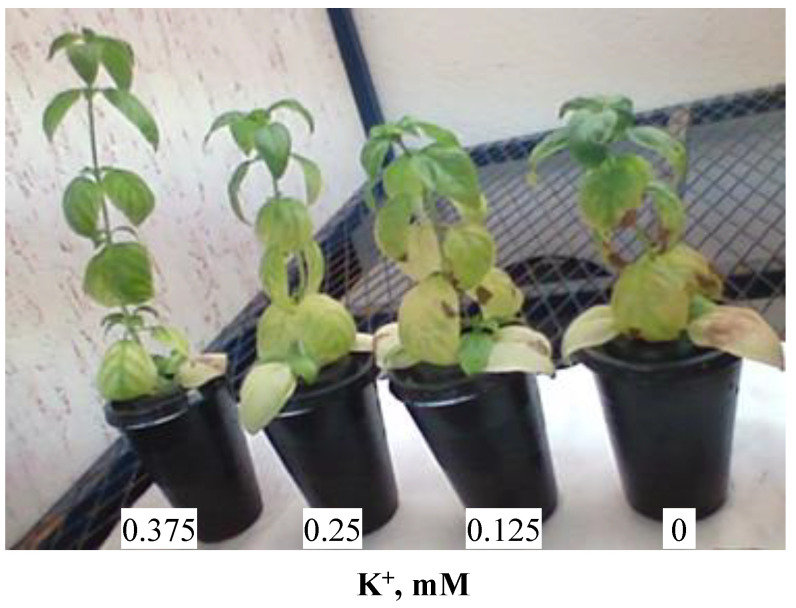
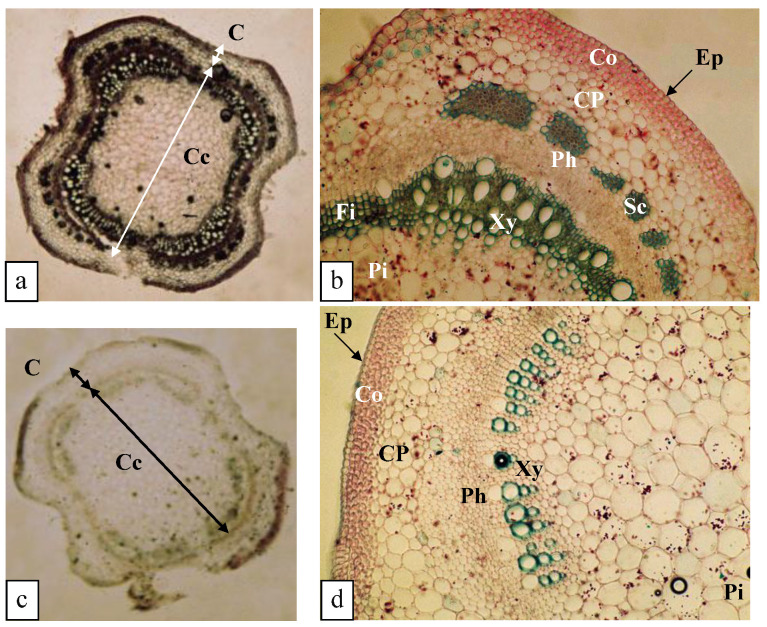
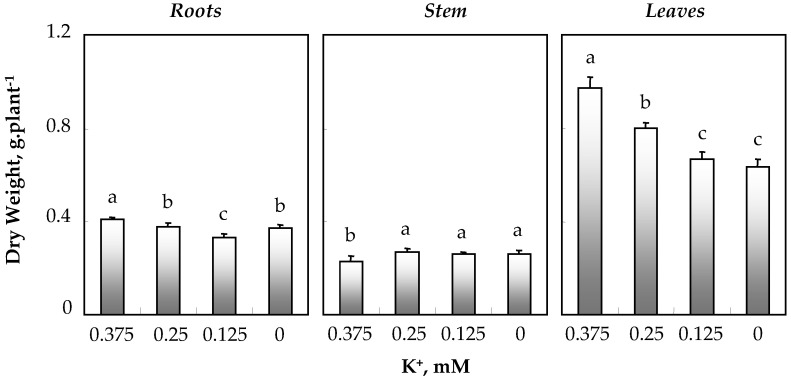
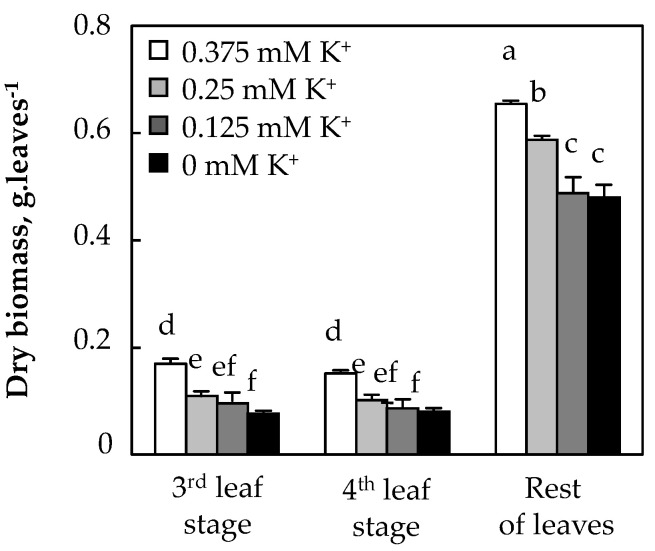
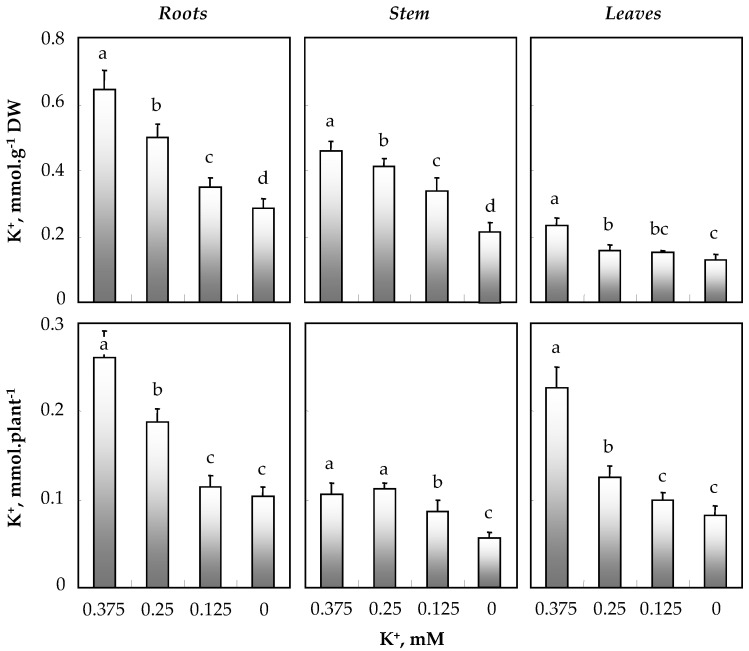
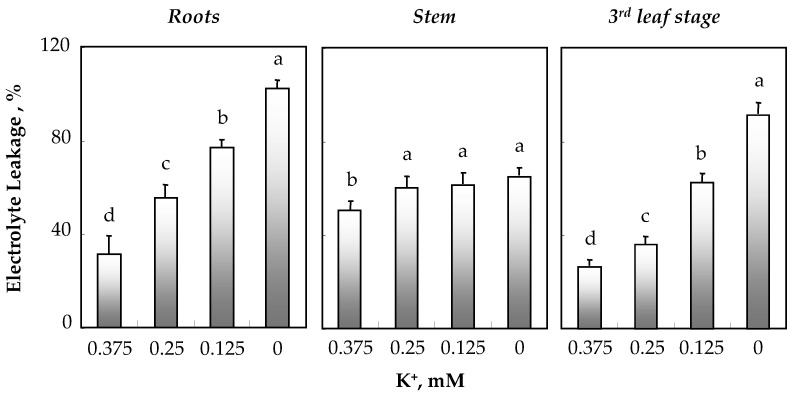
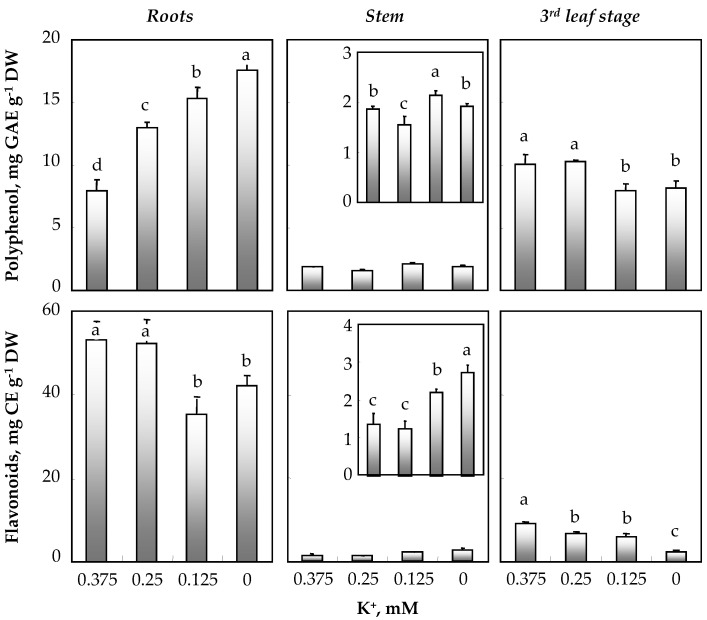
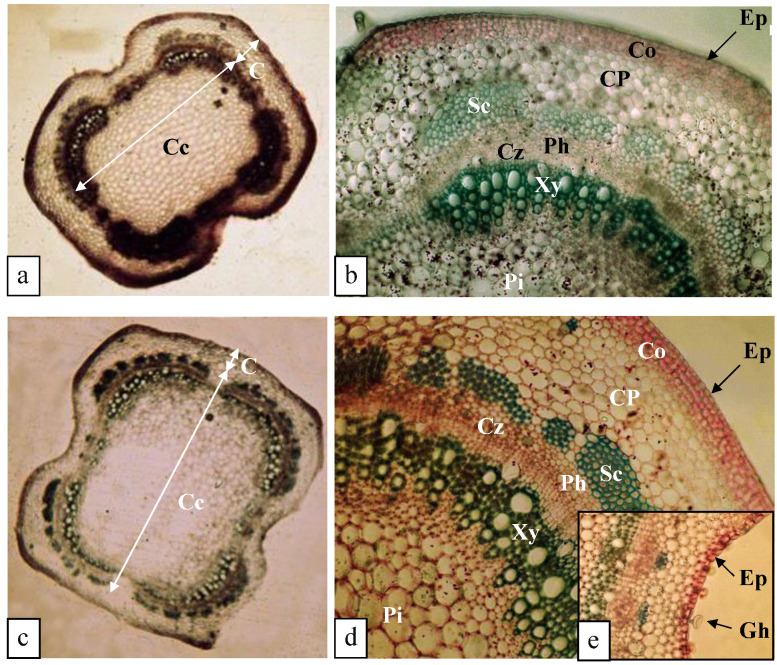
The aim of this study was to investigate the effect of a variable supply of potassium to culture medium on physiological and anatomical parameters (histological sections at the third internode) in basil, . Thirty-four-day-old plants grown on basic nutrient medium were divided into four batches and grown on media with varying doses of potassium: 0.375 mM, 0.250 mM, 0.125 mM and 0 mM K. After 64 days of culture, a final harvest was performed. The results showed that root and shoot growth in basil was decreased with decreased K concentration. This restriction was associated with a reduction in root elongation and leaf expansion, which was coupled with a decrease in chlorophyll and carotenoid contents. The estimation of electrolyte leakage reveals that this parameter was increased by potassium deficiency. With respect to total polyphenol and flavonoid contents, only the third leaf-stage extracts exhibited a decrease under low-K conditions. However, variability in response of phenolic compounds was recorded depending on the organ and the K concentration in the medium. Stem cross sections of potassium-deficient basil plants revealed a decrease in the diameter of these organs, which can be attributed to a restriction of the extent of different tissue territories (cortex and medulla), as well as by a reduction in cell size. These effects were associated with a decrease in the number of conducting vessels and an increase in the number of woody fibers.
本研究的目的是调查向培养基中供应不同量的钾对罗勒生理和解剖参数(第三茎节的组织切片)的影响。在基本营养培养基上生长34天的植株被分成四组,分别在含有不同钾剂量的培养基上生长:0.375 mM、0.250 mM、0.125 mM和0 mM钾。培养64天后进行最终收获。结果表明,罗勒的根和地上部生长随钾浓度降低而减少。这种限制与根伸长和叶片扩展的减少有关,同时叶绿素和类胡萝卜素含量也降低。电解质渗漏的测定表明,缺钾会使该参数增加。关于总多酚和黄酮含量,只有第三叶期的提取物在低钾条件下表现出减少。然而,酚类化合物的反应变化取决于器官和培养基中的钾浓度。缺钾罗勒植株的茎横切面显示这些器官的直径减小,这可归因于不同组织区域(皮层和髓)范围的限制以及细胞大小的减小。这些影响与导管数量的减少和木纤维数量的增加有关。