Silva Diana Filipa, Empadinhas Nuno, Cardoso Sandra Morais, Esteves Ana Raquel
CNC-Center for Neuroscience and Cell Biology and CIBB-Center for Innovative Biomedicine and Biotechnology, University of Coimbra, 3004-504 Coimbra, Portugal.
IIIUC-Institute for Interdisciplinary Research, University of Coimbra, 3030-789 Coimbra, Portugal.
Antioxidants (Basel). 2022 Oct 28;11(11):2141. doi: 10.3390/antiox11112141.
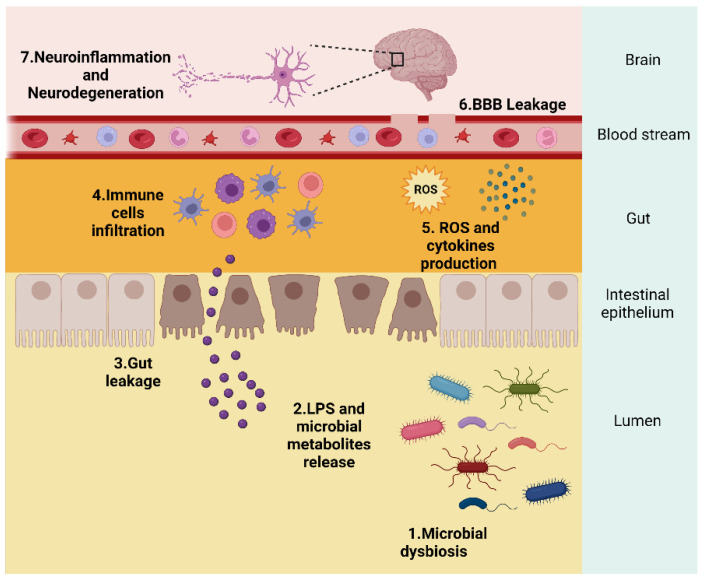
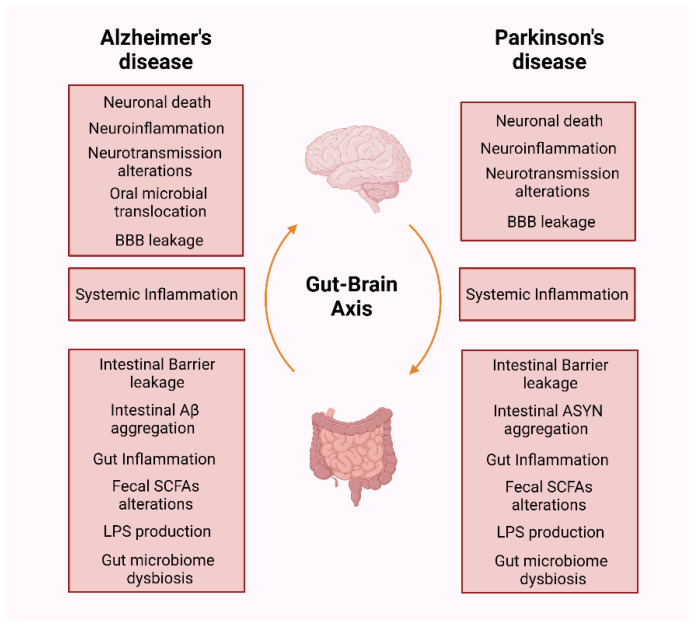
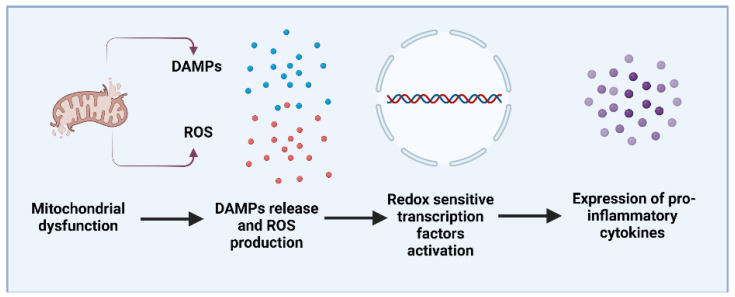
Inflammation and oxidative stress characterize a number of chronic conditions including neurodegenerative diseases and aging. Inflammation is a key component of the innate immune response in Alzheimer's disease and Parkinson's disease of which oxidative stress is an important hallmark. Immune dysregulation and mitochondrial dysfunction with concomitant reactive oxygen species accumulation have also been implicated in both diseases, both systemically and within the Central Nervous System. Mitochondria are a centrally positioned signalling hub for inflammatory responses and inflammatory cells can release reactive species at the site of inflammation often leading to exaggerated oxidative stress. A growing body of evidence suggests that disruption of normal gut microbiota composition may induce increased permeability of the gut barrier leading to chronic systemic inflammation, which may, in turn, impair the blood-brain barrier function and promote neuroinflammation and neurodegeneration. The gastrointestinal tract is constantly exposed to myriad exogenous substances and microbial pathogens, which are abundant sources of reactive oxygen species, oxidative damage and pro-inflammatory events. Several studies have demonstrated that microbial infections may also affect the balance in gut microbiota composition (involving oxidant and inflammatory processes by the host and indigenous microbiota) and influence downstream Alzheimer's disease and Parkinson's disease pathogenesis, in which blood-brain barrier damage ultimately occurs. Therefore, the oxidant/inflammatory insults triggered by a disrupted gut microbiota and chronic dysbiosis often lead to compromised gut barrier function, allowing inflammation to "escape" as well as uncontrolled immune responses that may ultimately disrupt mitochondrial function upwards the brain. Future therapeutic strategies should be designed to "restrain" gut inflammation, a goal that could ideally be attained by microbiota modulation strategies, in alternative to classic anti-inflammatory agents with unpredictable effects on the microbiota architecture itself.
炎症和氧化应激是包括神经退行性疾病和衰老在内的多种慢性疾病的特征。炎症是阿尔茨海默病和帕金森病固有免疫反应的关键组成部分,其中氧化应激是一个重要标志。免疫失调和线粒体功能障碍以及随之而来的活性氧积累在这两种疾病的全身和中枢神经系统中都有涉及。线粒体是炎症反应的核心信号枢纽,炎症细胞可在炎症部位释放活性物质,常常导致氧化应激加剧。越来越多的证据表明,正常肠道微生物群组成的破坏可能会导致肠道屏障通透性增加,从而引发慢性全身炎症,进而可能损害血脑屏障功能,促进神经炎症和神经退行性变。胃肠道不断接触大量外源性物质和微生物病原体,这些都是活性氧、氧化损伤和促炎事件的丰富来源。多项研究表明,微生物感染也可能影响肠道微生物群组成的平衡(涉及宿主和本土微生物群的氧化和炎症过程),并影响阿尔茨海默病和帕金森病的下游发病机制,最终导致血脑屏障受损。因此,肠道微生物群破坏和慢性生态失调引发的氧化/炎症损伤通常会导致肠道屏障功能受损,使炎症“逃逸”以及引发不受控制的免疫反应,最终可能向上破坏大脑中的线粒体功能。未来的治疗策略应旨在“抑制”肠道炎症,这一目标理想情况下可通过微生物群调节策略实现,而不是使用对微生物群结构本身有不可预测影响的传统抗炎药物。