Chakrabarti Sasanka, Bisaglia Marco
Department of Biochemistry and Central Research Laboratory, Maharishi Markandeshwar Institute of Medical Sciences and Research, Maharishi Markandeshwar University (Deemed to be), Mullana, Ambala 133207, India.
Department of Biology, University of Padova, Via Ugo Bassi 58/B, 35131 Padova, Italy.
Antioxidants (Basel). 2023 Apr 18;12(4):955. doi: 10.3390/antiox12040955.
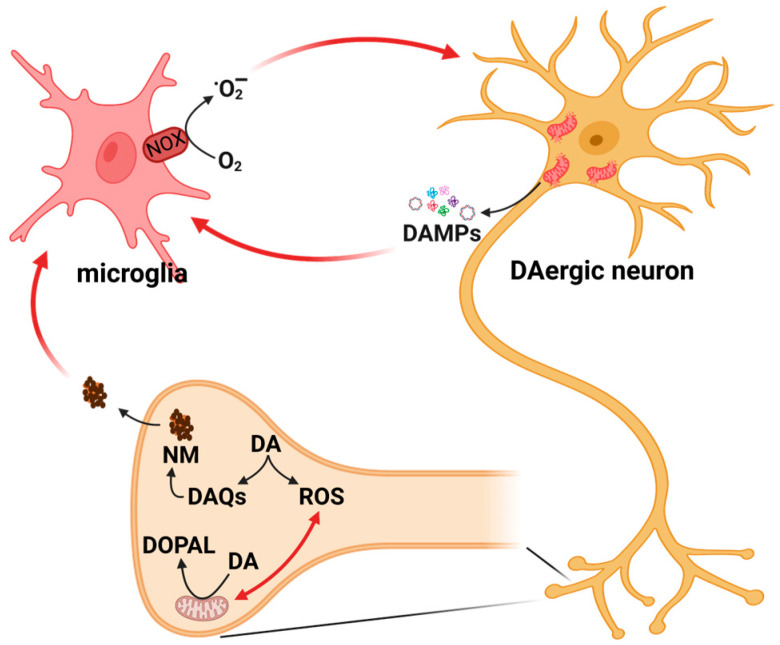
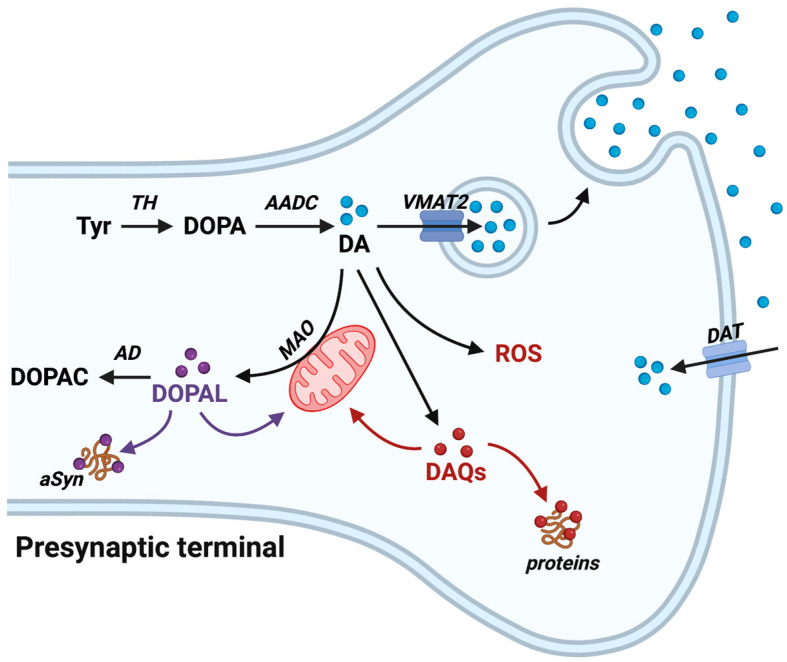
Parkinson's disease (PD) is a chronic neurodegenerative condition affecting more than 1% of people over 65 years old. It is characterized by the preferential degeneration of nigrostriatal dopaminergic neurons, which is responsible for the motor symptoms of PD patients. The pathogenesis of this multifactorial disorder is still elusive, hampering the discovery of therapeutic strategies able to suppress the disease's progression. While redox alterations, mitochondrial dysfunctions, and neuroinflammation are clearly involved in PD pathology, how these processes lead to the preferential degeneration of dopaminergic neurons is still an unanswered question. In this context, the presence of dopamine itself within this neuronal population could represent a crucial determinant. In the present review, an attempt is made to link the aforementioned pathways to the oxidation chemistry of dopamine, leading to the formation of free radical species, reactive quinones and toxic metabolites, and sustaining a pathological vicious cycle.
帕金森病(PD)是一种慢性神经退行性疾病,影响着超过1%的65岁以上人群。其特征是黑质纹状体多巴胺能神经元的选择性退化,这是导致PD患者出现运动症状的原因。这种多因素疾病的发病机制仍然不明,阻碍了能够抑制疾病进展的治疗策略的发现。虽然氧化还原改变、线粒体功能障碍和神经炎症显然与PD病理有关,但这些过程如何导致多巴胺能神经元的选择性退化仍是一个未解之谜。在这种情况下,多巴胺本身在这个神经元群体中的存在可能是一个关键决定因素。在本综述中,我们试图将上述途径与多巴胺的氧化化学联系起来,导致自由基、反应性醌和有毒代谢产物的形成,并维持一个病理性恶性循环。