Department of Neurology, Shuang Ho Hospital, Taipei Medical University, New Taipei City 23561, Taiwan.
Department of Neurology, School of Medicine, College of Medicine, Taipei Medical University, Taipei 11031, Taiwan.
Cells. 2022 Nov 2;11(21):3468. doi: 10.3390/cells11213468.
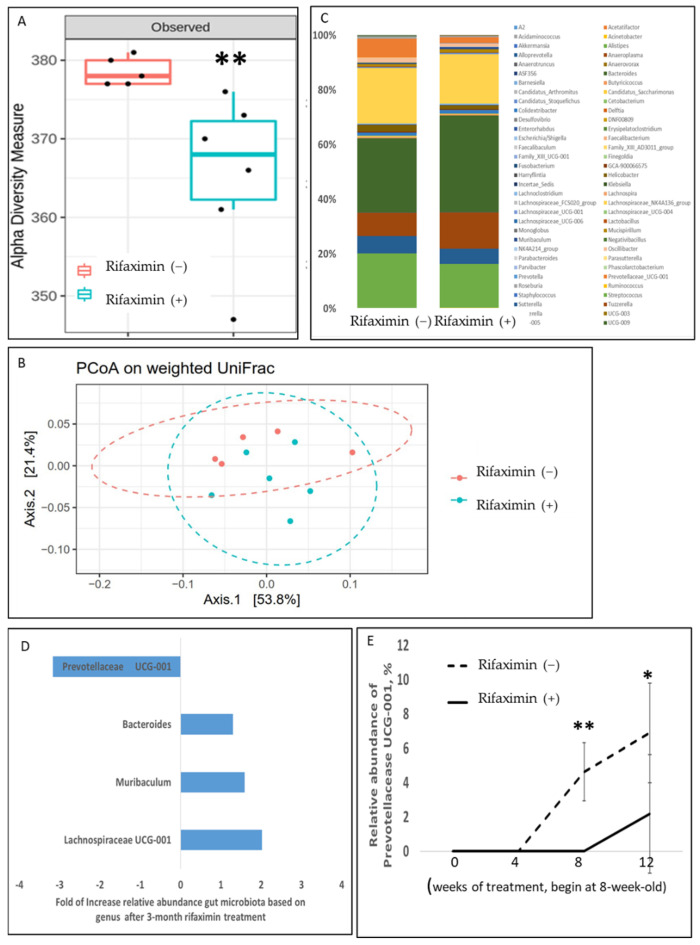
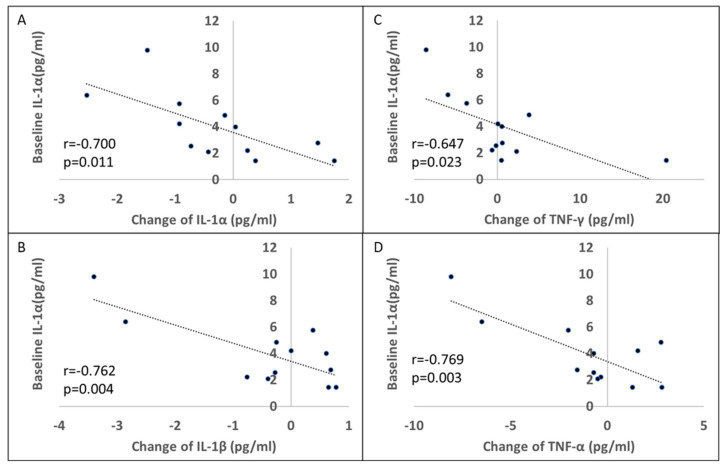
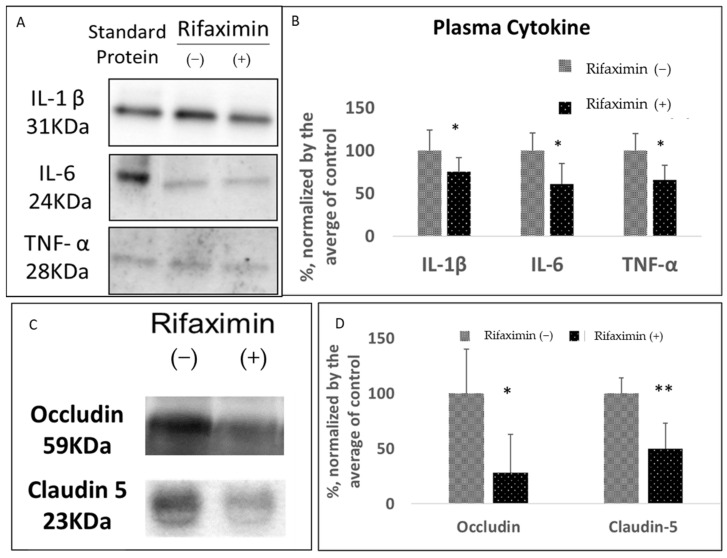
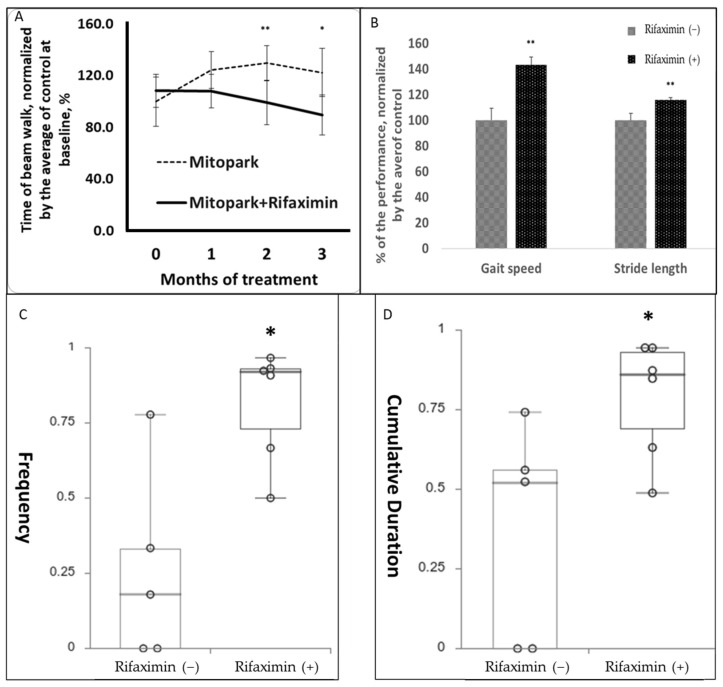
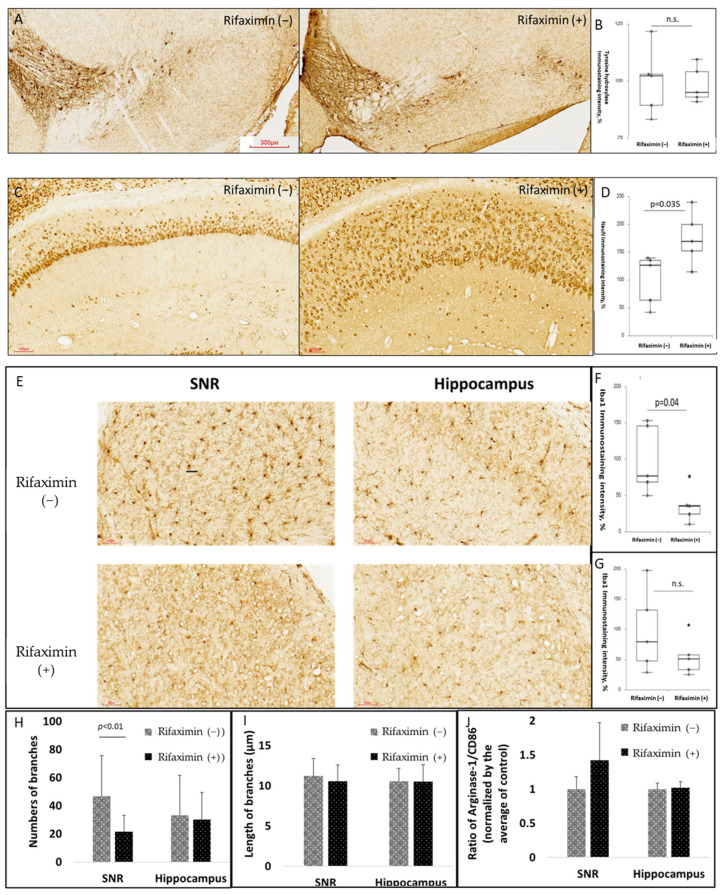
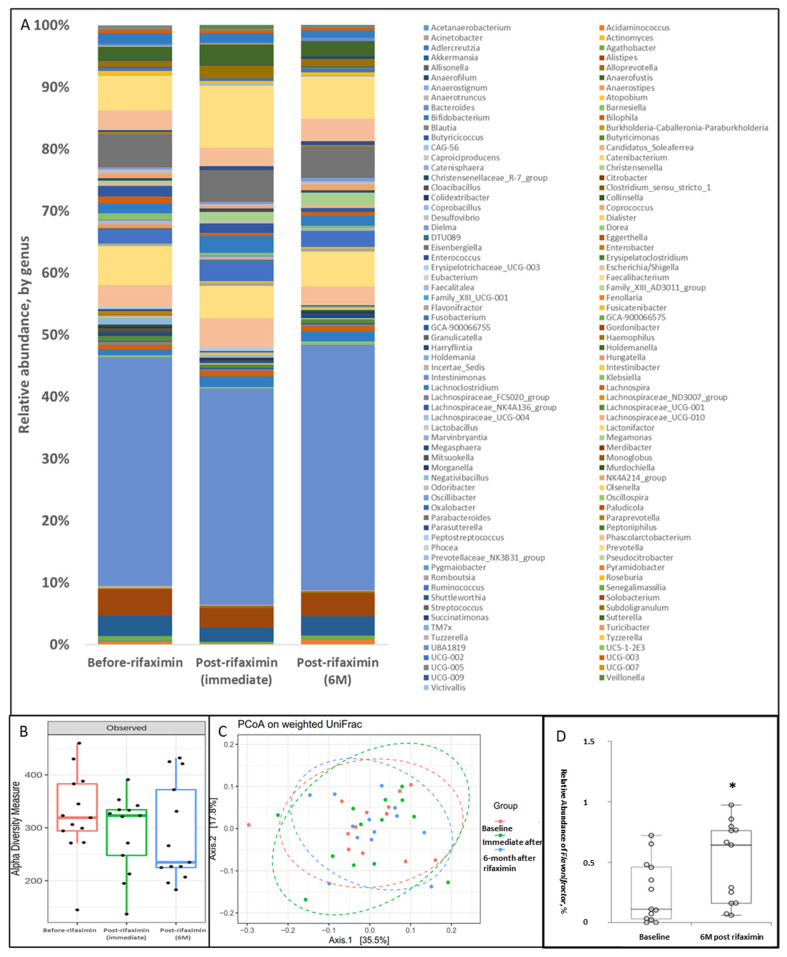
Patients with Parkinson's disease (PD) exhibit distinct gut microbiota, which may promote gut-derived inflammation. Rifaximin is a nonabsorbable antibiotic that can modify gut microbiota. The present study investigated the effect of rifaximin on gut microbiota and inflammation status in PD. The study examined the effect of long-term rifaximin treatment on in vivo transgenic PD mice (MitoPark) and short-term rifaximin treatment on patients with PD. Rifaximin treatment caused a significant change in gut microbiota in the transgenic PD mice; in particular, it reduced the relative abundance of and increased the relative abundance of , , and . Rifaximin treatment attenuated serum interleukin-1β, interleukin-6 and tumor necrosis factor-α, claudin-5 and occludin, which indicated the reduction of systemic inflammation and the protection of the blood-brain barrier integrity. The rifaximin-treated MitoPark mice exhibited better motor and memory performance than did the control mice, with lower microglial activation and increased neuronal survival in the hippocampus. In the patients with PD, 7-day rifaximin treatment caused an increase in the relative abundance of 6 months after treatment, and the change in plasma proinflammatory cytokine levels was negatively associated with the baseline plasma interleukin-1α level. In conclusion, the present study demonstrated that rifaximin exerted a neuroprotective effect on the transgenic PD mice by modulating gut microbiota. We observed that patients with higher baseline inflammation possibly benefited from rifaximin treatment. With consideration for the tolerability and safety of rifaximin, randomized controlled trials should investigate the disease-modification effect of long-term treatment on select patients with PD.
帕金森病(PD)患者表现出独特的肠道微生物群,这可能促进肠道来源的炎症。利福昔明是一种不可吸收的抗生素,可以改变肠道微生物群。本研究调查了利福昔明对 PD 患者肠道微生物群和炎症状态的影响。研究考察了长期利福昔明治疗对体内转基因 PD 小鼠(MitoPark)和短期利福昔明治疗对 PD 患者的影响。利福昔明治疗导致转基因 PD 小鼠的肠道微生物群发生显著变化;特别是,它降低了 的相对丰度,增加了 、 、和 的相对丰度。利福昔明治疗减轻了血清白细胞介素-1β、白细胞介素-6 和肿瘤坏死因子-α、闭合蛋白-5 和闭合蛋白-4,这表明全身炎症减轻和血脑屏障完整性得到保护。与对照组小鼠相比,利福昔明治疗的 MitoPark 小鼠表现出更好的运动和记忆表现,小胶质细胞激活减少,海马神经元存活增加。在 PD 患者中,7 天的利福昔明治疗导致治疗 6 个月后 的相对丰度增加,并且血浆促炎细胞因子水平的变化与基线血浆白细胞介素-1α水平呈负相关。总之,本研究表明,利福昔明通过调节肠道微生物群对转基因 PD 小鼠发挥神经保护作用。我们观察到,基线炎症较高的患者可能受益于利福昔明治疗。考虑到利福昔明的耐受性和安全性,应进行随机对照试验,以调查长期治疗对选择的 PD 患者的疾病修饰作用。