National Institute of Food Science and Technology, University of Agriculture, Faisalabad 38000, Pakistan.
Department of Agriculture and Food Technology, Karakoram International University Gilgit Baltistan, Gilgit 15100, Pakistan.
Molecules. 2022 Oct 24;27(21):7184. doi: 10.3390/molecules27217184.
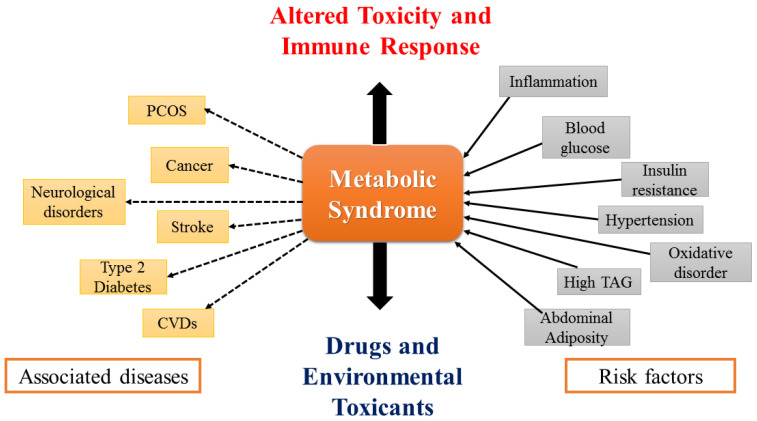
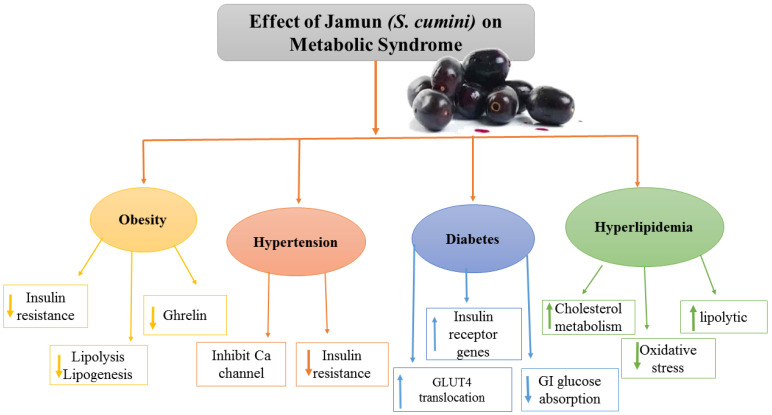
, also called Jamun, or black plum, is an excellent source of bioactive components such as flavonoids, polyphenols, antioxidants, iron, and vitamin C. The Jamun tree is a tropical evergreen blooming plant and is an important medicinal plant from the Myrtaceae family that has been used for a long time in Indian and other traditional medicines across the world. Jamun is mainly cultivated in Asian countries such as Pakistan, India, Sri Lanka, and Bangladesh. Since ancient medicine, it has been utilized to treat a variety of diseases and physiological conditions. Currently, it is mostly used as a medication to treat various metabolic issues, including diabetes, hyperlipidemia, hypertension, obesity, etc. Therefore, Jamun could serve a beneficial role against metabolic syndrome (MS). In this work, the latest available scientific literature on Jamun was collected and the clinical trials investigating its effect on diabetes, hypertension, obesity, and hyperlipidemia were analyzed to find out how Jamun could improve the symptoms and biomarkers of MS. Overall, the results of this study found a significant association of Jamun with the prevention and treatment of these biomarkers of MS. In many studies, Jamun showed pharmacological modifications not only in MS but in many other diseases as well. Currently, its utilization as a folk medicine for the treatment of patients with MS is widely acknowledged. Hence, the findings of a large number of clinical studies confirmed the ameliorating effects of Jamun against MS due to its antioxidation, antidiabetic, anti-inflammation anticarcinogenic, and hyperlipidemic effects. More research is still needed to determine and identify the Jamun compounds and to elucidate their mechanisms of action that are responsible for these astounding bioactive properties and health benefits.
罗望子,又称印度醋栗或黑李,是生物活性成分的极好来源,如类黄酮、多酚、抗氧化剂、铁和维生素 C。罗望子树是一种热带常绿开花植物,是桃金娘科的一种重要药用植物,在印度和世界各地的其他传统医学中已经使用了很长时间。罗望子主要种植在亚洲国家,如巴基斯坦、印度、斯里兰卡和孟加拉国。自古以来,它就被用于治疗各种疾病和生理状况。目前,它主要用作治疗各种代谢问题的药物,包括糖尿病、高血脂、高血压、肥胖症等。因此,罗望子可能对代谢综合征(MS)有有益的作用。在这项工作中,收集了关于罗望子的最新可用科学文献,并分析了研究其对糖尿病、高血压、肥胖症和高血脂影响的临床试验,以了解罗望子如何改善 MS 的症状和生物标志物。总的来说,这项研究的结果发现罗望子与预防和治疗 MS 的这些生物标志物之间存在显著关联。在许多研究中,罗望子不仅在 MS 中,而且在许多其他疾病中都显示出了药理作用的改变。目前,它作为一种民间药物用于治疗 MS 患者已得到广泛认可。因此,大量临床研究的结果证实了罗望子对 MS 的改善作用,这归因于它的抗氧化、抗糖尿病、抗炎、抗癌和降血脂作用。仍需要更多的研究来确定和鉴定罗望子化合物,并阐明其负责这些惊人的生物活性特性和健康益处的作用机制。