Dediu Violeta, Busila Mariana, Tucureanu Vasilica, Bucur Florentina Ionela, Iliescu Florina Silvia, Brincoveanu Oana, Iliescu Ciprian
National Research and Development Institute in Microtechnologies-IMT Bucharest, 126A Erou Iancu Nicolae Street, 077190 Bucharest, Romania.
Centre of Nanostructures and Functional Materials-CNMF, "Dunarea de Jos" University of Galati, Domneasca Street 111, 800201 Galati, Romania.
Nanomaterials (Basel). 2022 Oct 30;12(21):3832. doi: 10.3390/nano12213832.
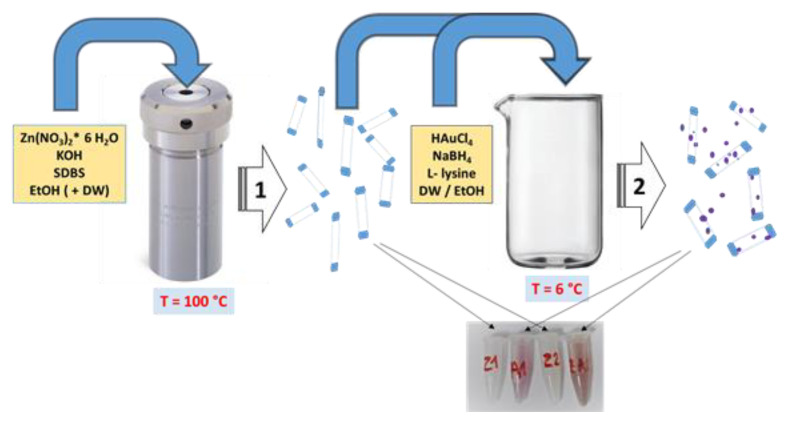
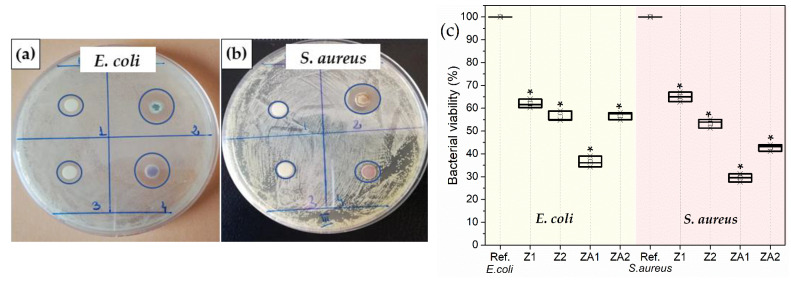
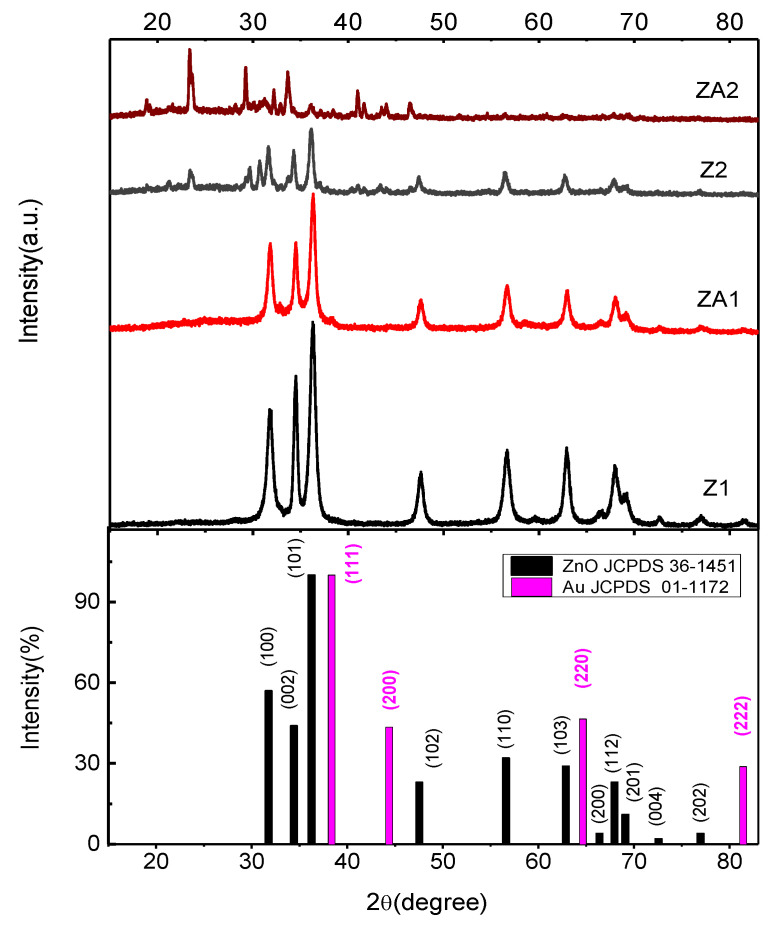
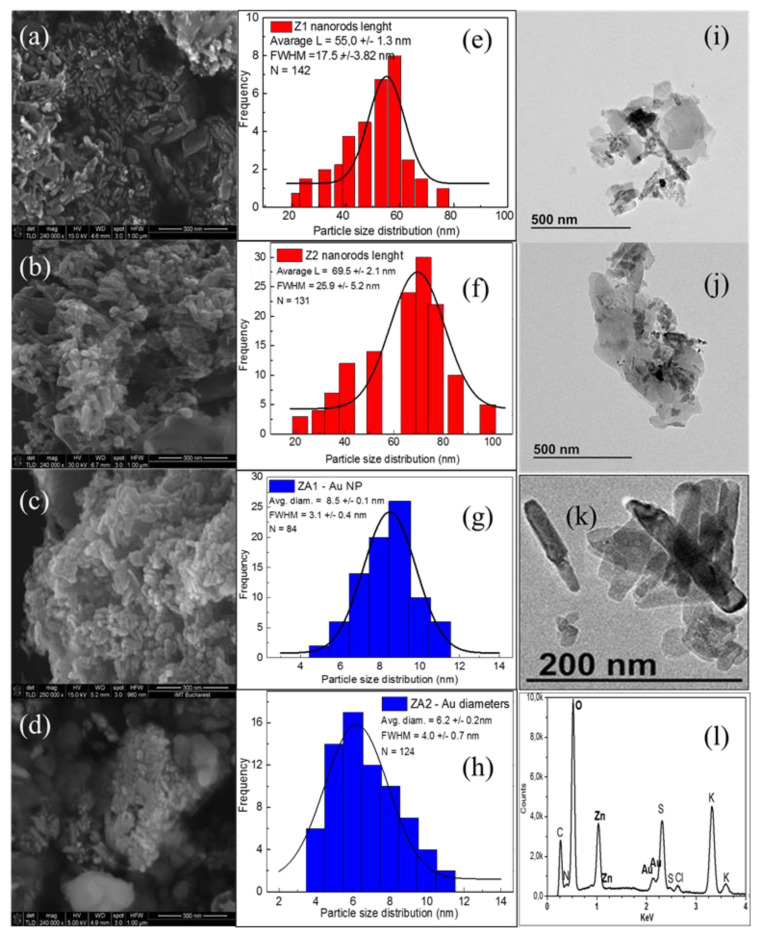
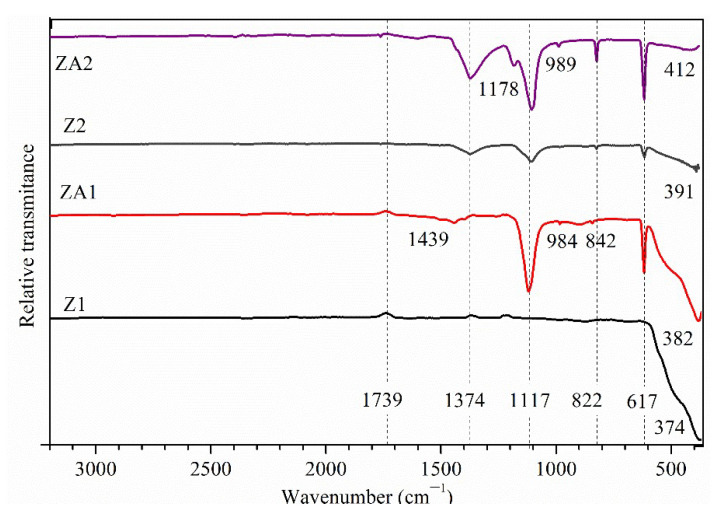
Annually, antimicrobial-resistant infections-related mortality worldwide accelerates due to the increased use of antibiotics during the coronavirus pandemic and the antimicrobial resistance, which grows exponentially, and disproportionately to the current rate of development of new antibiotics. Nanoparticles can be an alternative to the current therapeutic approach against multi-drug resistance microorganisms caused infections. The motivation behind this work was to find a superior antibacterial nanomaterial, which can be efficient, biocompatible, and stable in time. This study evaluated the antibacterial activity of ZnO-based nanomaterials with different morphologies, synthesized through the solvothermal method and further modified with Au nanoparticles through wet chemical reduction. The structure, crystallinity, and morphology of ZnO and ZnO/Au nanomaterials have been investigated with XRD, SEM, TEM, DLS, and FTIR spectroscopy. The antibacterial effect of unmodified ZnO and ZnO/Au nanomaterials against and was investigated through disc diffusion and tetrazolium/formazan (TTC) assays. The results showed that the proposed nanomaterials exhibited significant antibacterial effects on the Gram-positive and Gram-negative bacteria. Furthermore, ZnO nanorods with diameters smaller than 50 nm showed better antibacterial activity than ZnO nanorods with larger dimensions. The antibacterial efficiency against and improved considerably by adding 0.2% (/) Au to ZnO nanorods. The results indicated the new materials' potential for antibacterial applications.
由于在新冠疫情期间抗生素使用增加以及抗菌耐药性呈指数增长,且与新型抗生素当前的研发速度不成比例,全球与抗菌药物耐药性感染相关的死亡率逐年上升。纳米颗粒可作为针对多重耐药微生物引起的感染的当前治疗方法的替代方案。这项工作的动机是找到一种更优质的抗菌纳米材料,它可以高效、生物相容且长期稳定。本研究评估了通过溶剂热法合成并通过湿化学还原法用金纳米颗粒进一步改性的不同形态的氧化锌基纳米材料的抗菌活性。采用X射线衍射(XRD)、扫描电子显微镜(SEM)、透射电子显微镜(TEM)、动态光散射(DLS)和傅里叶变换红外光谱(FTIR)对氧化锌和氧化锌/金纳米材料的结构、结晶度和形态进行了研究。通过纸片扩散法和四氮唑/甲臜(TTC)试验研究了未改性的氧化锌和氧化锌/金纳米材料对[具体细菌名称1]和[具体细菌名称2]的抗菌效果。结果表明,所提出的纳米材料对革兰氏阳性菌和革兰氏阴性菌均表现出显著的抗菌效果。此外,直径小于50纳米的氧化锌纳米棒比尺寸更大的氧化锌纳米棒表现出更好的抗菌活性。向氧化锌纳米棒中添加0.2%(/)的金后,对[具体细菌名称1]和[具体细菌名称2]的抗菌效率有显著提高。结果表明了这些新材料在抗菌应用方面的潜力。