Verma Vishal, Al-Dossari Mawaheb, Singh Jagpreet, Rawat Mohit, Kordy Mohamed G M, Shaban Mohamed
Department of Nanotechnology, Sri Guru Granth Sahib World University, Fatehgarh Sahib 140406, India.
Department of Physics, Dhahran Aljanoub, King Khalid University, Abha 61421, Saudi Arabia.
Polymers (Basel). 2022 Apr 1;14(7):1444. doi: 10.3390/polym14071444.
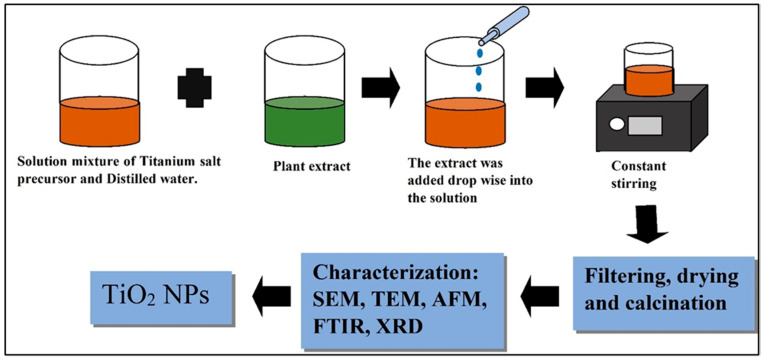
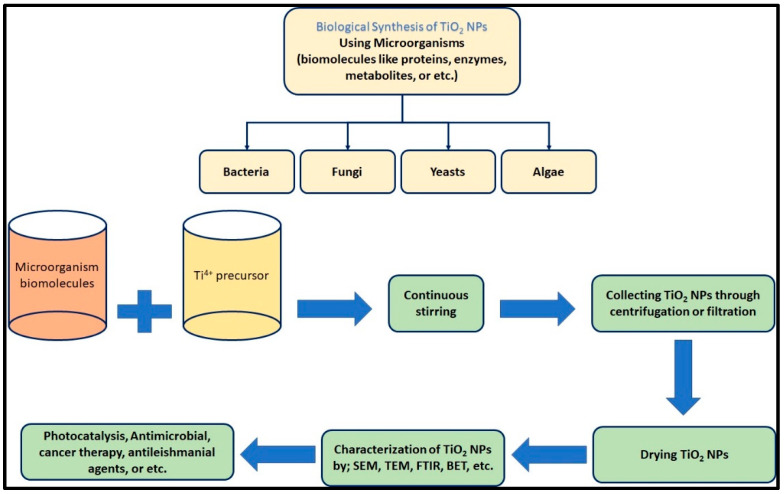
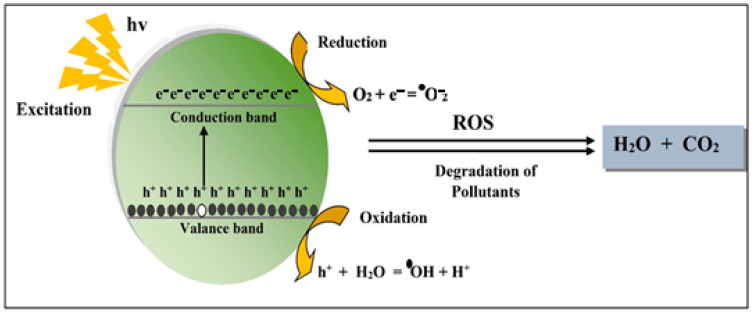
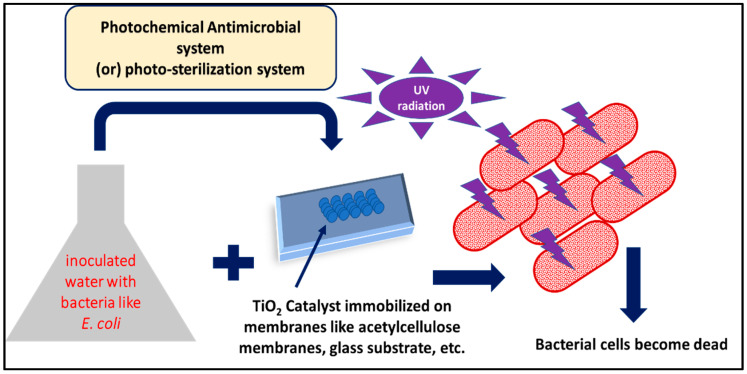
Nanotechnology is a fast-expanding area with a wide range of applications in science, engineering, health, pharmacy, and other fields. Nanoparticles (NPs) are frequently prepared via a variety of physical and chemical processes. Simpler, sustainable, and cost-effective green synthesis technologies have recently been developed. The synthesis of titanium dioxide nanoparticles (TiO NPs) in a green/sustainable manner has gotten a lot of interest in the previous quarter. Bioactive components present in organisms such as plants and bacteria facilitate the bio-reduction and capping processes. The biogenic synthesis of TiO NPs, as well as the different synthesis methods and mechanistic perspectives, are discussed in this review. A range of natural reducing agents including proteins, enzymes, phytochemicals, and others, are involved in the synthesis of TiO NPs. The physics of antibacterial and photocatalysis applications were also thoroughly discussed. Finally, we provide an overview of current research and future concerns in biologically mediated TiO nanostructures-based feasible platforms for industrial applications.
纳米技术是一个快速发展的领域,在科学、工程、健康、药学和其他领域有着广泛的应用。纳米颗粒(NPs)通常通过各种物理和化学过程制备。最近已经开发出更简单、可持续且具有成本效益的绿色合成技术。上个季度,以绿色/可持续方式合成二氧化钛纳米颗粒(TiO NPs)受到了广泛关注。植物和细菌等生物体中存在的生物活性成分促进了生物还原和封端过程。本文综述了TiO NPs的生物合成以及不同的合成方法和机理观点。一系列天然还原剂,包括蛋白质、酶、植物化学物质等,参与了TiO NPs的合成。还深入讨论了抗菌和光催化应用的物理原理。最后,我们概述了基于生物介导的TiO纳米结构的可行平台在工业应用方面的当前研究和未来关注点。