College of Pharmacy and Institute of Pharmaceutical Sciences, CHA University, Seongnam 13488, Korea.
Nutrients. 2022 Nov 3;14(21):4644. doi: 10.3390/nu14214644.
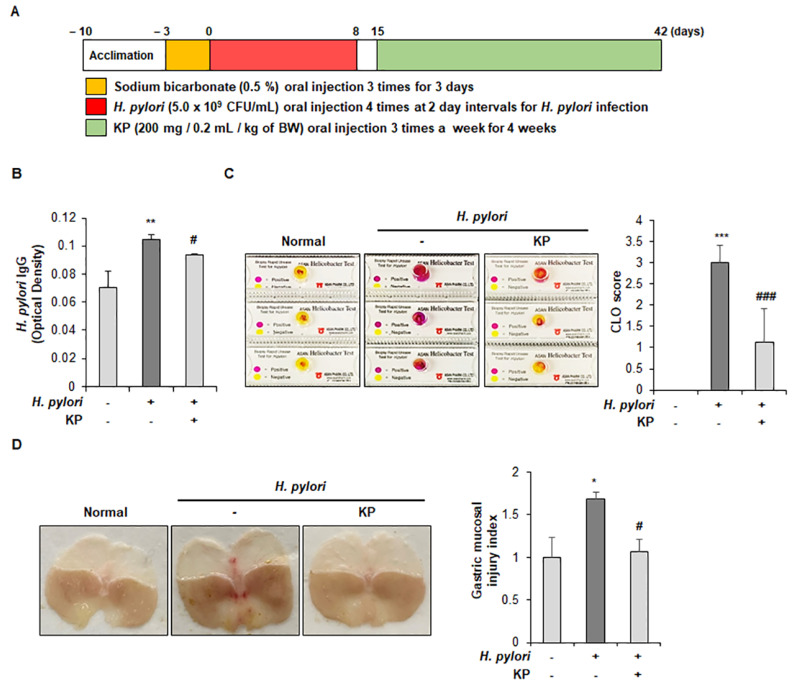
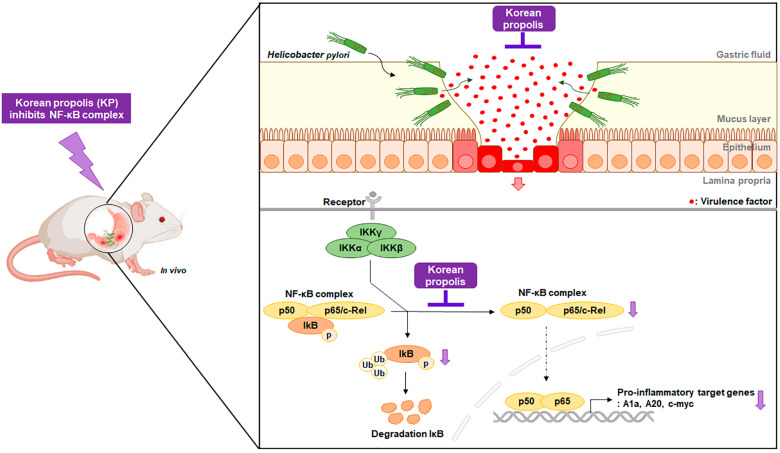
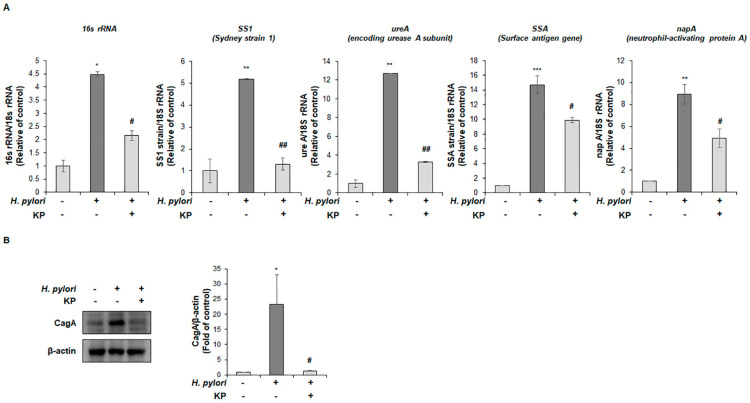
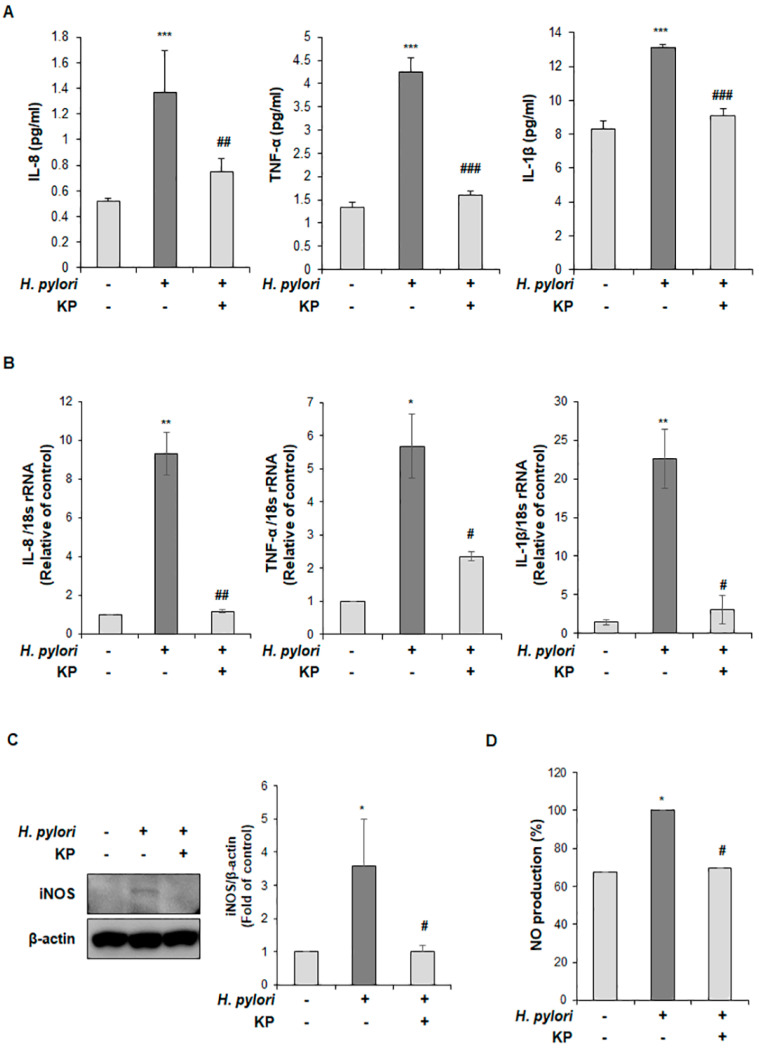
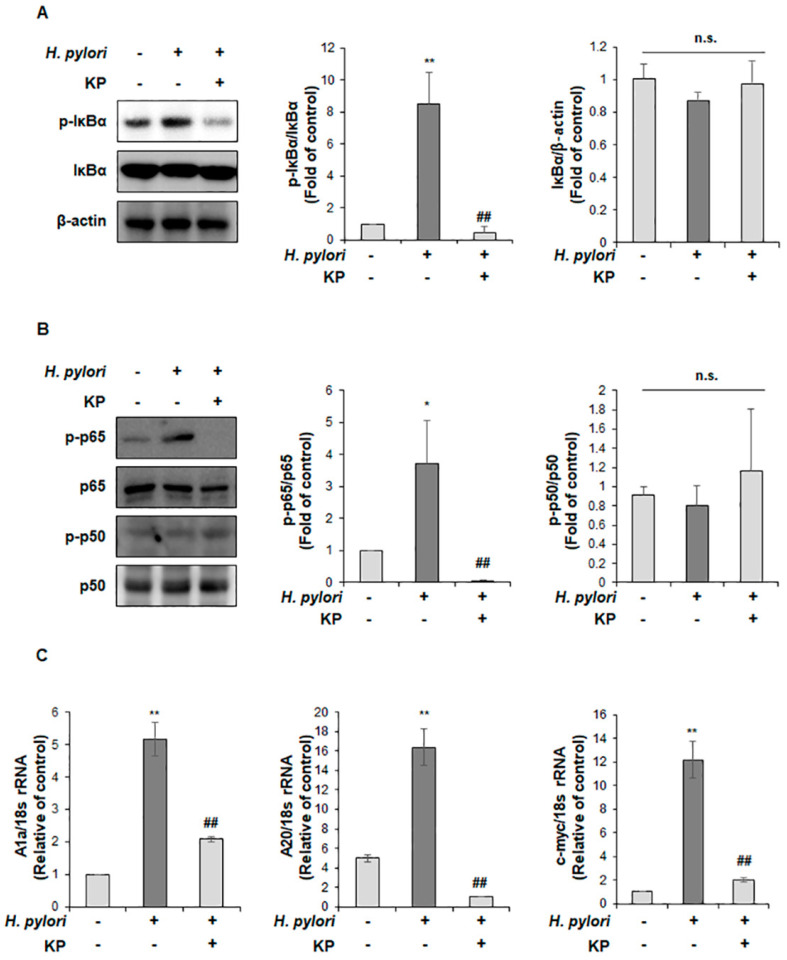
Propolis, a natural resinous substance obtained from a variety of buds and plants, has been reported to possess various biological functions. Several recent studies have demonstrated the inhibitory effects of propolis on the growth of Helicobacter pylori (H. pylori) in vitro; however, current research efforts on Korean propolis (KP) remain insufficient especially in vivo. Our study aims to investigate the anti-inflammatory effect and molecular mechanism of KP on mouse gastric mucosa during H. pylori infection. We examined an in vivo H. pylori-induced gastric mucosal injury mice model. We found that KP inhibited the growth of H. pylori and attenuated the expression of H. pylori virulence factors such as cytotoxin-associated gene A, encoding urease A subunit, surface antigen gene and neutrophil-activating protein A. Moreover, KP reduced both gross lesions and pathological scores in H. pylori-challenged mice. In addition, KP markedly restrained the production of pro-inflammatory cytokines and nitric oxide levels compared with an untreated H. pylori-infected group. In particular, we found that KP repressed the phosphorylation of IκBα and NF-κB p65 subunit, and subsequently suppressed their downstream target genes. Taken together, these findings demonstrate the beneficial effects of KP on inflammation through the inhibition of NF-κB signaling as well as inhibition of H. pylori growth in a mouse model infected with H. pylori. This suggests the potential application of KP as a natural supplement for patient’s suffering from gastric mucosal injury caused by H. pylori infection.
蜂胶,一种从各种芽和植物中提取的天然树脂状物质,据报道具有多种生物功能。最近的几项研究表明,蜂胶对体外幽门螺杆菌(H. pylori)的生长具有抑制作用;然而,目前对韩国蜂胶(KP)的研究仍不够充分,特别是在体内研究方面。我们的研究旨在探讨 KP 在 H. pylori 感染时对小鼠胃黏膜的抗炎作用及其分子机制。我们建立了体内 H. pylori 诱导的胃黏膜损伤小鼠模型。结果发现,KP 抑制了 H. pylori 的生长,并减弱了 H. pylori 毒力因子如细胞毒素相关基因 A(编码尿素酶 A 亚单位)、表面抗原基因和中性粒细胞激活蛋白 A 的表达。此外,KP 还减轻了 H. pylori 感染小鼠的大体损伤和病理评分。此外,与未经处理的 H. pylori 感染组相比,KP 明显抑制了促炎细胞因子和一氧化氮水平的产生。特别是,我们发现 KP 抑制了 IκBα 和 NF-κB p65 亚基的磷酸化,从而抑制了它们的下游靶基因。综上所述,这些结果表明 KP 通过抑制 NF-κB 信号通路以及抑制 H. pylori 在感染 H. pylori 的小鼠模型中的生长,对炎症具有有益的作用。这表明 KP 作为一种天然补充剂,可能应用于因 H. pylori 感染导致胃黏膜损伤的患者。