National Center for Clinical Laboratories, Institute of Geriatric Medicine, Chinese Academy of Medical Sciences, Beijing Hospital/National Center of Gerontology, PR China; Chinese Academy of Medical Sciences & Peking Union Medical College, Beijing, PR China; Beijing Engineering Research Center of Laboratory Medicine, Beijing Hospital, Beijing, PR China.
National Center for Clinical Laboratories, Institute of Geriatric Medicine, Chinese Academy of Medical Sciences, Beijing Hospital/National Center of Gerontology, PR China; Chinese Academy of Medical Sciences & Peking Union Medical College, Beijing, PR China; Beijing Engineering Research Center of Laboratory Medicine, Beijing Hospital, Beijing, PR China.
J Adv Res. 2023 Aug;50:69-82. doi: 10.1016/j.jare.2022.10.011. Epub 2022 Oct 30.
Early detection of pathogen-associated diseases are critical for effective treatment. Rapid, specific, sensitive, and cost-effective diagnostic technologies continue to be challenging to develop. The current gold standard for pathogen detection, polymerase chain reaction technology, has limitations such as long operational cycles, high cost, and high technician and instrumentation requirements.
This review examines and highlights the technical advancements of CRISPR-Cas in pathogen detection and provides an outlook for future development, multi-application scenarios, and clinical translation.
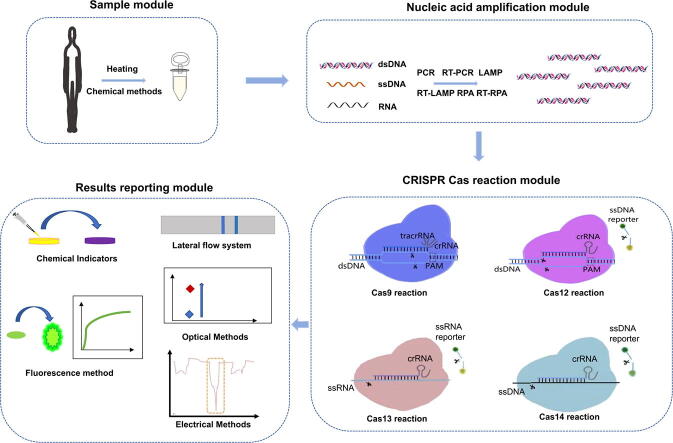
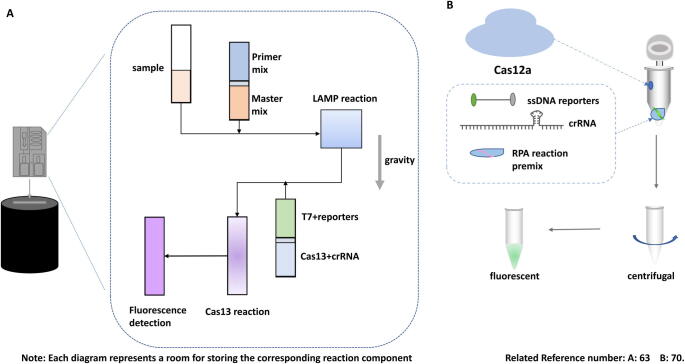
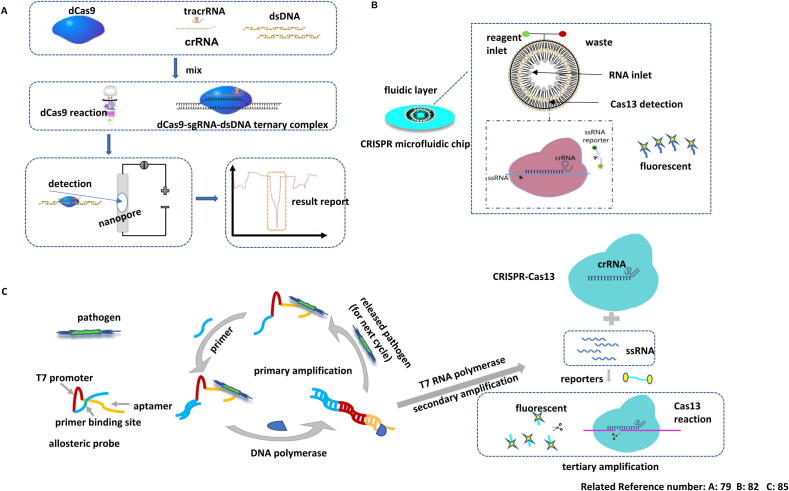
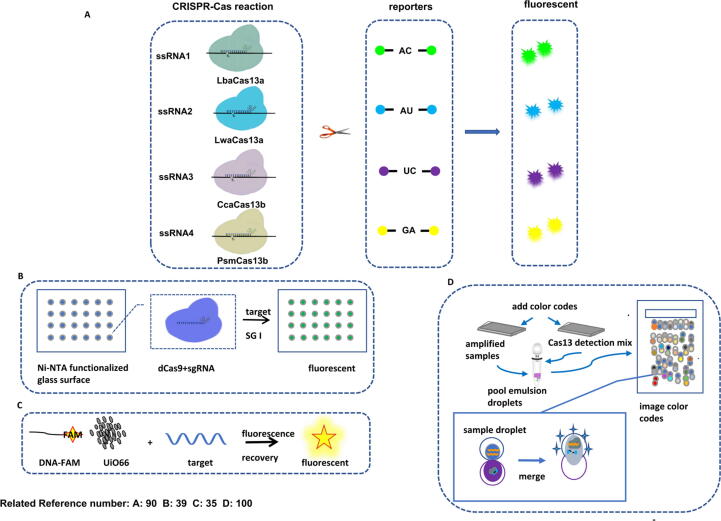
Approaches enabling clinical detection of pathogen nucleic acids that are highly sensitive, specific, cheap, and portable are necessary. CRISPR-Cas9 specificity in targeting nucleic acids and "collateral cleavage" activity of CRISPR-Cas12/Cas13/Cas14 show significant promise in nucleic acid detection technology. These methods have a high specificity, versatility, and rapid detection cycle. In this paper, CRISPR-Cas-based detection methods are discussed in depth. Although CRISPR-Cas-mediated pathogen diagnostic solutions face challenges, their powerful capabilities will pave the way for ideal diagnostic tools.
早期发现与病原体相关的疾病对于有效治疗至关重要。快速、特异、敏感且具有成本效益的诊断技术仍难以开发。目前病原体检测的金标准聚合酶链反应技术存在操作周期长、成本高、对技术人员和仪器要求高等局限性。
本综述考察并强调了 CRISPR-Cas 在病原体检测中的技术进展,并对未来的发展、多应用场景和临床转化进行了展望。
需要开发高度敏感、特异、廉价和便携的临床检测病原体核酸的方法。CRISPR-Cas9 在靶向核酸方面的特异性和 CRISPR-Cas12/Cas13/Cas14 的“ collateral cleavage ”活性在核酸检测技术方面显示出巨大的应用潜力。这些方法具有高特异性、多功能性和快速检测周期。本文深入讨论了基于 CRISPR-Cas 的检测方法。尽管 CRISPR-Cas 介导的病原体诊断解决方案面临挑战,但它们强大的功能将为理想的诊断工具铺平道路。