Department of General Paediatrics, Asklepios Clinic Sankt Augustin, Sankt Augustin, Germany.
Department of Paediatric and Adolescents Medicine, University Hospital of Cologne, Cologne, Germany.
Pediatr Rheumatol Online J. 2022 Nov 16;20(1):100. doi: 10.1186/s12969-022-00755-x.
Juvenile idiopathic arthritis (JIA) describes heterogenous categories of chronic inflammatory rheumatic conditions of unknown origin in children and adolescents. Epidemiological data in the literature vary, depending on geographic location, ethnicity and the case definition used. We evaluated epidemiology, especially that of the categories defined by the International League of Associations for Rheumatology (ILAR).
Using data from two different longitudinal health claims databases (WIG2 and InGef) from January 1, 2013 to December 31, 2019, we looked at patients aged 2 to 15 years old with at least one main inpatient or two secondary inpatient/verified outpatient ICD-10 diagnoses in at least two different quarters within one calendar year. We calculated prevalence and incidence (per 100,000 patients) and extrapolated data to the entire German population, looking at differences in gender and age groups. Additionally, we collected data on "other" not necessary comorbidities in our JIA patient population.
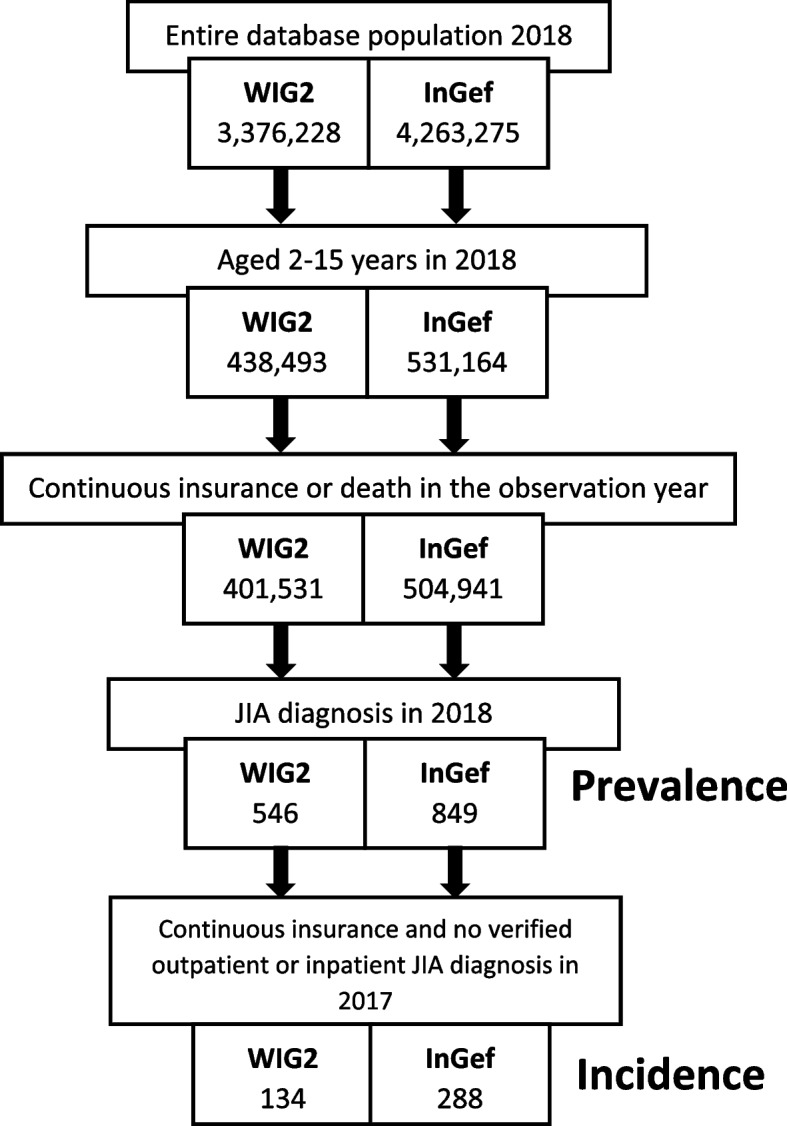
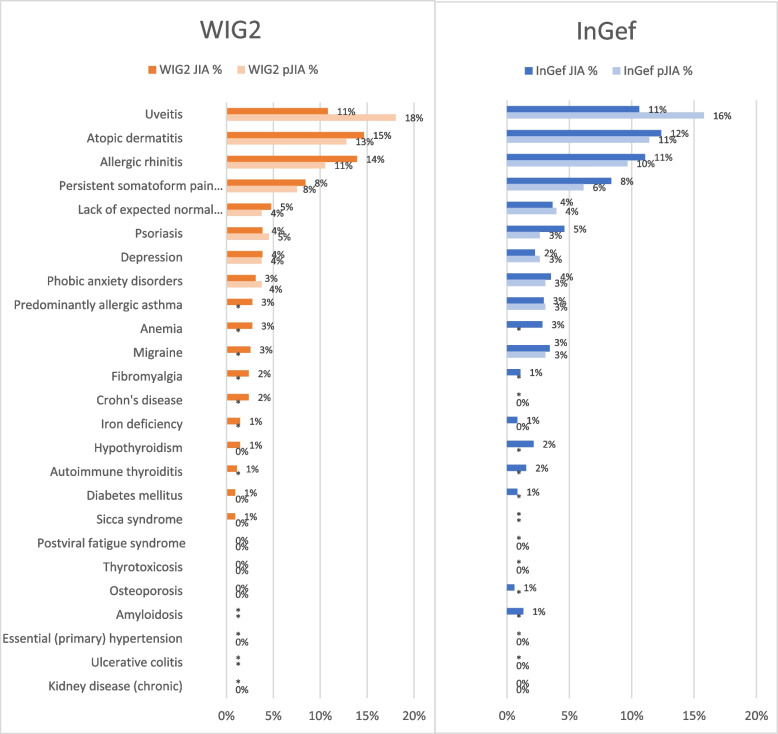
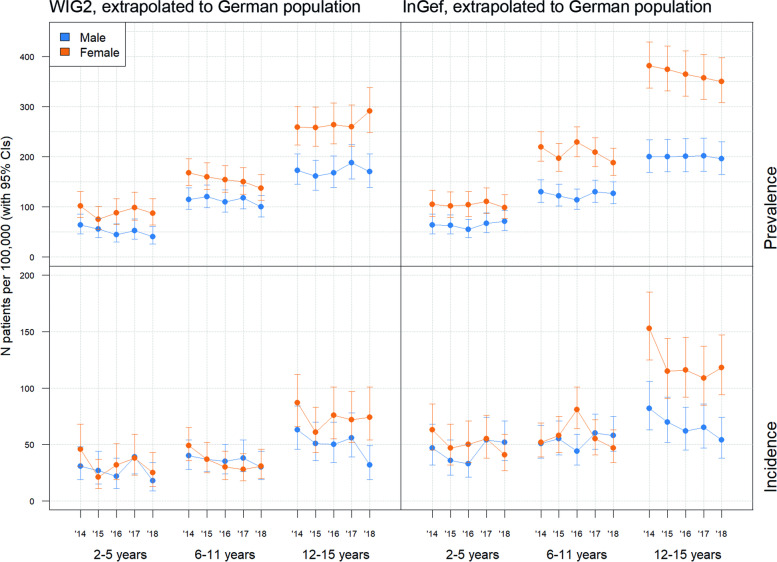
Of the 3-4 million patients in the databases (respectively) in 2018, we found a total of 546 (WIG2) and 849 (InGef) patients that met our JIA case definition, with an incidence of 34 (29-41) and 60 (53-67) and prevalence of 133 (122-145) and 168 (157-179). Both incidence and prevalence throughout the age range were mostly higher in females than males, however the difference between females and males increased with increasing age. Of the ILAR categories, oligoarthritis was the most prevalent (70 and 91 per 100,000), with about half of our JIA patients in this category, followed by undifferentiated arthritis (49 and 56 cases per 100,000) and rheumatoid factor negative (RF-) (31 and 39 per 100,000). Incidence in 2018 was the highest in these three categories. Atopic dermatitis, vasomotor and allergic rhinitis, and uveitis were the pre-defined comorbidities seen most often in both databases.
This study provides current incidence and prevalence JIA data in Germany, contributing to knowledge on burden of disease and tools for healthcare planning.
幼年特发性关节炎(JIA)描述了儿童和青少年中病因不明的异质性慢性炎症性风湿性疾病类别。文献中的流行病学数据因地理位置、种族和使用的病例定义而异。我们评估了流行病学,特别是国际风湿病协会联盟(ILAR)定义的类别。
使用来自两个不同纵向健康索赔数据库(WIG2 和 InGef)的数据,时间范围为 2013 年 1 月 1 日至 2019 年 12 月 31 日,我们观察了至少 2 个不同季度内至少有 1 个主要住院或 2 个次要住院/经核实的门诊 ICD-10 诊断的 2 至 15 岁患者。我们计算了发病率(每 10 万患者)和患病率(每 10 万患者),并将数据外推至整个德国人口,观察了性别和年龄组之间的差异。此外,我们还收集了我们 JIA 患者人群中“其他”非必需合并症的数据。
在 2018 年的数据库(分别为)中,我们共发现 546 例(WIG2)和 849 例(InGef)符合 JIA 病例定义的患者,发病率为 34(29-41)和 60(53-67),患病率为 133(122-145)和 168(157-179)。整个年龄范围内,女性的发病率和患病率均高于男性,但随着年龄的增长,女性与男性之间的差异增加。在 ILAR 类别中,寡关节炎最为常见(每 10 万人中有 70 人和 91 人),约有一半的 JIA 患者属于此类,其次是未分化关节炎(每 10 万人中有 49 人和 56 人)和类风湿因子阴性(RF-)(每 10 万人中有 31 人和 39 人)。2018 年这三类的发病率最高。特应性皮炎、血管舒缩性和过敏性鼻炎以及葡萄膜炎是两个数据库中最常见的预先定义的合并症。
本研究提供了德国当前 JIA 的发病率和患病率数据,有助于了解疾病负担和医疗保健规划工具。