Department of Otorhinolaryngology, Head and Neck Surgery, Keio University School of Medicine, 35 Shinanomachi, Shinjuku-Ku, Tokyo, 160-8582, Japan.
Department of Physiology, Keio University School of Medicine, 35 Shinanomachi, Shinjuku-Ku, Tokyo, 160-8582, Japan.
Sci Rep. 2022 Nov 17;12(1):19811. doi: 10.1038/s41598-022-24380-6.
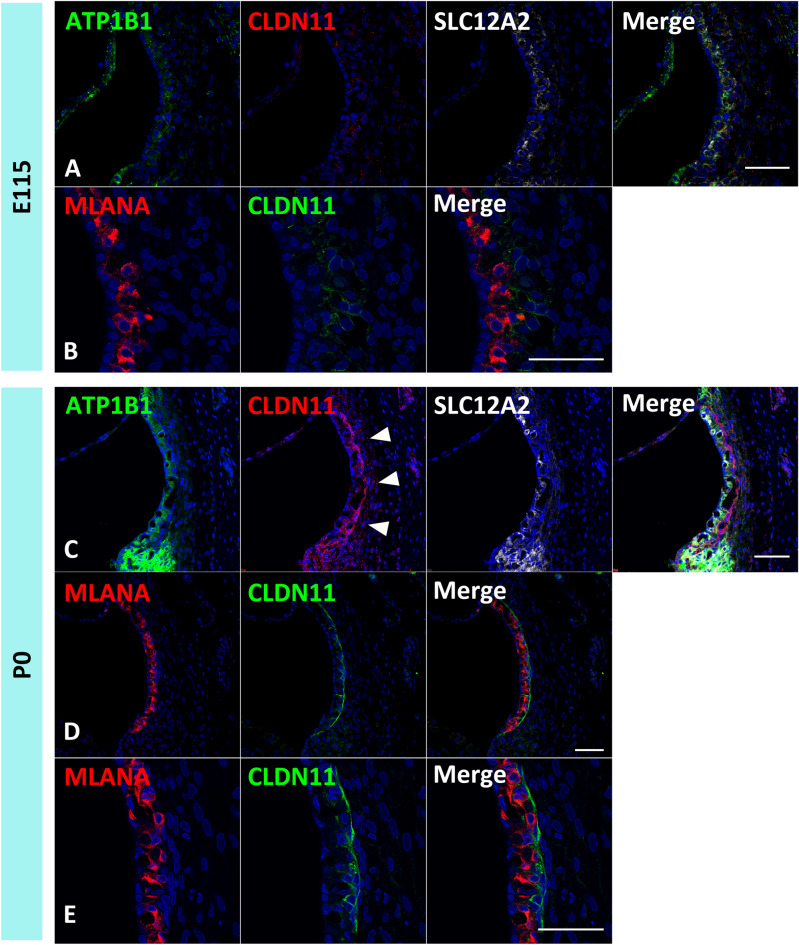
Stria vascularis is a structure that generates potassium gradients in the cochlea, which is vital for hair cells to convert mechanical sound waves into electrical pulses. The precise development of the stria vascularis and subsequent generation of endocochlear potential are thus essential for hearing. Understanding the development of the stria vascularis is valuable for studying hearing loss caused by aging or genetics and designing regenerative therapy. Although inter-species differences have been reported between rodents and humans, most of our current knowledge regarding cochlear development has been obtained from rodent models because of the difficulty in using human fetal samples in this field of research. Therefore, we investigated the development of the cochlear stria vascularis in the common marmoset (Callithrix jacchus), a small monkey species native to the New World. Our study confirms that stria vascularis development in the common marmoset is similar to that in humans and is suitable for furthering our understanding of human cochlear development. The time course established in this report will aid in studying the primate-specific developmental biology of the inner ear, which could eventually lead to new treatment strategies for hearing loss in humans.
血管纹是耳蜗中产生钾离子梯度的结构,对于毛细胞将机械声波转化为电脉冲至关重要。因此,血管纹的精确发育和随后的内淋巴电位的产生对于听力至关重要。了解血管纹的发育对于研究因衰老或遗传因素引起的听力损失以及设计再生治疗方法具有重要意义。尽管已经报道了啮齿动物和人类之间的种间差异,但由于在该研究领域中使用人胎样本较为困难,我们目前关于耳蜗发育的大部分知识都是从啮齿动物模型中获得的。因此,我们研究了原产于新大陆的小型猴种——普通狨猴(Callithrix jacchus)的耳蜗血管纹的发育情况。我们的研究证实,普通狨猴的血管纹发育与人相似,适合进一步了解人类耳蜗的发育。本报告中建立的时间进程将有助于研究内耳的灵长类特异性发育生物学,最终可能为人类听力损失提供新的治疗策略。