Institute for Parasitology, Centre for Infection Medicine, University of Veterinary Medicine Hannover, Buenteweg 17, 30559, Hanover, Germany.
Department of Safety and Quality of Meat, Max Rubner-Institut, Federal Research Institute of Nutrition and Food, E.-C.-Baumann-Straße 20, 95326, Kulmbach, Germany.
Parasit Vectors. 2022 Nov 17;15(1):433. doi: 10.1186/s13071-022-05535-w.
The porcine roundworm Ascaris suum impairs feed conversion and weight gain, but its effects on intestinal microbiota remain largely unexplored.
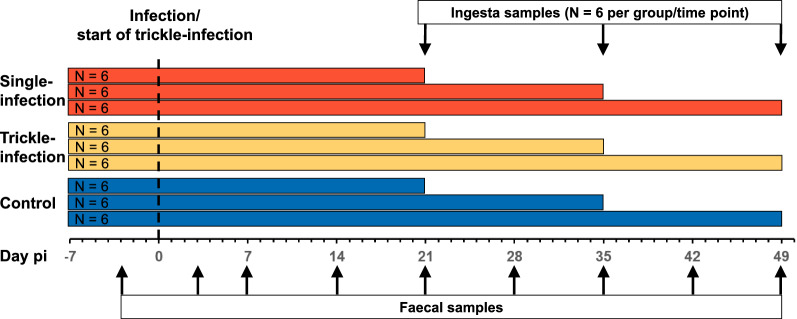
Modulation of the intestinal microbiota was assessed in pigs that were infected once with 10,000 A. suum eggs and pigs that received a trickle infection (1000 eggs/day over 10 days), compared with a non-infected control group. Six pigs each were sacrificed per group at days 21, 35 and 49 post-infection (p.i.). Faecal samples taken weekly until slaughter and ingesta samples from different intestinal compartments were subjected to next-generation sequencing of the bacterial 16S rRNA gene.
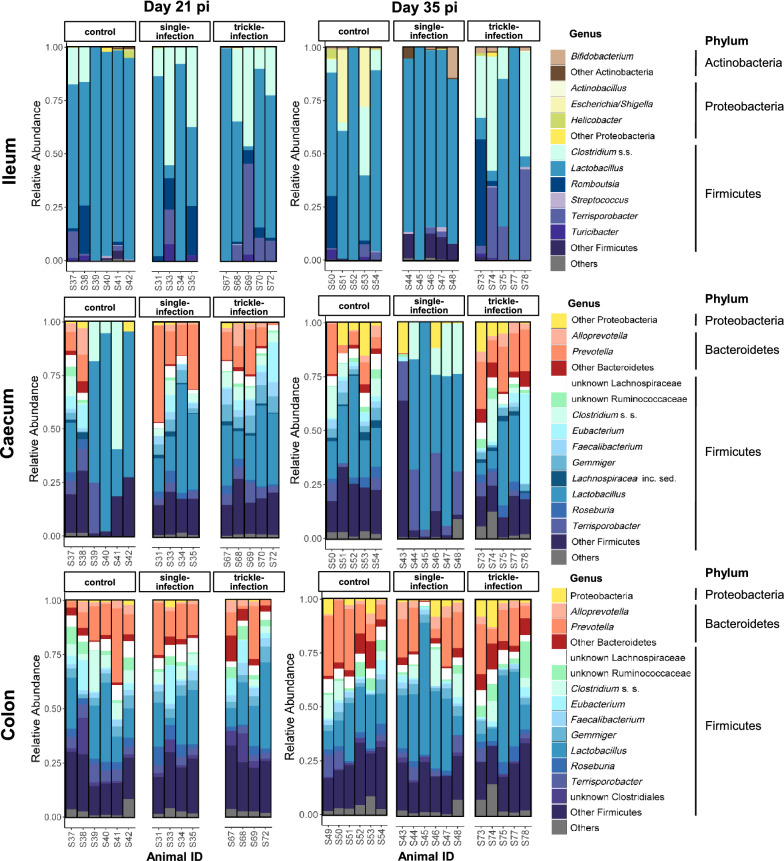
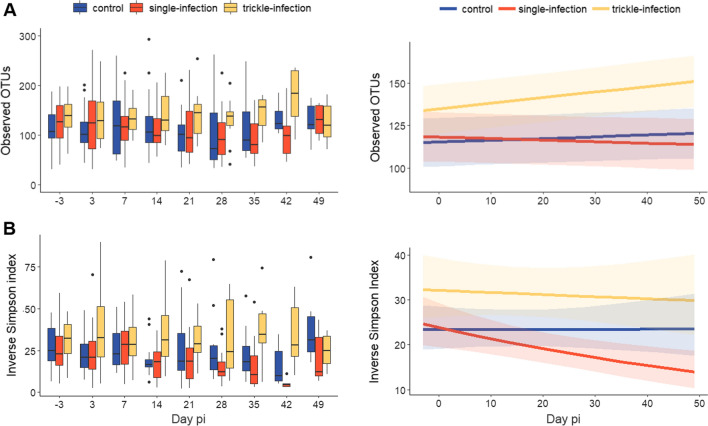
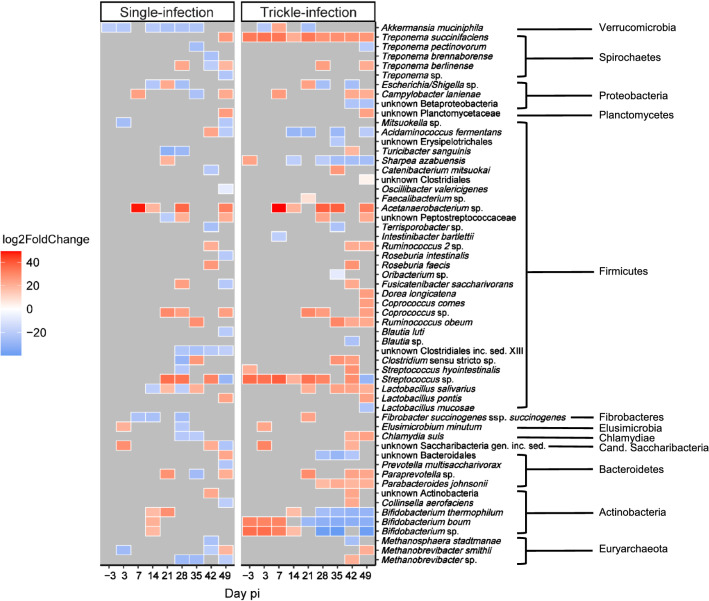
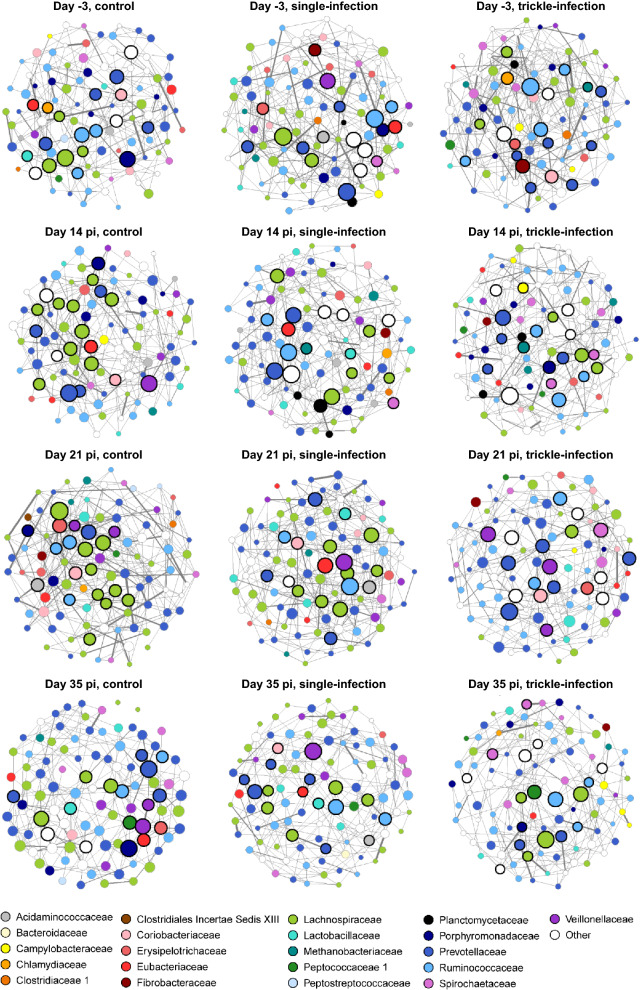
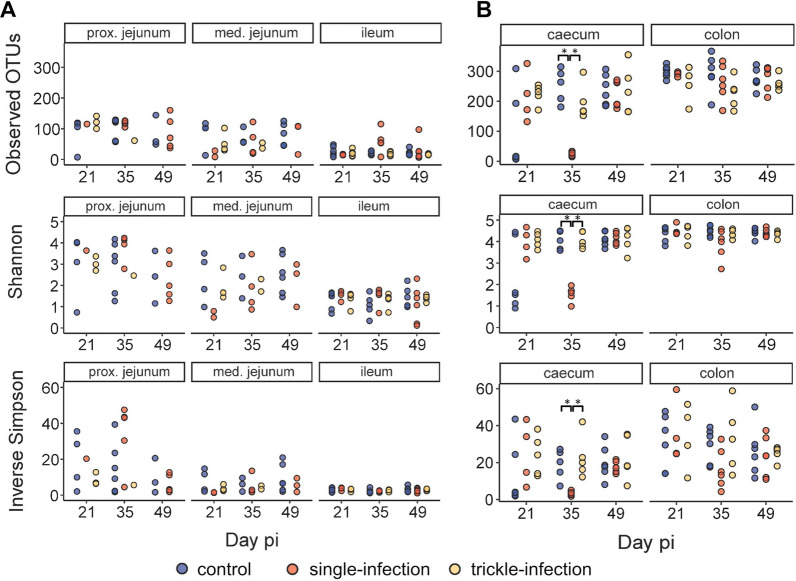
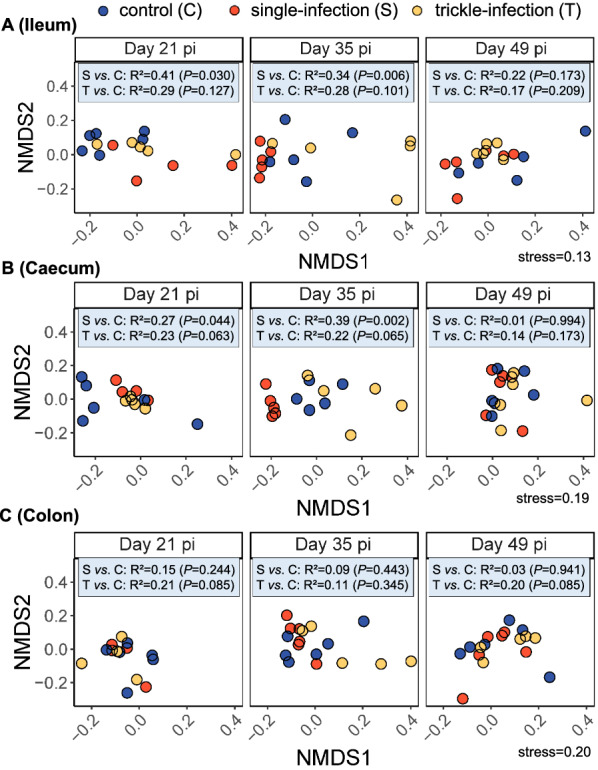
The results revealed marked differences between the single- and the trickle-infected group. Single infection caused a remarkable but transient decrease in microbial diversity in the caecum, which was not observed in the trickle-infected group. However, an increase in short-chain fatty acid-producing genera in the caecum on day 21 p.i., which shifted to a decrease on day 35 p.i., was common to both groups, possibly related to changes in excretory-secretory products following the parasite's final moult. Faecal microbial interaction networks were more similar between the single-infected and control group than the trickle-infected group. In addition, a lower degree of similarity over time indicated that A. suum trickle infection prevented microbiota stabilization.
These different patterns may have important implications regarding the comparability of experimental infections with natural scenarios characterized by continuous exposure, and should be confirmed by further studies.
猪蛔虫 Ascaris suum 会降低饲料转化率和体重增加,但它对肠道微生物群的影响在很大程度上仍未得到探索。
通过对感染了 10000 个 A. suum 卵的猪和接受滴注感染(1000 个卵/天,持续 10 天)的猪与未感染对照组的猪进行肠道微生物群的调节评估。每组各有 6 头猪在感染后第 21、35 和 49 天被处死。在屠宰前每周采集粪便样本,采集不同肠道部位的食糜样本,进行细菌 16S rRNA 基因的下一代测序。
结果显示,单次感染组和滴注感染组之间存在显著差异。单次感染导致盲肠微生物多样性显著但短暂下降,而滴注感染组未观察到这种情况。然而,在感染后第 21 天,短链脂肪酸产生菌在盲肠中的增加,在感染后第 35 天减少,这在两组中是共同的,可能与寄生虫最后蜕皮后分泌-排泄产物的变化有关。感染后第 21 天,单感染组和对照组之间的粪便微生物相互作用网络比滴注感染组更相似。此外,随着时间的推移,相似性降低表明 A. suum 滴注感染阻止了微生物群的稳定。
这些不同的模式可能对实验感染与连续暴露的自然情况的可比性具有重要意义,应通过进一步研究加以证实。