Department of Neurology, Faculty of Medicine, Heinrich-Heine-University, Düsseldorf, Germany.
Epilepsy Research Center, Department of Neurosurgery, Westfälische Wilhelms-Universität Münster, Domagkstr. 11, 48149, Münster, Germany.
J Neuroinflammation. 2022 Nov 19;19(1):275. doi: 10.1186/s12974-022-02636-2.
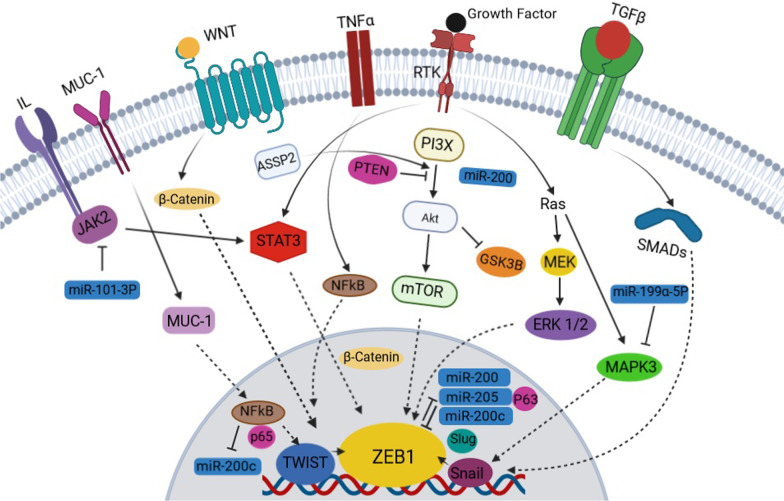
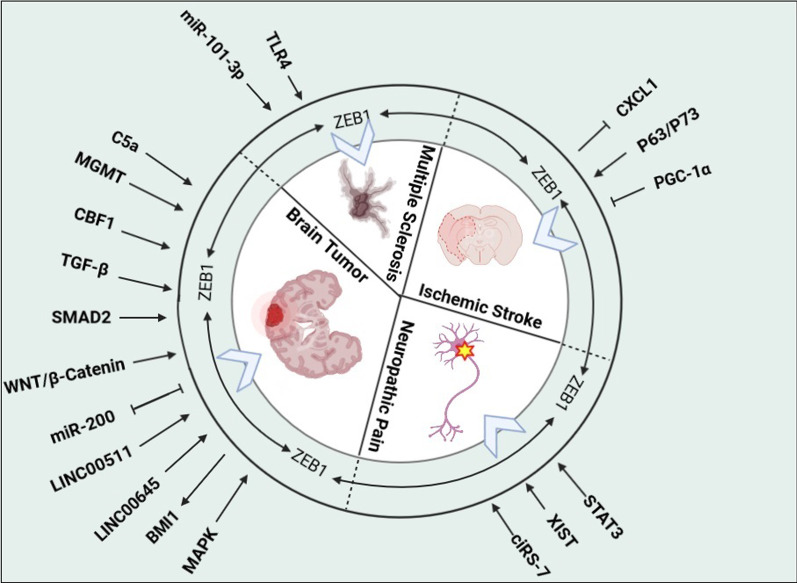
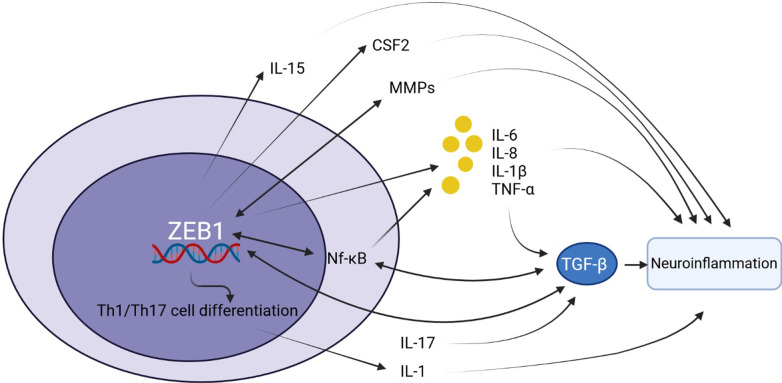
Zinc finger E-box binding homeobox 1 (ZEB1) is a master modulator of the epithelial-mesenchymal transition (EMT), a process whereby epithelial cells undergo a series of molecular changes and express certain characteristics of mesenchymal cells. ZEB1, in association with other EMT transcription factors, promotes neuroinflammation through changes in the production of inflammatory mediators, the morphology and function of immune cells, and multiple signaling pathways that mediate the inflammatory response. The ZEB1-neuroinflammation axis plays a pivotal role in the pathogenesis of different CNS disorders, such as brain tumors, multiple sclerosis, cerebrovascular diseases, and neuropathic pain, by promoting tumor cell proliferation and invasiveness, formation of the hostile inflammatory micromilieu surrounding neuronal tissues, dysfunction of microglia and astrocytes, impairment of angiogenesis, and dysfunction of the blood-brain barrier. Future studies are needed to elucidate whether the ZEB1-neuroinflammation axis could serve as a diagnostic, prognostic, and/or therapeutic target for CNS disorders.
锌指 E 盒结合同源盒 1(ZEB1)是上皮-间充质转化(EMT)的主要调节因子,上皮细胞通过一系列分子变化并表达间充质细胞的某些特征来发生 EMT。ZEB1 与其他 EMT 转录因子一起,通过改变炎症介质的产生、免疫细胞的形态和功能以及介导炎症反应的多种信号通路来促进神经炎症。ZEB1-神经炎症轴通过促进肿瘤细胞增殖和侵袭、形成围绕神经元组织的敌对炎症微环境、小胶质细胞和星形胶质细胞功能障碍、血管生成受损以及血脑屏障功能障碍,在不同的中枢神经系统疾病(如脑肿瘤、多发性硬化症、脑血管疾病和神经病理性疼痛)的发病机制中发挥关键作用。需要进一步的研究来阐明 ZEB1-神经炎症轴是否可以作为中枢神经系统疾病的诊断、预后和/或治疗靶点。