Nichenametla Sailendra N, Mattocks Dwight A L, Cooke Diana, Midya Vishal, Malloy Virginia L, Mansilla Wilfredo, Øvrebø Bente, Turner Cheryl, Bastani Nasser E, Sokolová Jitka, Pavlíková Markéta, Richie John P, Shoveller Anna K, Refsum Helga, Olsen Thomas, Vinknes Kathrine J, Kožich Viktor, Ables Gene P
Animal Science Laboratory, Orentreich Foundation for the Advancement of Science, Cold Spring-on-Hudson, New York, USA.
Department of Environmental Medicine and Public Health, Icahn School of Medicine at Mount Sinai, New York, New York, USA.
Aging Cell. 2022 Dec;21(12):e13739. doi: 10.1111/acel.13739. Epub 2022 Nov 19.
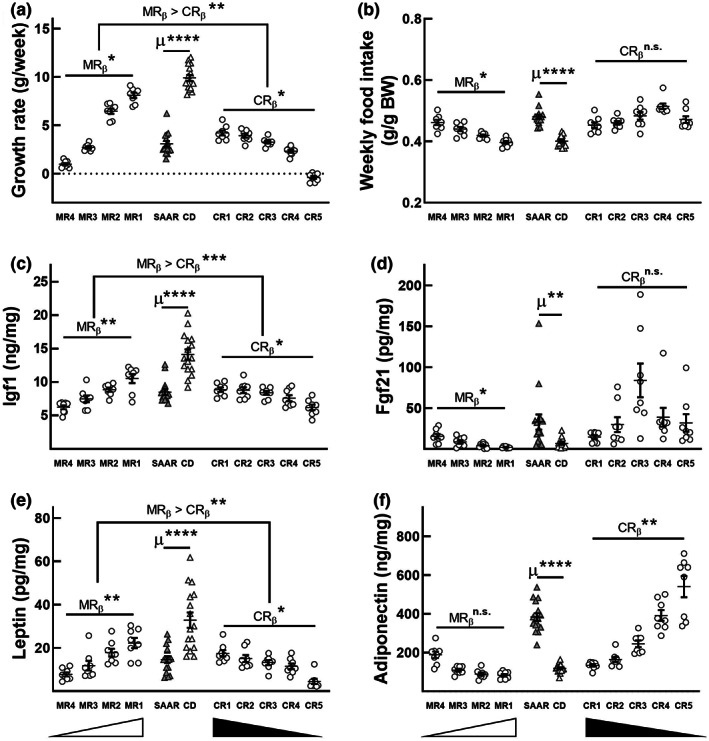
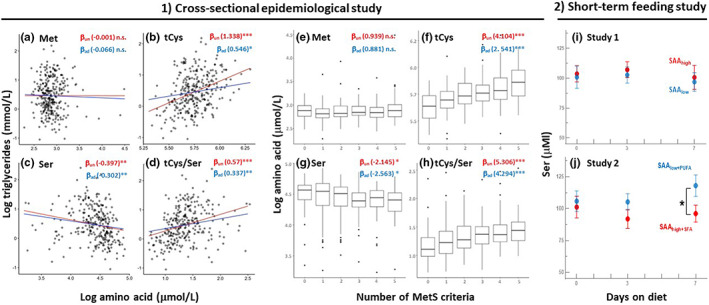
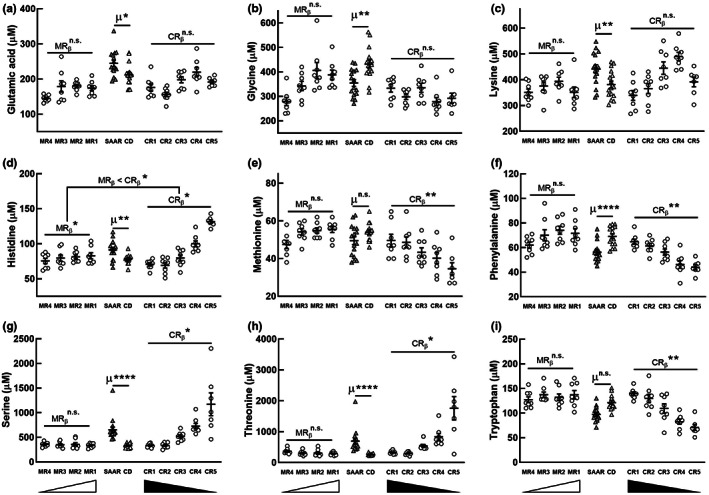
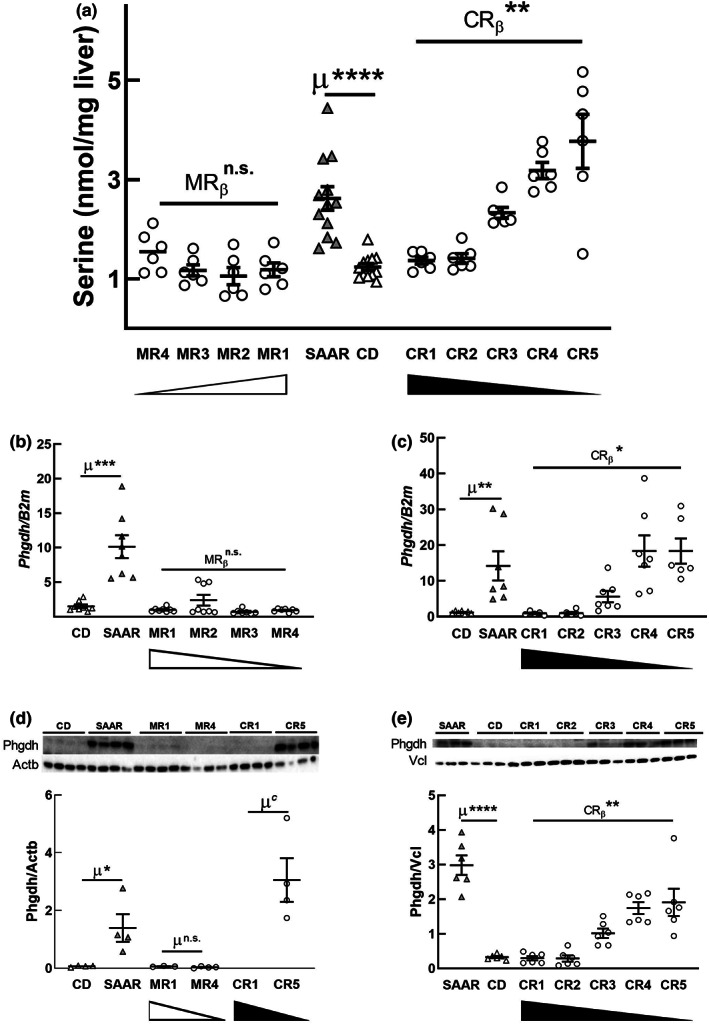
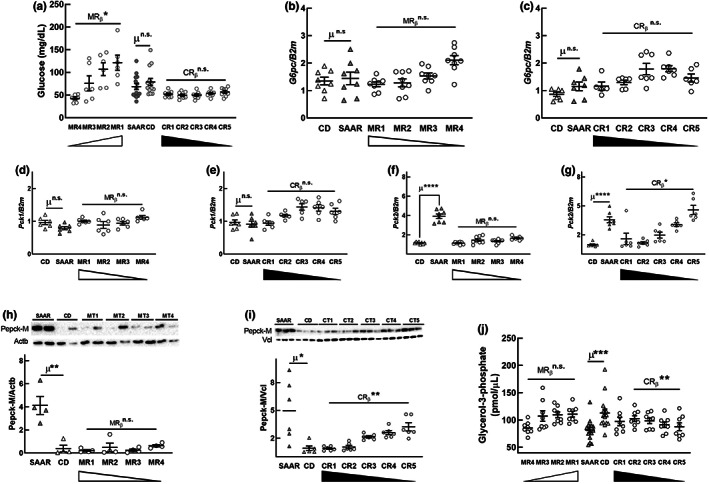
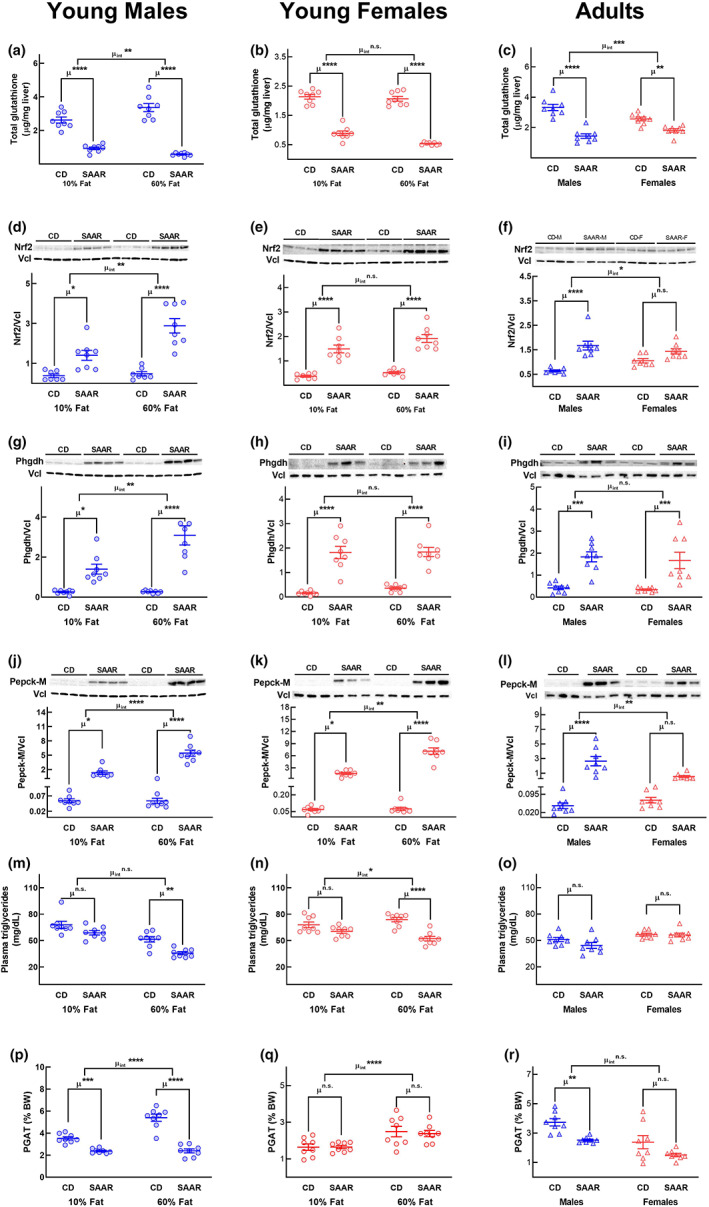
Decreasing the dietary intake of methionine exerts robust anti-adiposity effects in rodents but modest effects in humans. Since cysteine can be synthesized from methionine, animal diets are formulated by decreasing methionine and eliminating cysteine. Such diets exert both methionine restriction (MR) and cysteine restriction (CR), that is, sulfur amino acid restriction (SAAR). Contrarily, SAAR diets formulated for human consumption included cysteine, and thus might have exerted only MR. Epidemiological studies positively correlate body adiposity with plasma cysteine but not methionine, suggesting that CR, but not MR, is responsible for the anti-adiposity effects of SAAR. Whether this is true, and, if so, the underlying mechanisms are unknown. Using methionine- and cysteine-titrated diets, we demonstrate that the anti-adiposity effects of SAAR are due to CR. Data indicate that CR increases serinogenesis (serine biosynthesis from non-glucose substrates) by diverting substrates from glyceroneogenesis, which is essential for fatty acid reesterification and triglyceride synthesis. Molecular data suggest that CR depletes hepatic glutathione and induces Nrf2 and its downstream targets Phgdh (the serine biosynthetic enzyme) and Pepck-M. In mice, the magnitude of SAAR-induced changes in molecular markers depended on dietary fat concentration (60% fat >10% fat), sex (males > females), and age-at-onset (young > adult). Our findings are translationally relevant as we found negative and positive correlations of plasma serine and cysteine, respectively, with triglycerides and metabolic syndrome criteria in a cross-sectional epidemiological study. Controlled feeding of low-SAA, high-polyunsaturated fatty acid diets increased plasma serine in humans. Serinogenesis might be a target for treating hypertriglyceridemia.
减少蛋氨酸的饮食摄入量对啮齿动物具有显著的抗肥胖作用,但对人类的作用较小。由于半胱氨酸可以由蛋氨酸合成,因此动物饮食通过减少蛋氨酸并去除半胱氨酸来配制。这种饮食同时施加了蛋氨酸限制(MR)和半胱氨酸限制(CR),即硫氨基酸限制(SAAR)。相反,为人类消费配制的SAAR饮食包含半胱氨酸,因此可能仅施加了MR。流行病学研究表明,身体肥胖与血浆半胱氨酸呈正相关,而与蛋氨酸无关,这表明CR而非MR是SAAR抗肥胖作用的原因。这是否属实,以及如果属实,其潜在机制尚不清楚。使用蛋氨酸和半胱氨酸滴定饮食,我们证明SAAR的抗肥胖作用是由于CR。数据表明,CR通过将底物从甘油生成途径转移,从而增加了丝氨酸生成(从非葡萄糖底物合成丝氨酸),而甘油生成对于脂肪酸再酯化和甘油三酯合成至关重要。分子数据表明,CR会消耗肝脏中的谷胱甘肽,并诱导Nrf2及其下游靶点Phgdh(丝氨酸生物合成酶)和Pepck-M。在小鼠中,SAAR诱导的分子标志物变化程度取决于饮食脂肪浓度(60%脂肪>10%脂肪)、性别(雄性>雌性)和发病年龄(幼年>成年)。我们的研究结果具有转化相关性,因为我们在一项横断面流行病学研究中发现,血浆丝氨酸和半胱氨酸分别与甘油三酯和代谢综合征标准呈负相关和正相关。在人类中,控制摄入低硫氨基酸、高多不饱和脂肪酸饮食会增加血浆丝氨酸水平。丝氨酸生成可能是治疗高甘油三酯血症的一个靶点。