Awosika Ayoola, Hillman Angela R, Millis Richard M, Adeniyi Mayowa J
College of Health Sciences and Professions, Ohio University, Athens, USA.
Department of Pathophysiology, American University of Antigua, St. Johns, ATG.
Cureus. 2022 Nov 14;14(11):e31483. doi: 10.7759/cureus.31483. eCollection 2022 Nov.
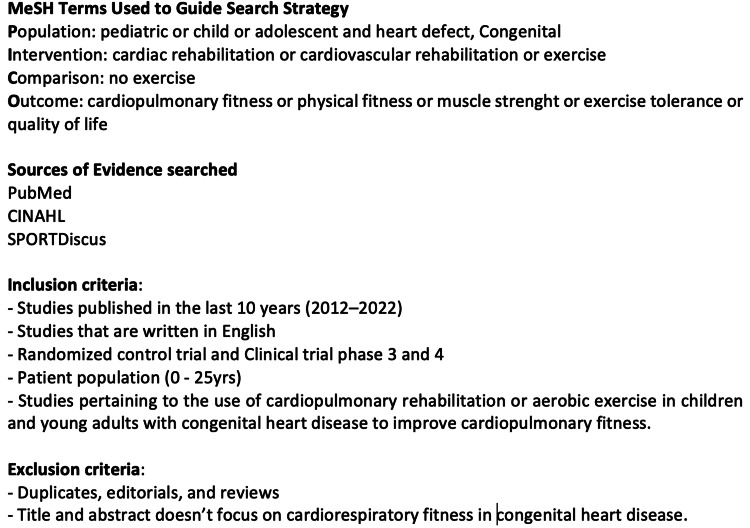
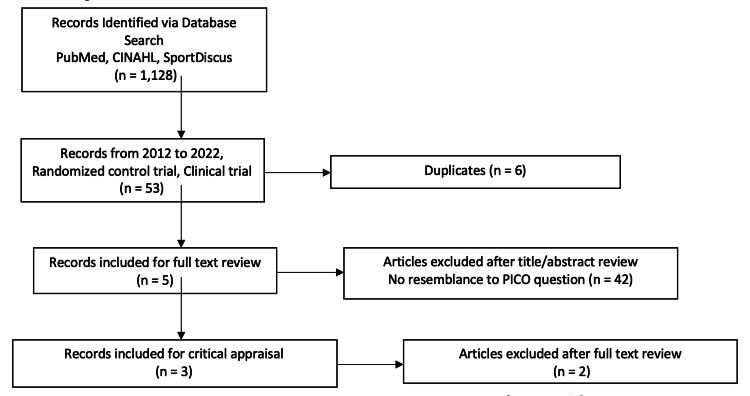
Public health guidelines and a myriad of studies have proven that exercise is beneficial in the alleviation of various cardio-metabolic diseases. Congenital heart disease (ConHD) is one of the most frequently occurring congenital structural malfunctions in the pediatric population, affecting nine of every 1,000 live births. Only a few studies have established the impact of a structured exercise program on cardiopulmonary fitness in diverse groups of patients with ConHD. It is also alarming to know that a substantial number of these patients and their caregivers often remain very wary of exercise. Anxiety about exercise may increase the risk of developing morbid obesity and other long-term health complications of ConHD. The present review of a critically appraised topic is undertaken to answer the question, "Does structured exercise intervention (cardiac rehabilitation) improve cardiorespiratory fitness in children and young adults with ConHD?" Exercise science and the medical literature were searched for studies that engaged the use of aerobic exercise in patients with different ConHD diagnoses. The search yielded four studies after screening with the inclusion and exclusion criteria, which were further narrowed to three studies after a full-text review. These studies yielded results showing significant increments in peak exercise workload, duration, power output, peak oxygen uptake, or improved tissue oxygenation and muscle strength after an exercise training intervention. It is noteworthy that a group identified as "cyanotic palliated" exhibited the most significant impairment both at baseline and after the exercise intervention. This review provides level 1b medical evidence that a structured exercise program may improve cardiopulmonary fitness in patients with ConHD, which is likely to be beneficial to their overall physical, motor, and psychosocial development. The results of this review may be useful for alleviating the anxiety of patients and their caregivers about participation in structured exercise programs. This review should also motivate future research investigations to develop clinical guidelines for the management of patients with ConHD by adding exercise prescriptions to their daily therapeutic regimens.
公共卫生指南和大量研究已证明,运动有助于缓解各种心血管代谢疾病。先天性心脏病(ConHD)是儿科人群中最常见的先天性结构故障之一,每1000例活产中就有9例受影响。只有少数研究确定了结构化运动计划对不同类型先天性心脏病患者心肺功能的影响。同样令人担忧的是,这些患者中的相当一部分及其护理人员通常对运动非常谨慎。对运动的焦虑可能会增加患病态肥胖症和先天性心脏病其他长期健康并发症的风险。本次对一个严格评估主题的综述旨在回答“结构化运动干预(心脏康复)是否能改善先天性心脏病儿童和年轻人的心肺功能?”这一问题。通过检索运动科学和医学文献,寻找涉及对不同先天性心脏病诊断患者进行有氧运动的研究。经纳入和排除标准筛选后,检索到四项研究,经过全文审查后进一步缩小到三项研究。这些研究结果显示,运动训练干预后,峰值运动负荷、持续时间、功率输出、峰值摄氧量显著增加,或组织氧合和肌肉力量得到改善。值得注意的是,一组被确定为“紫绀型姑息治疗”的患者在基线和运动干预后表现出最显著的损伤。本综述提供了1b级医学证据,表明结构化运动计划可能改善先天性心脏病患者的心肺功能,这可能有利于他们的整体身体、运动和心理社会发展。本综述的结果可能有助于减轻患者及其护理人员对参与结构化运动计划的焦虑。本综述还应激励未来的研究调查,通过在日常治疗方案中增加运动处方,为先天性心脏病患者的管理制定临床指南。