Nguyen Phuong Thi Thanh, Song Hayoung, Kim Boyoung, Kim Yoo Yeon, Kim Chulho, Lee Jun Ho, Suh Jun Gyo
Department of Medical Genetics, College of Medicine, Hallym University, Chuncheon, South Korea.
Institute of New Frontier Research, Hallym University College of Medicine, Chuncheon, South Korea.
Front Neurol. 2022 Nov 3;13:1016654. doi: 10.3389/fneur.2022.1016654. eCollection 2022.
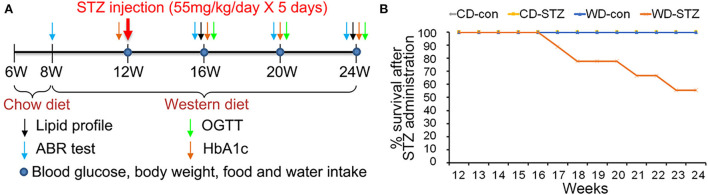
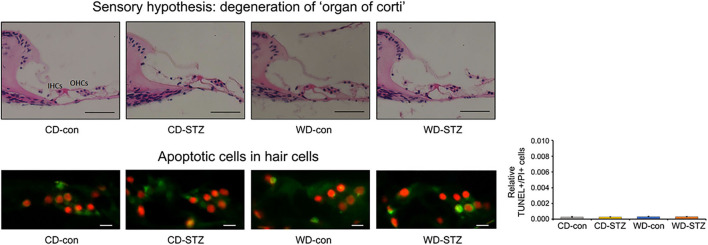
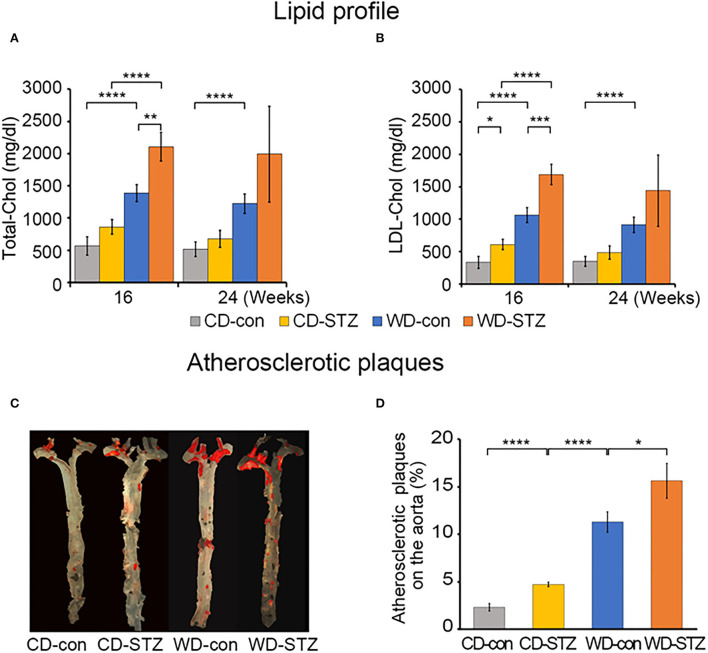
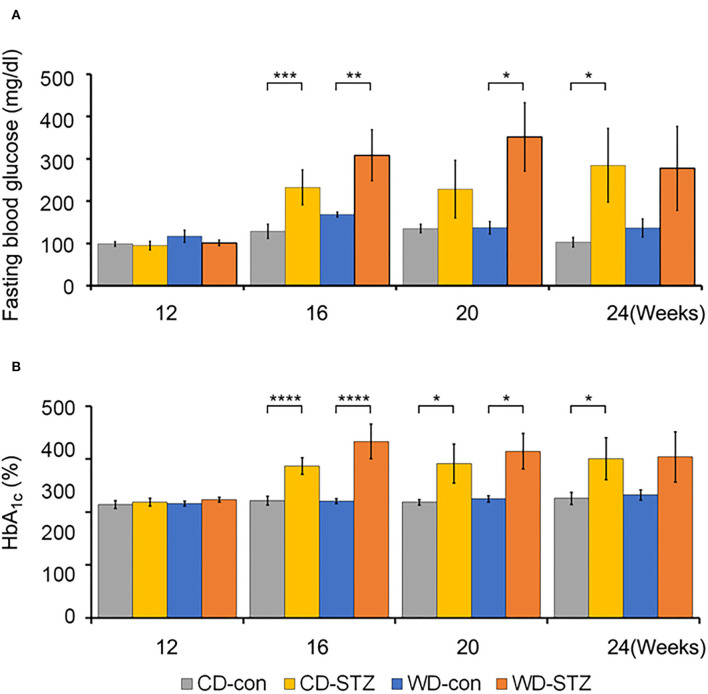
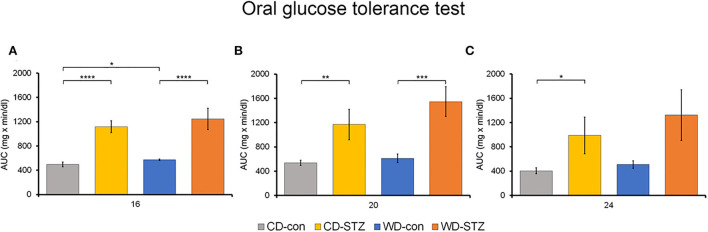
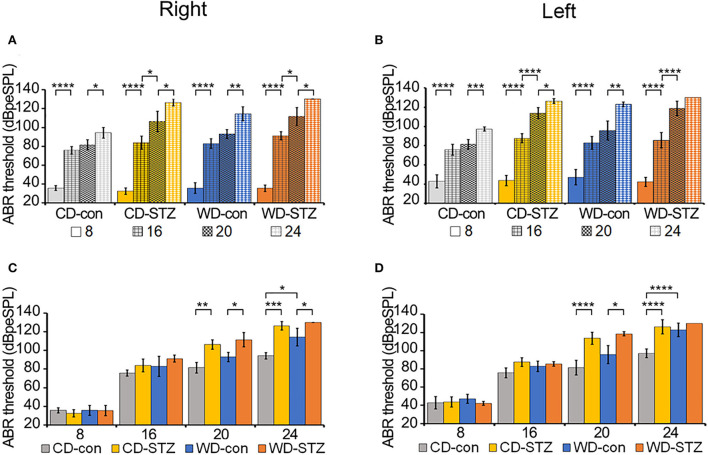
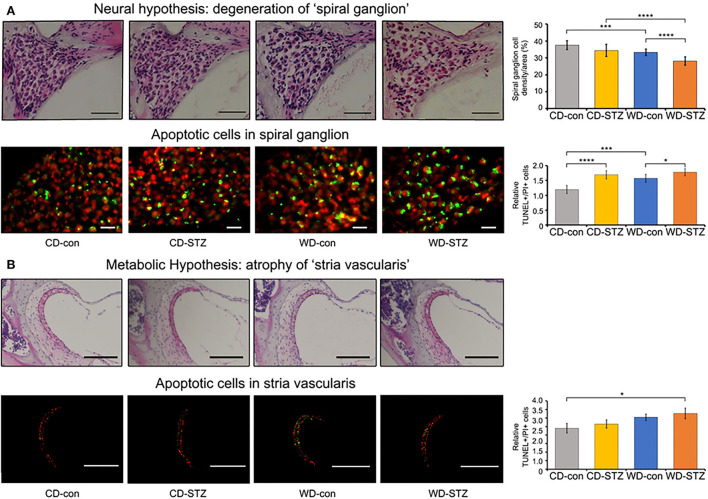
Age-related hearing loss (ARHL) is associated with diabetes and/or dyslipidemia in humans. However, the detailed mechanism for the development of ARHL by diabetes and/or dyslipidemia has not been elucidated. In this study, we investigated the etiology of ARHL in apolipoprotein E (ApoE)-deficient mice with diabetes and dyslipidemia. The atherosclerotic CD-STZ (mice fed with a control diet and received an STZ injection), WD-con (mice fed with a western diet), and WD-STZ (mice fed with a western diet and received an STZ injection) mice showed a 2.4-, 4.9-, and 6.8-fold larger area, respectively, occupied by lesions throughout the aorta compared with the CD-con mice. A significantly larger area under the curve (AUC) was observed in the STZ-treated groups than in the non-treated groups based on the oral glucose tolerance test (OGTT). At 20 weeks of age, HbA levels were significantly higher in the CD-STZ and WD-STZ mice than in the CD-con and WD-con mice. In all the groups, the auditory brainstem response (ABR) thresholds of the 16-week-old mice were significantly higher compared with those of the 8-week-old mice. In particular, in the WD-STZ mice, the ABR thresholds of the left and right ears reached the maximum decibel peak equivalent sound pressure levels (130 dBpeSPL), which is a sign of deafness. The apoptotic spiral ganglion neurons (SGNs) of the WD-STZ mice were significantly increased compared with those of the other three groups, indicating that SGN apoptosis resulted in hearing loss in STZ-induced diabetic ApoE KO mice fed with a WD. A significant loss of the stria vascularis cells was observed in the WD-STZ group compared with the CD-con mice. In the organ of Corti, few apoptotic hair cells were found in all the groups; however, no significant difference was observed. Therefore, we consider that the reduced hearing ability in the STZ-treated and WD-fed groups was attributed to the damage to the SGN and stria vascularis in the cochlea. Thus, our results indicated that ototoxicity by diabetes and/or dyslipidemia accelerated ARHL in ApoE KO mice, thereby suggesting the importance of appropriate treatment of patients with diabetes and/or dyslipidemia to prevent ARHL.
年龄相关性听力损失(ARHL)与人类的糖尿病和/或血脂异常有关。然而,糖尿病和/或血脂异常导致ARHL发生的详细机制尚未阐明。在本研究中,我们调查了患有糖尿病和血脂异常的载脂蛋白E(ApoE)缺陷小鼠中ARHL的病因。动脉粥样硬化的CD-STZ(喂食对照饮食并接受链脲佐菌素注射的小鼠)、WD-con(喂食西式饮食的小鼠)和WD-STZ(喂食西式饮食并接受链脲佐菌素注射的小鼠)小鼠与CD-con小鼠相比,整个主动脉中病变所占面积分别大2.4倍、4.9倍和6.8倍。基于口服葡萄糖耐量试验(OGTT),与未治疗组相比,链脲佐菌素治疗组观察到显著更大的曲线下面积(AUC)。在20周龄时,CD-STZ和WD-STZ小鼠的糖化血红蛋白(HbA)水平显著高于CD-con和WD-con小鼠。在所有组中,16周龄小鼠的听觉脑干反应(ABR)阈值显著高于8周龄小鼠。特别是,在WD-STZ小鼠中,左耳和右耳的ABR阈值达到最大分贝峰值等效声压级(130 dBpeSPL),这是耳聋的迹象。与其他三组相比,WD-STZ小鼠的凋亡螺旋神经节神经元(SGNs)显著增加,表明SGN凋亡导致喂食西式饮食的链脲佐菌素诱导的糖尿病ApoE基因敲除小鼠听力丧失。与CD-con小鼠相比,WD-STZ组观察到血管纹细胞显著丢失。在柯蒂氏器中,所有组中均发现很少有凋亡的毛细胞;然而,未观察到显著差异。因此,我们认为链脲佐菌素治疗组和喂食西式饮食组听力能力下降归因于耳蜗中SGN和血管纹的损伤。因此,我们的结果表明,糖尿病和/或血脂异常引起的耳毒性加速了ApoE基因敲除小鼠的ARHL,从而表明对糖尿病和/或血脂异常患者进行适当治疗以预防ARHL的重要性。