Chen Hang-Kang, Wang Yen-Hsin, Lei Cing-Syuan, Guo Yu-Ru, Tang Ming-Chi, Tsai Ting-Fen, Chen Yi-Fan, Wang Chih-Hung
Graduate Institute of Medical Sciences, National Defense Medical Center, Taipei 114201, Taiwan.
Graduate Institute of Microbiology and Immunology, National Defense Medical Center, Taipei 114201, Taiwan.
Aging Dis. 2024 Aug 24;16(4):2468-2482. doi: 10.14336/AD.2024.1036.
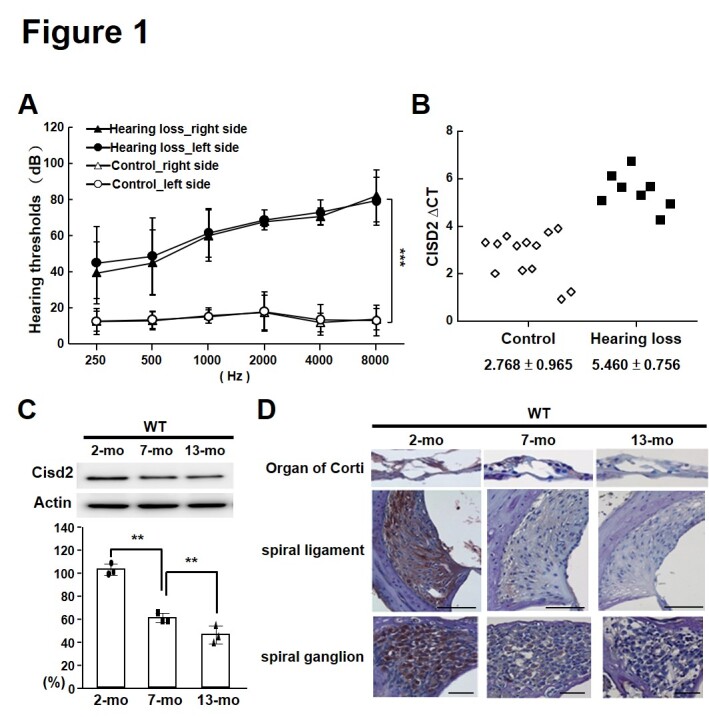
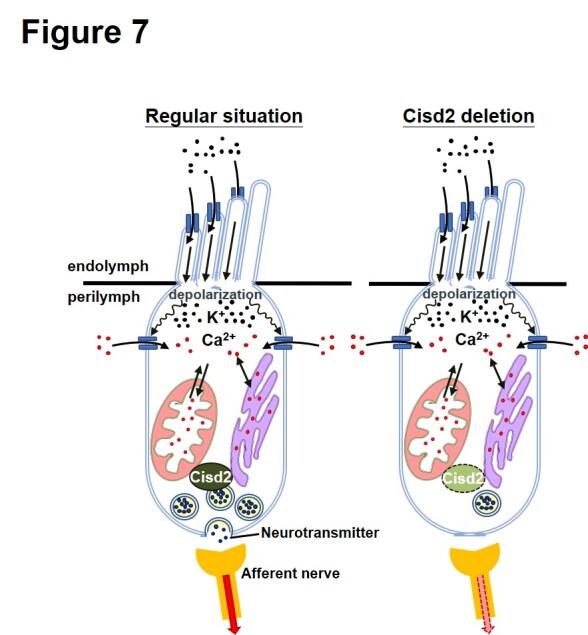
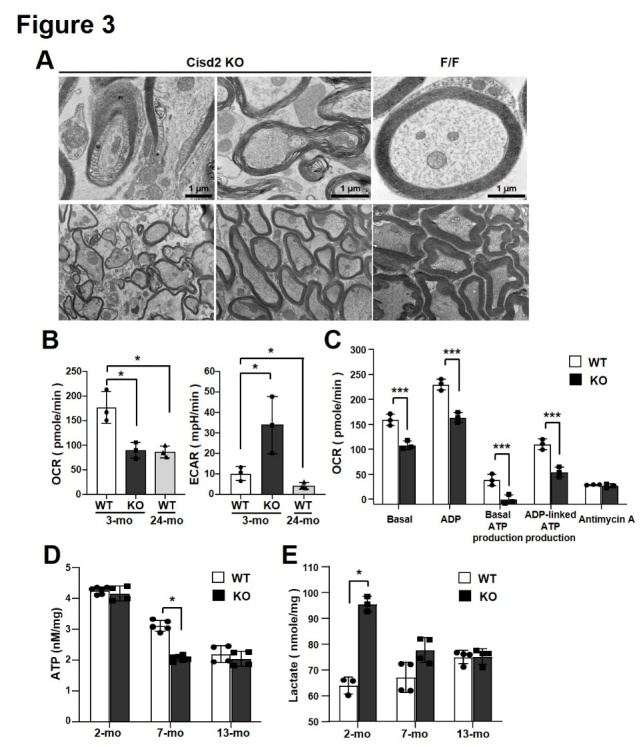
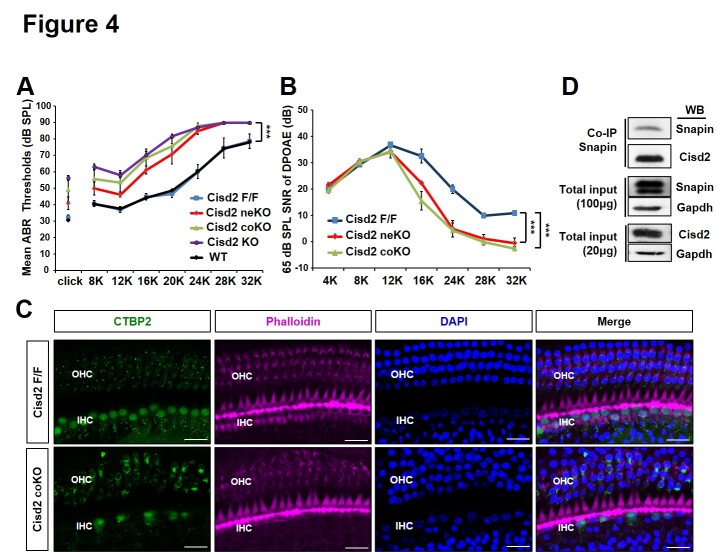
Age-related hearing loss (ARHL) is a disease that impacts human quality of life and contributes to the progression of other neuronal problems. Various stressors induce an increase in free radicals, destroy mitochondria to further contribute to cellular malfunction, and compromise cell viability, ultimately leading to functional decline. Cisd2, a master gene for Marfan syndrome, plays an essential role in maintaining mitochondrial integrity and functions. As shown by our data, specific deletion of Cisd2 in the cochlea exacerbated the hearing impairment of ARHL in C57BL/6 mice. Increased defects in mitochondrial function, potassium homeostasis and synapse activity were observed in the Cisd2-deleted mouse models. These mechanistic phenotypes combined with oxidative stress contribute to cell death in the whole cochlea. Human patients with obviously deteriorated ARHL had low Cisd2 expression; therefore, Cisd2 may be a potential target for designing therapeutic methods to attenuate the disease progression of ARHL.
年龄相关性听力损失(ARHL)是一种影响人类生活质量并促使其他神经问题发展的疾病。各种应激源会导致自由基增加,破坏线粒体,进一步导致细胞功能紊乱,并损害细胞活力,最终导致功能衰退。Cisd2是马凡综合征的主基因,在维持线粒体完整性和功能方面发挥着重要作用。我们的数据表明,耳蜗中Cisd2的特异性缺失加剧了C57BL/6小鼠ARHL的听力损伤。在Cisd2缺失的小鼠模型中观察到线粒体功能、钾离子稳态和突触活动的缺陷增加。这些机制性表型与氧化应激共同导致整个耳蜗中的细胞死亡。ARHL明显恶化的人类患者Cisd2表达较低;因此,Cisd2可能是设计治疗方法以减缓ARHL疾病进展的潜在靶点。