Department of Pharmacological Sciences, Icahn School of Medicine at Mount Sinai, New York, New York, United States of America.
Department of Electrical, Electronic, and Information Engineering "Guglielmo Marconi", University of Bologna, Cesena, Italy.
PLoS Comput Biol. 2022 Nov 21;18(11):e1010098. doi: 10.1371/journal.pcbi.1010098. eCollection 2022 Nov.
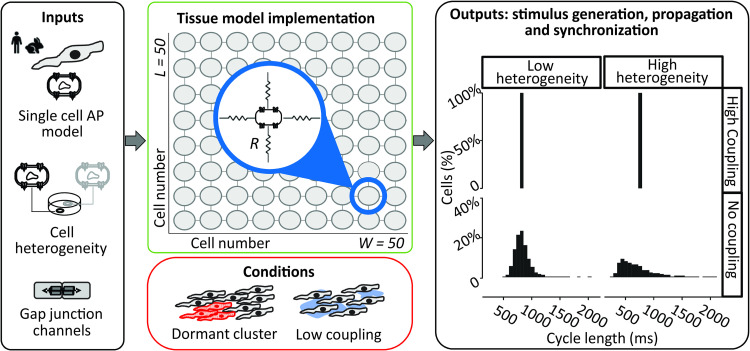
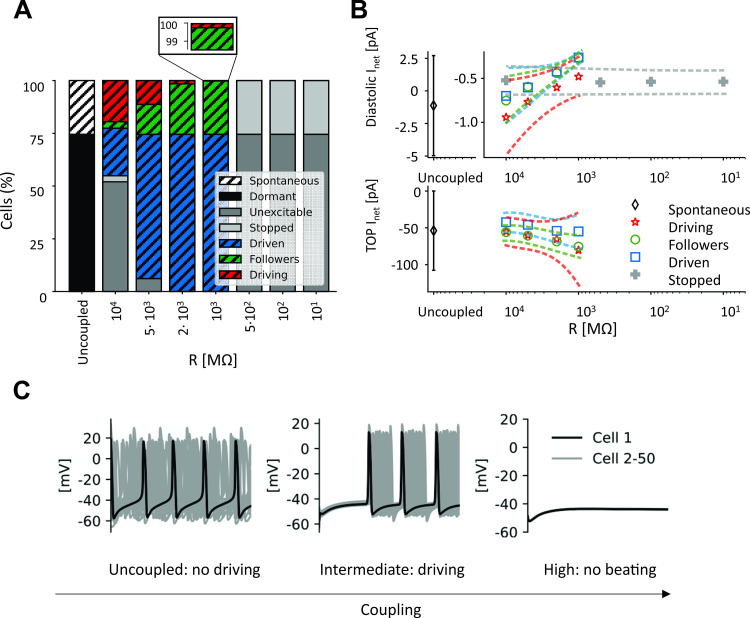
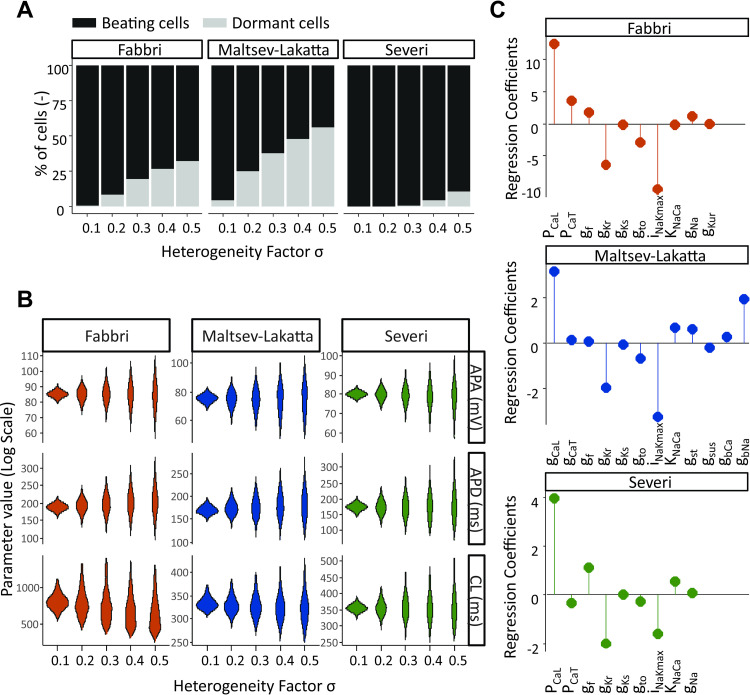
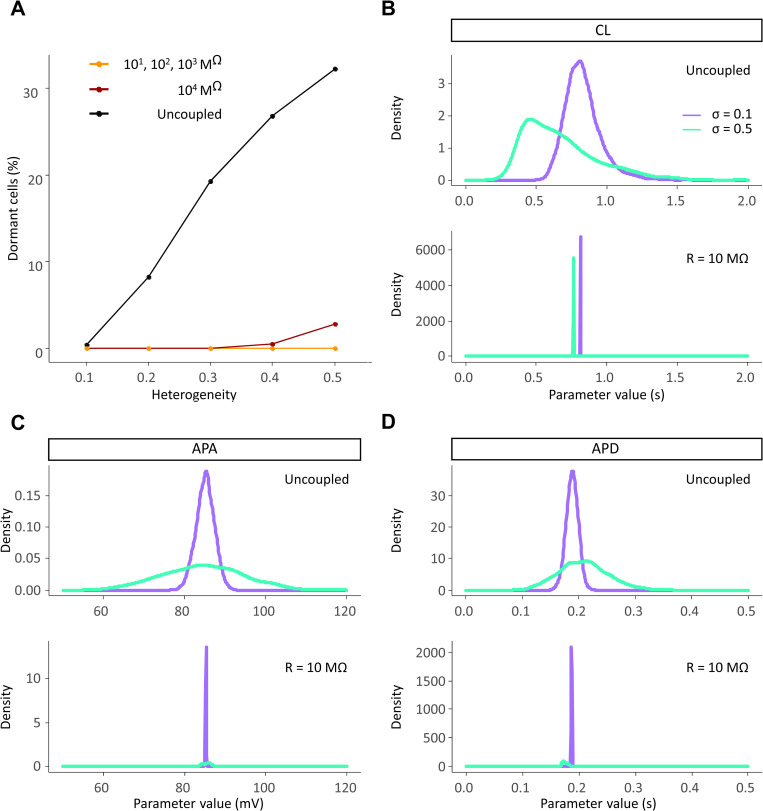
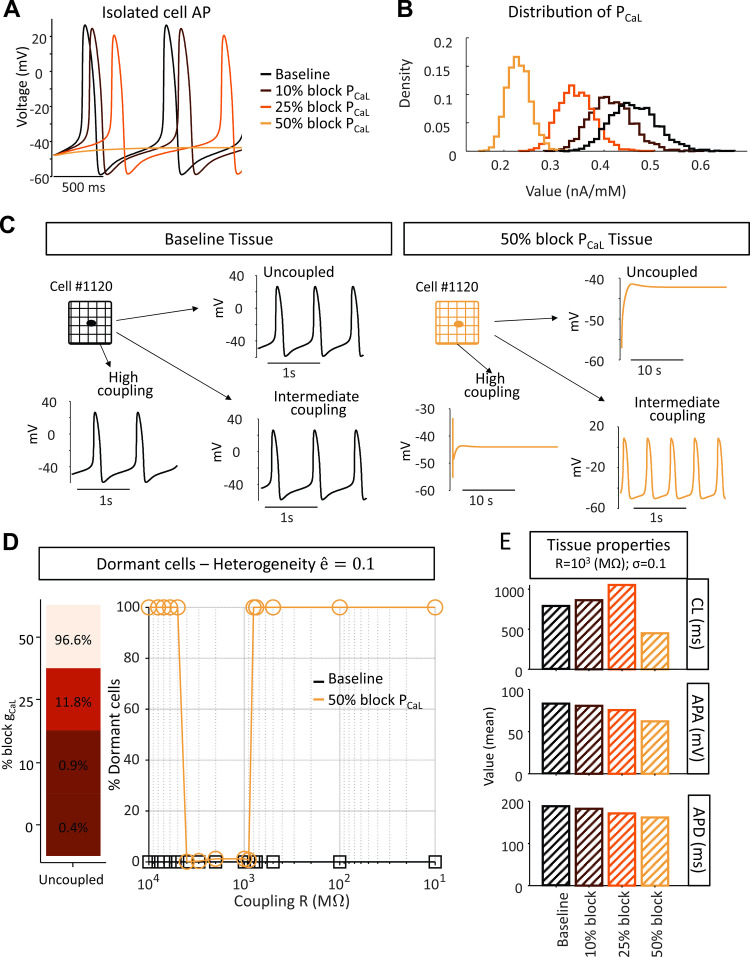
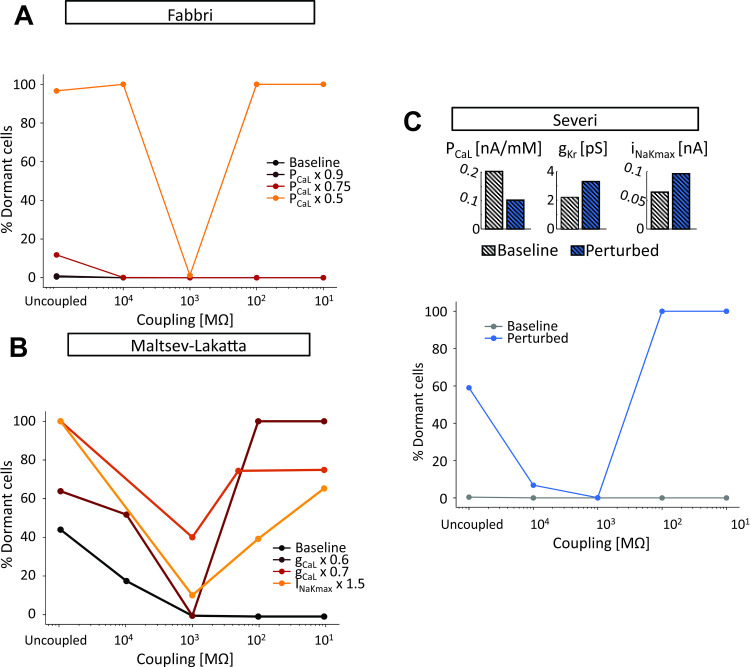
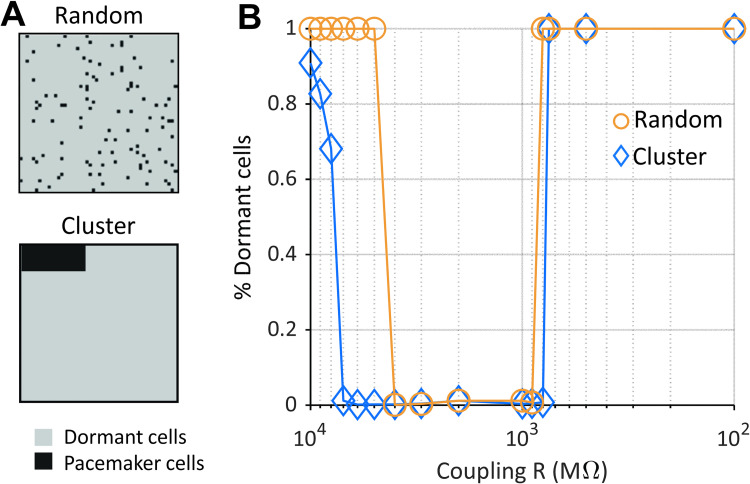
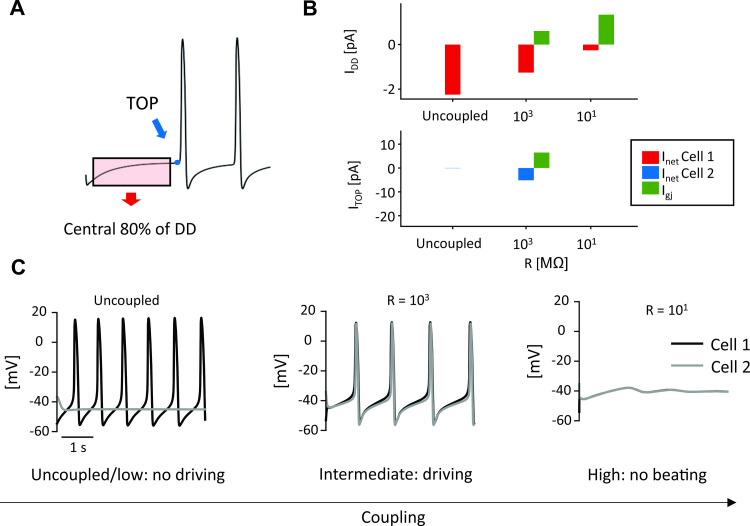
Both experimental and modeling studies have attempted to determine mechanisms by which a small anatomical region, such as the sinoatrial node (SAN), can robustly drive electrical activity in the human heart. However, despite many advances from prior research, important questions remain unanswered. This study aimed to investigate, through mathematical modeling, the roles of intercellular coupling and cellular heterogeneity in synchronization and pacemaking within the healthy and diseased SAN. In a multicellular computational model of a monolayer of either human or rabbit SAN cells, simulations revealed that heterogenous cells synchronize their discharge frequency into a unique beating rhythm across a wide range of heterogeneity and intercellular coupling values. However, an unanticipated behavior appeared under pathological conditions where perturbation of ionic currents led to reduced excitability. Under these conditions, an intermediate range of intercellular coupling (900-4000 MΩ) was beneficial to SAN automaticity, enabling a very small portion of tissue (3.4%) to drive propagation, with propagation failure occurring at both lower and higher resistances. This protective effect of intercellular coupling and heterogeneity, seen in both human and rabbit tissues, highlights the remarkable resilience of the SAN. Overall, the model presented in this work allowed insight into how spontaneous beating of the SAN tissue may be preserved in the face of perturbations that can cause individual cells to lose automaticity. The simulations suggest that certain degrees of gap junctional coupling protect the SAN from ionic perturbations that can be caused by drugs or mutations.
实验和建模研究都试图确定小的解剖区域(如窦房结(SAN))如何能够在人体心脏中稳健地驱动电活动的机制。然而,尽管之前的研究取得了许多进展,但仍有一些重要问题未得到解答。本研究旨在通过数学建模研究细胞间耦合和细胞异质性在健康和患病的 SAN 中的同步和起搏中的作用。在人类或兔 SAN 细胞单层的多细胞计算模型中,模拟表明,异质细胞通过在广泛的异质性和细胞间耦合值范围内将其放电频率同步为独特的跳动节律。然而,在病理条件下,离子电流的干扰导致兴奋性降低,出现了一种意想不到的行为。在这些条件下,中等范围的细胞间耦合(900-4000 MΩ)有利于 SAN 的自动性,使非常小一部分组织(3.4%)能够驱动传播,而在较低和较高电阻下都会发生传播失败。这种细胞间耦合和异质性的保护作用在人类和兔组织中都可见,突出了 SAN 的惊人弹性。总的来说,本工作中提出的模型使我们能够深入了解在可能导致单个细胞失去自动性的干扰下,SAN 组织的自发跳动是如何得以维持的。模拟表明,一定程度的缝隙连接耦合可以保护 SAN 免受药物或突变引起的离子扰动。