Centre of Reproductive Medicine and Andrology, University Hospital of Münster, Münster, Germany.
Hum Reprod. 2023 Jan 5;38(1):1-13. doi: 10.1093/humrep/deac245.
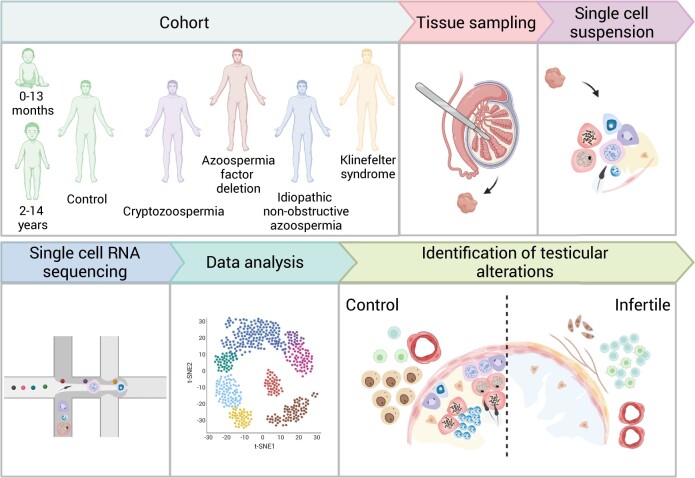
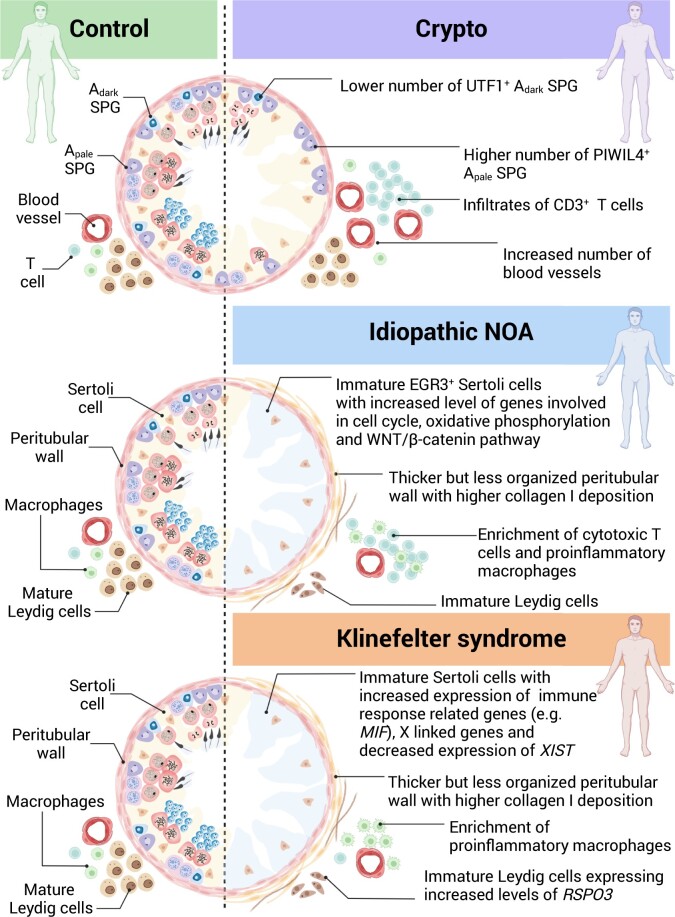
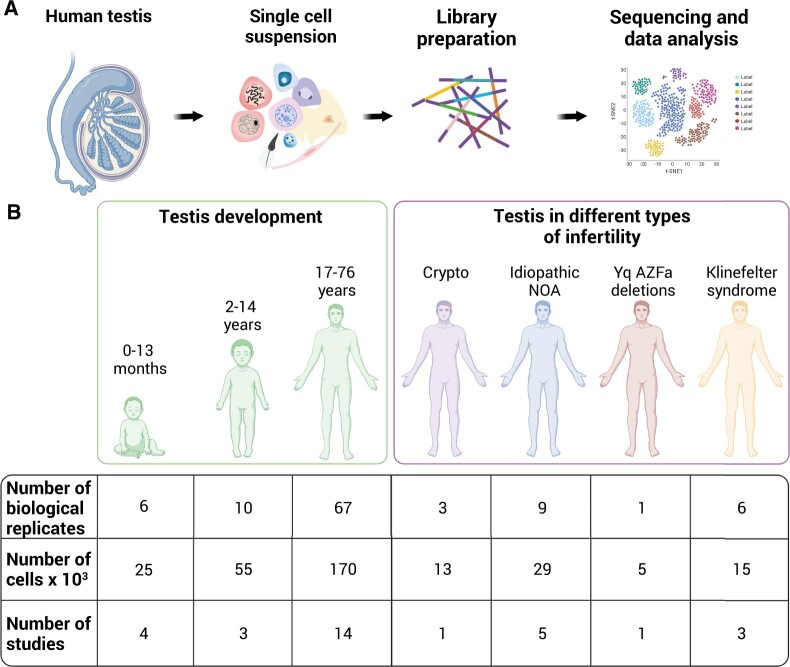
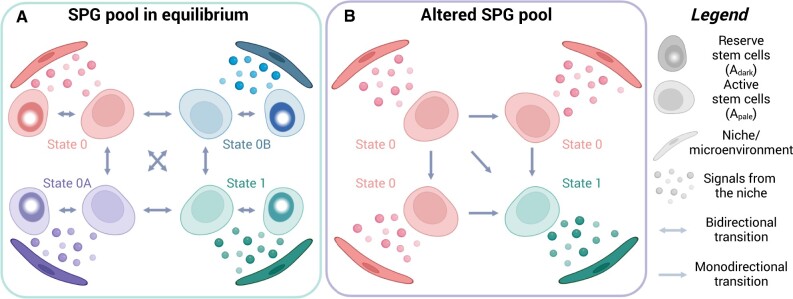
The amount of single-cell RNA-sequencing (scRNA-seq) data produced in the field of human male reproduction has steadily increased. Transcriptional profiles of thousands of testicular cells have been generated covering the human neonatal, prepubertal, pubertal and adult period as well as different types of male infertility; the latter include non-obstructive azoospermia, cryptozoospermia, Klinefelter syndrome and azoospermia factor deletions. In this review, we provide an overview of transcriptional changes in different testicular subpopulations during postnatal development and in cases of male infertility. Moreover, we review novel concepts regarding the existence of spermatogonial and somatic cell subtypes as well as their crosstalk and provide corresponding marker genes to facilitate their identification. We discuss the potential clinical implications of scRNA-seq findings, the need for spatial information and the necessity to corroborate findings by exploring other levels of regulation, including at the epigenetic or protein level.
单细胞 RNA 测序 (scRNA-seq) 在人类男性生殖领域产生的数据量稳步增加。已经生成了数千个人睾丸细胞的转录谱,涵盖了人类新生儿期、青春期前、青春期和成年期以及不同类型的男性不育症;后者包括非梗阻性无精子症、隐匿性精子症、克莱恩费尔特综合征和无精子症因子缺失。在这篇综述中,我们概述了在出生后发育和男性不育症中不同睾丸亚群的转录变化。此外,我们还回顾了关于精原细胞和体细胞亚型存在以及它们相互作用的新概念,并提供了相应的标记基因来促进它们的鉴定。我们讨论了 scRNA-seq 发现的潜在临床意义、对空间信息的需求以及通过探索其他调节水平(包括表观遗传或蛋白质水平)来证实发现的必要性。