Department of Psychology, University of Illinois-Urbana-Champaign, Champaign, Illinois, USA.
School of Information Sciences and Department of Educational Psychology, University of Illinois-Urbana-Champaign, Champaign, Illinois, USA.
Alcohol Clin Exp Res (Hoboken). 2023 Jan;47(1):50-59. doi: 10.1111/acer.14977. Epub 2022 Dec 12.
Wrist-worn transdermal alcohol sensors have the potential to change how alcohol consumption is measured. However, hardware and data analytic challenges associated with transdermal sensor data have kept these devices from widespread use. Given recent technological and analytic advances, this study provides an updated account of the performance of a new-generation wrist-worn transdermal sensor in both laboratory and field settings.
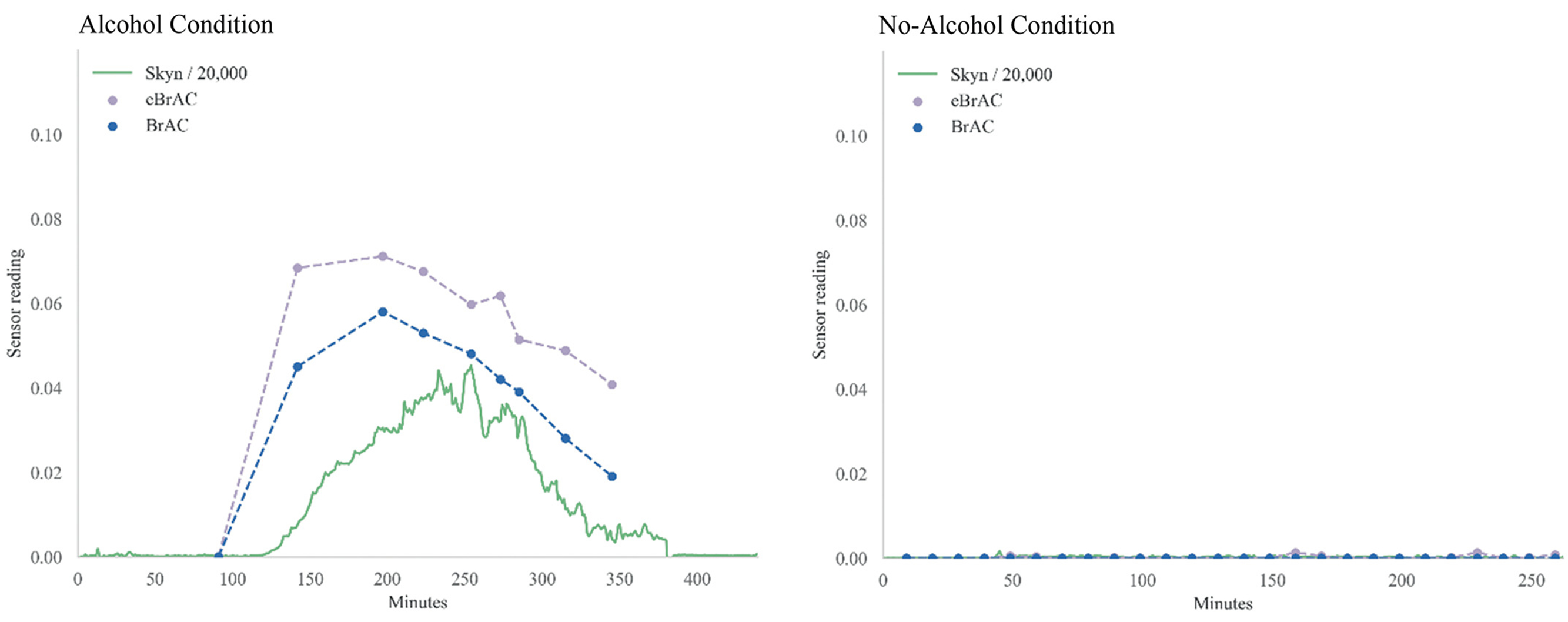
This work leverages machine learning models to convert transdermal alcohol concentration data into estimates of Breath Alcohol Concentration (BrAC) in a large-scale laboratory sample (N = 256, study 1) and a pilot field sample (N = 27, study 2). Specifically, in both studies, the accuracy of the translation is evaluated by comparing BAC estimates yielded by BACtrack Skyn to real-time breathalyzer measurements collected in the laboratory and in the field.
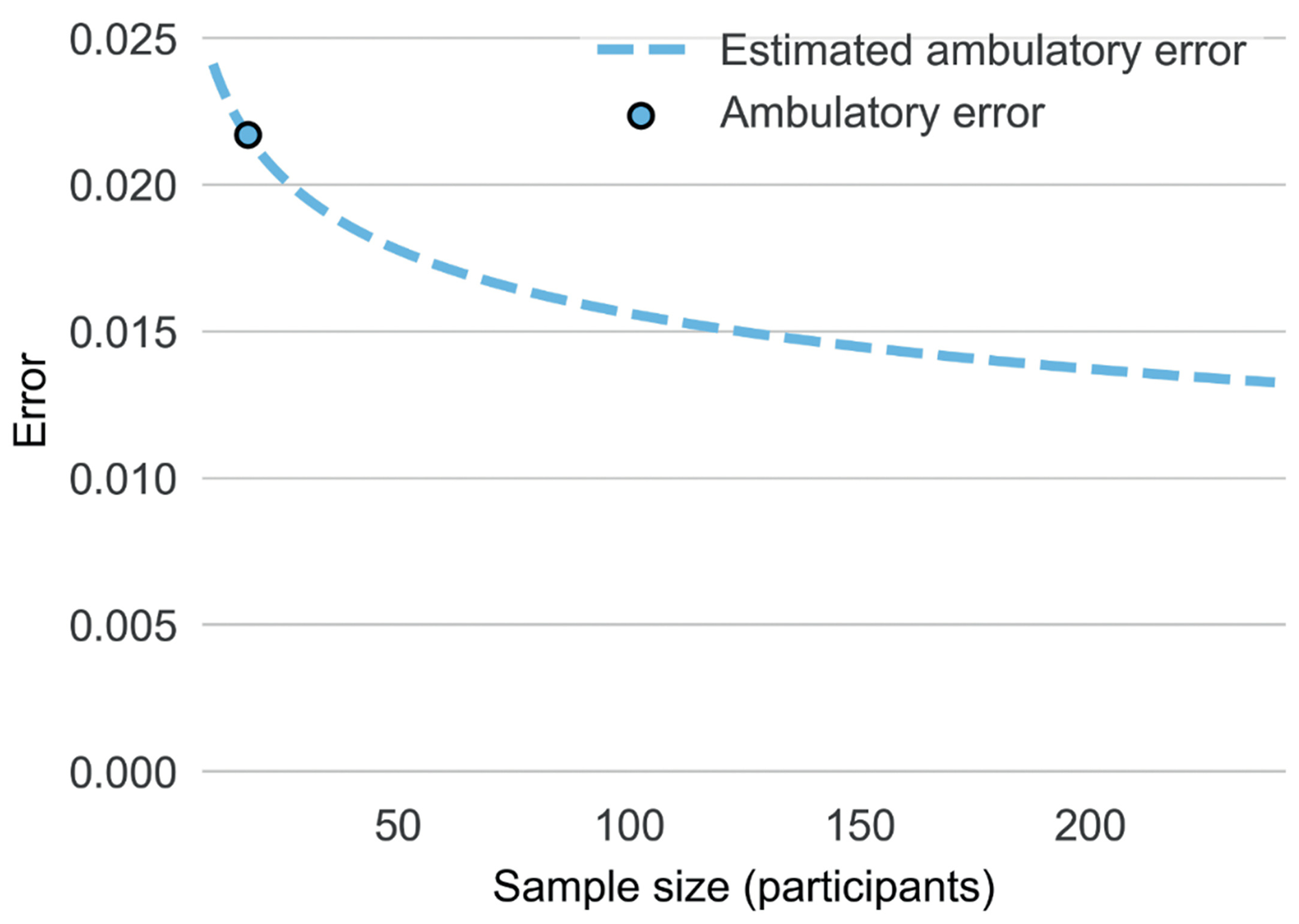
The newest version of the Skyn device demonstrates a substantially lower error rate than older hand-assembled prototypes (0% to 7% vs. 29% to 53%, respectively). On average, real-time estimates of BrAC yielded by these transdermal sensors are within 0.007 of true BAC readings in the laboratory context and within 0.019 of true BrAC readings in the field. In both contexts, the distance between true and estimated BrAC was larger when only alcohol episodes were examined (laboratory = 0.017; field = 0.041). Finally, results of power-law-curve projections indicate that, given their accuracy, transdermal BrAC estimates in real-world contexts have the potential to improve markedly (>25%) with adequately sized datasets for model training.
Findings from this study indicate that the latest version of the transdermal wrist sensor holds promise for the accurate assessment of alcohol consumption in field contexts. A great deal of additional work is needed to provide a full picture of the utility of these devices, including research with large participant samples in field contexts.
腕戴式经皮酒精传感器有可能改变酒精摄入量的测量方式。然而,经皮传感器数据的硬件和数据分析挑战使得这些设备无法广泛使用。鉴于最近的技术和分析进展,本研究提供了一种新一代腕戴式经皮传感器在实验室和现场环境中的性能的最新描述。
本工作利用机器学习模型将经皮酒精浓度数据转换为大规模实验室样本(N=256,研究 1)和试点现场样本(N=27,研究 2)中呼吸酒精浓度(BrAC)的估计值。具体来说,在这两项研究中,通过将 BACtrack Skyn 产生的 BAC 估计值与实验室和现场实时呼气酒精计测量值进行比较,评估了翻译的准确性。
最新版本的 Skyn 设备的误差率明显低于旧的手工组装原型(分别为 0%至 7%和 29%至 53%)。平均而言,这些经皮传感器实时估计的 BrAC 在实验室环境中与真实 BAC 读数相差 0.007,在现场环境中与真实 BrAC 读数相差 0.019。在这两种情况下,当只检查饮酒事件时,真实和估计的 BrAC 之间的距离更大(实验室=0.017;现场=0.041)。最后,幂律曲线预测的结果表明,鉴于其准确性,在现实世界背景下,经皮 BrAC 估计值有可能通过适当大小的数据集进行模型训练而显著提高(>25%)。
本研究的结果表明,最新版本的经皮腕带传感器有望在现场环境中准确评估酒精摄入量。需要做大量的额外工作来全面了解这些设备的实用性,包括在现场环境中对大样本参与者进行研究。