Multidisciplinary Department of Medical-Surgical and Dental Specialties, University of Campania Luigi Vanvitelli, Via Luigi De Crecchio 6, 80138, Naples, Italy.
Prog Orthod. 2022 Nov 28;23(1):43. doi: 10.1186/s40510-022-00438-z.
To assess the predictability of crowding resolution and the efficacy of different strategies to gain space during clear aligners treatment.
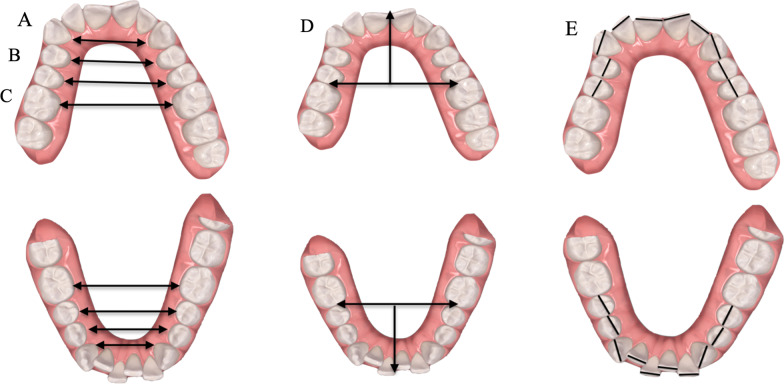
A total of 10 clinicians were randomly recruited using the Doctor Locator by Align Technology (California). For each clinician, four consecutive patients treated with aligners and manual stripping were selected for a total of 40 subjects. Thus, 80 arches were collected and uploaded on the Orthoanalyzer software for arch measurements. The data were gained on the starting arch form (T0), on the virtual arch developed with digital planning (vT1), and on the arch form achieved at the end of the aligner sequences (T1). The following parameters were scored: Little's Irregularity Index, transversal arch diameters, (intercuspid, interpremolar, and intermolar width), incisor position/arch length, and enamel interproximal reduction (IPR).
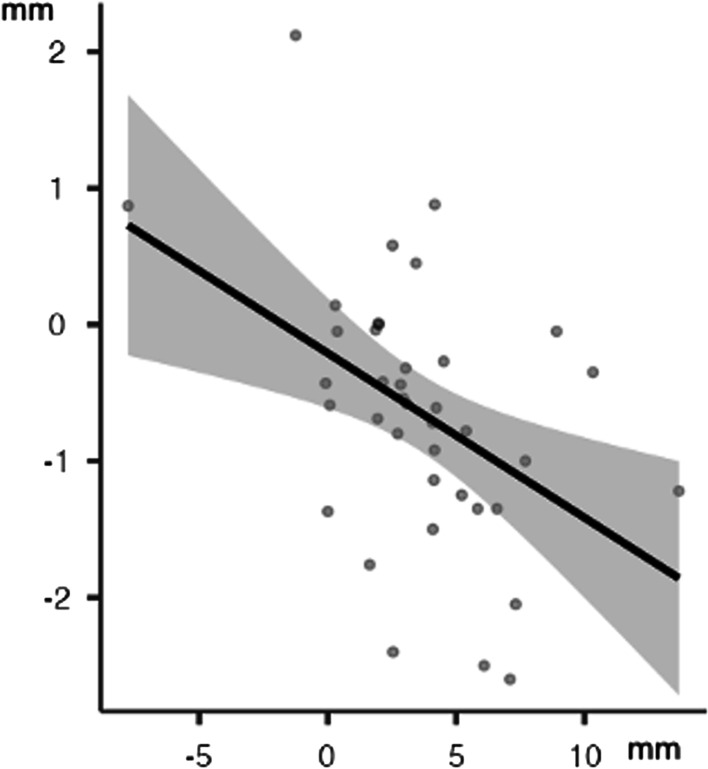
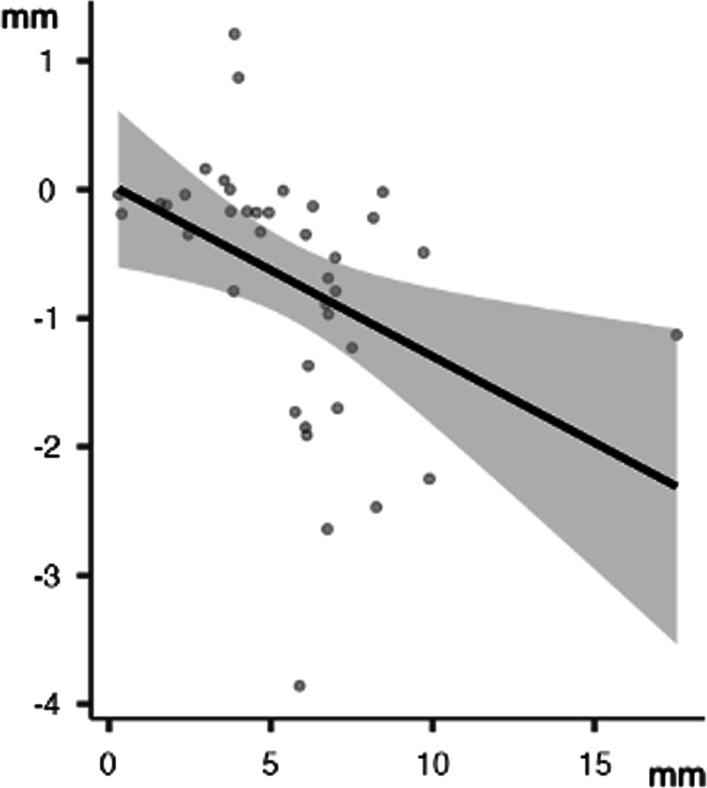
For all the measurements, statistically significant differences were found at different stages. The predictability of crowding resolution was very high, ranging from 87% in the upper arch and 81% in the lower one. Among the different strategies to gain space, variations in sagittal incisor position were predictable, with a value of 70% both in the upper and lower arch. Conversely, changes in arch diameters were less reliable varying between 49 and 67% in the lower arch and 59-83% in the upper one. Moreover, IPR was the least accurate procedure, wavering at 49% in the upper arch and 42% in the lower arch.
The predictability of crowding resolution during treatment with aligners was high. However, the virtual arch forms obtained at the end of digital planning (vT1) did not correspond with the arch forms at the end of the aligner sequences (T1). The IPR was the least predictable strategy to gain space, being, perhaps, an operator-dependent procedure.
评估拥挤度缓解的可预测性以及在使用透明矫正器治疗期间获得空间的不同策略的效果。
使用Align Technology(加利福尼亚)的 Doctor Locator 随机招募了 10 名临床医生。对于每位临床医生,选择了四个连续使用矫正器和手动剥离治疗的患者,总共有 40 名患者。因此,共收集了 80 个弓并上传到 Orthoanalyzer 软件进行弓测量。数据是在起始弓形状(T0)、数字规划生成的虚拟弓(vT1)以及矫正器序列结束时获得的弓形状(T1)上获得的。评分的参数包括:Little 不规则指数、横向弓径(中切牙、双尖牙和磨牙宽度)、切牙位置/弓长和釉质近中缩窄(IPR)。
对于所有测量,在不同阶段都发现了统计学上的显著差异。拥挤度缓解的可预测性非常高,在上弓为 87%,在下弓为 81%。在获得空间的不同策略中,矢状切牙位置的变化是可预测的,在上弓和下弓的预测值分别为 70%。相反,弓径的变化不太可靠,在下弓为 49-67%,在上弓为 59-83%。此外,IPR 是最不准确的程序,在上弓波动在 49%,在下弓波动在 42%。
使用矫正器治疗期间拥挤度缓解的可预测性较高。然而,数字规划结束时获得的虚拟弓形状(vT1)与矫正器序列结束时的弓形状(T1)不对应。IPR 是获得空间的最不可预测的策略,可能是一种依赖于操作者的程序。