• 文献检索
  • 文档翻译
  • 深度研究
  • 学术资讯
  • Suppr Zotero 插件Zotero 插件
  • 邀请有礼
  • 套餐&价格
  • 历史记录
应用&插件
Suppr Zotero 插件Zotero 插件浏览器插件Mac 客户端Windows 客户端微信小程序
定价
高级版会员购买积分包购买API积分包
服务
文献检索文档翻译深度研究API 文档MCP 服务
关于我们
关于 Suppr公司介绍联系我们用户协议隐私条款
关注我们

Suppr 超能文献

核心技术专利:CN118964589B侵权必究
粤ICP备2023148730 号-1Suppr @ 2026

文献检索

告别复杂PubMed语法,用中文像聊天一样搜索,搜遍4000万医学文献。AI智能推荐,让科研检索更轻松。

立即免费搜索

文件翻译

保留排版,准确专业,支持PDF/Word/PPT等文件格式,支持 12+语言互译。

免费翻译文档

深度研究

AI帮你快速写综述,25分钟生成高质量综述,智能提取关键信息,辅助科研写作。

立即免费体验

盲文阅读:神经形态硬件上时空模式识别的一个基准。

Braille letter reading: A benchmark for spatio-temporal pattern recognition on neuromorphic hardware.

作者信息

Müller-Cleve Simon F, Fra Vittorio, Khacef Lyes, Pequeño-Zurro Alejandro, Klepatsch Daniel, Forno Evelina, Ivanovich Diego G, Rastogi Shavika, Urgese Gianvito, Zenke Friedemann, Bartolozzi Chiara

机构信息

Istituto Italiano di Tecnologia, Event-Driven Perception in Robotics, Genoa, Italy.

Politecnico di Torino, Electronic Design Automation (EDA) Group, Torino, Italy.

出版信息

Front Neurosci. 2022 Nov 11;16:951164. doi: 10.3389/fnins.2022.951164. eCollection 2022.

DOI:10.3389/fnins.2022.951164
PMID:36440280
原文链接:https://pmc.ncbi.nlm.nih.gov/articles/PMC9695069/
Abstract

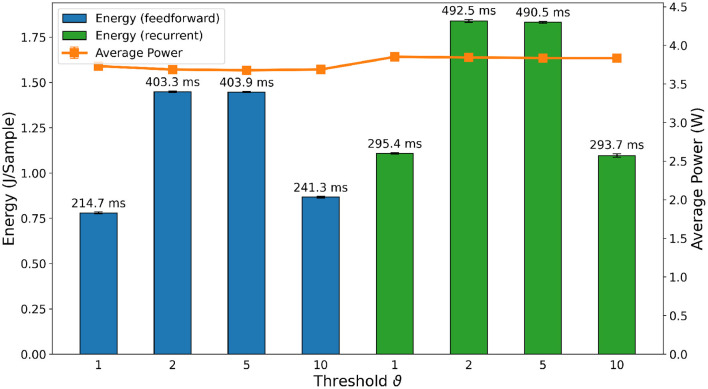
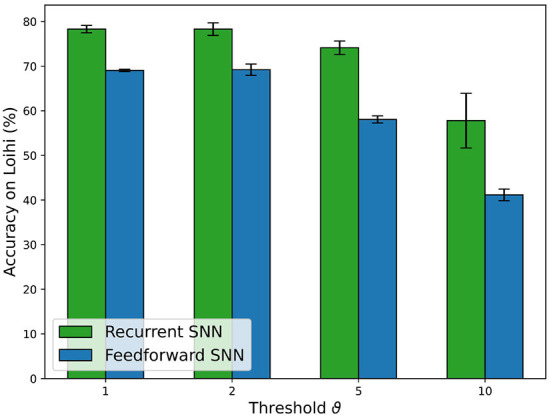
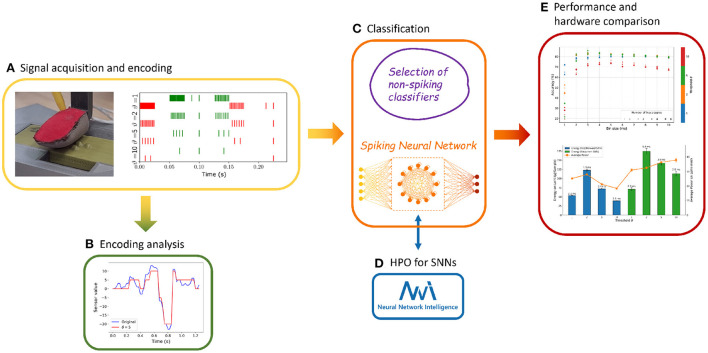
Spatio-temporal pattern recognition is a fundamental ability of the brain which is required for numerous real-world activities. Recent deep learning approaches have reached outstanding accuracies in such tasks, but their implementation on conventional embedded solutions is still very computationally and energy expensive. Tactile sensing in robotic applications is a representative example where real-time processing and energy efficiency are required. Following a brain-inspired computing approach, we propose a new benchmark for spatio-temporal tactile pattern recognition at the edge through Braille letter reading. We recorded a new Braille letters dataset based on the capacitive tactile sensors of the iCub robot's fingertip. We then investigated the importance of spatial and temporal information as well as the impact of event-based encoding on spike-based computation. Afterward, we trained and compared feedforward and recurrent Spiking Neural Networks (SNNs) offline using Backpropagation Through Time (BPTT) with surrogate gradients, then we deployed them on the Intel Loihi neuromorphic chip for fast and efficient inference. We compared our approach to standard classifiers, in particular to the Long Short-Term Memory (LSTM) deployed on the embedded NVIDIA Jetson GPU, in terms of classification accuracy, power, and energy consumption together with computational delay. Our results show that the LSTM reaches ~97% of accuracy, outperforming the recurrent SNN by ~17% when using continuous frame-based data instead of event-based inputs. However, the recurrent SNN on Loihi with event-based inputs is ~500 times more energy-efficient than the LSTM on Jetson, requiring a total power of only ~30 mW. This work proposes a new benchmark for tactile sensing and highlights the challenges and opportunities of event-based encoding, neuromorphic hardware, and spike-based computing for spatio-temporal pattern recognition at the edge.

摘要

时空模式识别是大脑的一项基本能力,许多现实世界的活动都需要它。最近的深度学习方法在这类任务中取得了出色的准确率,但其在传统嵌入式解决方案上的实现仍然在计算和能源方面成本高昂。机器人应用中的触觉传感就是一个需要实时处理和能源效率的典型例子。遵循受大脑启发的计算方法,我们通过盲文阅读提出了一种用于边缘时空触觉模式识别的新基准。我们基于iCub机器人指尖的电容式触觉传感器记录了一个新的盲文字母数据集。然后,我们研究了空间和时间信息的重要性以及基于事件的编码对基于脉冲的计算的影响。之后,我们使用带替代梯度的时间反向传播(BPTT)离线训练并比较了前馈和递归脉冲神经网络(SNN),然后将它们部署在英特尔Loihi神经形态芯片上进行快速高效的推理。我们在分类准确率、功率、能耗以及计算延迟方面,将我们的方法与标准分类器,特别是部署在嵌入式NVIDIA Jetson GPU上的长短期记忆(LSTM)进行了比较。我们的结果表明,当使用基于连续帧的数据而非基于事件的输入时,LSTM的准确率达到了约97%,比递归SNN高出约17%。然而,在Loihi上使用基于事件输入的递归SNN比Jetson上的LSTM节能约500倍,总功率仅需约30 mW。这项工作提出了一种新的触觉传感基准,并突出了基于事件的编码、神经形态硬件以及基于脉冲的计算在边缘时空模式识别方面的挑战和机遇。
https://cdn.ncbi.nlm.nih.gov/pmc/blobs/30f2/9695069/16e2e844f408/fnins-16-951164-g0011.jpg
https://cdn.ncbi.nlm.nih.gov/pmc/blobs/30f2/9695069/f7dd445b1fbe/fnins-16-951164-g0001.jpg
https://cdn.ncbi.nlm.nih.gov/pmc/blobs/30f2/9695069/c5b4713e3df3/fnins-16-951164-g0002.jpg
https://cdn.ncbi.nlm.nih.gov/pmc/blobs/30f2/9695069/9391d5541caa/fnins-16-951164-g0003.jpg
https://cdn.ncbi.nlm.nih.gov/pmc/blobs/30f2/9695069/d5f6edf355c1/fnins-16-951164-g0004.jpg
https://cdn.ncbi.nlm.nih.gov/pmc/blobs/30f2/9695069/a8b336e2a4ff/fnins-16-951164-g0005.jpg
https://cdn.ncbi.nlm.nih.gov/pmc/blobs/30f2/9695069/64326689899e/fnins-16-951164-g0006.jpg
https://cdn.ncbi.nlm.nih.gov/pmc/blobs/30f2/9695069/9daaadbae822/fnins-16-951164-g0007.jpg
https://cdn.ncbi.nlm.nih.gov/pmc/blobs/30f2/9695069/1e4f0ed6fe7d/fnins-16-951164-g0008.jpg
https://cdn.ncbi.nlm.nih.gov/pmc/blobs/30f2/9695069/69657c655524/fnins-16-951164-g0009.jpg
https://cdn.ncbi.nlm.nih.gov/pmc/blobs/30f2/9695069/9d08c65f702c/fnins-16-951164-g0010.jpg
https://cdn.ncbi.nlm.nih.gov/pmc/blobs/30f2/9695069/16e2e844f408/fnins-16-951164-g0011.jpg
https://cdn.ncbi.nlm.nih.gov/pmc/blobs/30f2/9695069/f7dd445b1fbe/fnins-16-951164-g0001.jpg
https://cdn.ncbi.nlm.nih.gov/pmc/blobs/30f2/9695069/c5b4713e3df3/fnins-16-951164-g0002.jpg
https://cdn.ncbi.nlm.nih.gov/pmc/blobs/30f2/9695069/9391d5541caa/fnins-16-951164-g0003.jpg
https://cdn.ncbi.nlm.nih.gov/pmc/blobs/30f2/9695069/d5f6edf355c1/fnins-16-951164-g0004.jpg
https://cdn.ncbi.nlm.nih.gov/pmc/blobs/30f2/9695069/a8b336e2a4ff/fnins-16-951164-g0005.jpg
https://cdn.ncbi.nlm.nih.gov/pmc/blobs/30f2/9695069/64326689899e/fnins-16-951164-g0006.jpg
https://cdn.ncbi.nlm.nih.gov/pmc/blobs/30f2/9695069/9daaadbae822/fnins-16-951164-g0007.jpg
https://cdn.ncbi.nlm.nih.gov/pmc/blobs/30f2/9695069/1e4f0ed6fe7d/fnins-16-951164-g0008.jpg
https://cdn.ncbi.nlm.nih.gov/pmc/blobs/30f2/9695069/69657c655524/fnins-16-951164-g0009.jpg
https://cdn.ncbi.nlm.nih.gov/pmc/blobs/30f2/9695069/9d08c65f702c/fnins-16-951164-g0010.jpg
https://cdn.ncbi.nlm.nih.gov/pmc/blobs/30f2/9695069/16e2e844f408/fnins-16-951164-g0011.jpg

相似文献

1
Braille letter reading: A benchmark for spatio-temporal pattern recognition on neuromorphic hardware.盲文阅读:神经形态硬件上时空模式识别的一个基准。
Front Neurosci. 2022 Nov 11;16:951164. doi: 10.3389/fnins.2022.951164. eCollection 2022.
2
Deep Learning With Spiking Neurons: Opportunities and Challenges.基于脉冲神经元的深度学习:机遇与挑战。
Front Neurosci. 2018 Oct 25;12:774. doi: 10.3389/fnins.2018.00774. eCollection 2018.
3
Boost event-driven tactile learning with location spiking neurons.利用位置发放神经元增强事件驱动的触觉学习。
Front Neurosci. 2023 Apr 21;17:1127537. doi: 10.3389/fnins.2023.1127537. eCollection 2023.
4
Neuromorphic Sentiment Analysis Using Spiking Neural Networks.基于尖峰神经网络的神经形态情绪分析。
Sensors (Basel). 2023 Sep 6;23(18):7701. doi: 10.3390/s23187701.
5
Hand-Gesture Recognition Based on EMG and Event-Based Camera Sensor Fusion: A Benchmark in Neuromorphic Computing.基于肌电图和基于事件的相机传感器融合的手势识别:神经形态计算中的一个基准
Front Neurosci. 2020 Aug 5;14:637. doi: 10.3389/fnins.2020.00637. eCollection 2020.
6
Enhancing SNN-based spatio-temporal learning: A benchmark dataset and Cross-Modality Attention model.基于 SNN 的时空学习增强:基准数据集和跨模态注意模型。
Neural Netw. 2024 Dec;180:106677. doi: 10.1016/j.neunet.2024.106677. Epub 2024 Sep 3.
7
Exploring Optimized Spiking Neural Network Architectures for Classification Tasks on Embedded Platforms.探索用于嵌入式平台上分类任务的优化尖峰神经网络架构。
Sensors (Basel). 2021 May 7;21(9):3240. doi: 10.3390/s21093240.
8
SSTDP: Supervised Spike Timing Dependent Plasticity for Efficient Spiking Neural Network Training.SSTDP:用于高效脉冲神经网络训练的监督式脉冲时间依赖可塑性
Front Neurosci. 2021 Nov 4;15:756876. doi: 10.3389/fnins.2021.756876. eCollection 2021.
9
STSC-SNN: Spatio-Temporal Synaptic Connection with temporal convolution and attention for spiking neural networks.STSC-SNN:用于脉冲神经网络的具有时间卷积和注意力机制的时空突触连接
Front Neurosci. 2022 Dec 23;16:1079357. doi: 10.3389/fnins.2022.1079357. eCollection 2022.
10
Efficient training of spiking neural networks with temporally-truncated local backpropagation through time.通过时间上截断的局部反向传播对脉冲神经网络进行高效训练。
Front Neurosci. 2023 Apr 6;17:1047008. doi: 10.3389/fnins.2023.1047008. eCollection 2023.

引用本文的文献

1
Neuromorphic computing for robotic vision: algorithms to hardware advances.用于机器人视觉的神经形态计算:从算法到硬件的进展
Commun Eng. 2025 Aug 13;4(1):152. doi: 10.1038/s44172-025-00492-5.
2
Neuromorphic intermediate representation: A unified instruction set for interoperable brain-inspired computing.神经形态中间表示:一种用于可互操作的类脑计算的统一指令集。
Nat Commun. 2024 Sep 16;15(1):8122. doi: 10.1038/s41467-024-52259-9.
3
SHIP: a computational framework for simulating and validating novel technologies in hardware spiking neural networks.

本文引用的文献

1
Neural heterogeneity promotes robust learning.神经异质性促进了稳健的学习。
Nat Commun. 2021 Oct 4;12(1):5791. doi: 10.1038/s41467-021-26022-3.
2
The Remarkable Robustness of Surrogate Gradient Learning for Instilling Complex Function in Spiking Neural Networks.尖峰神经网络中复杂功能的代理梯度学习的显著稳健性。
Neural Comput. 2021 Mar 26;33(4):899-925. doi: 10.1162/neco_a_01367.
3
The Heidelberg Spiking Data Sets for the Systematic Evaluation of Spiking Neural Networks.用于 Spike 神经网络系统评估的海德堡 Spike 数据集。
SHIP:一种用于模拟和验证硬件脉冲神经网络中的新技术的计算框架。
Front Neurosci. 2024 Jan 8;17:1270090. doi: 10.3389/fnins.2023.1270090. eCollection 2023.
4
Neuromorphic hardware for somatosensory neuroprostheses.用于体感神经假肢的神经形态硬件。
Nat Commun. 2024 Jan 16;15(1):556. doi: 10.1038/s41467-024-44723-3.
5
Impact of spiking neurons leakages and network recurrences on event-based spatio-temporal pattern recognition.脉冲神经元泄漏和网络递归对基于事件的时空模式识别的影响。
Front Neurosci. 2023 Nov 24;17:1244675. doi: 10.3389/fnins.2023.1244675. eCollection 2023.
6
Critically synchronized brain waves form an effective, robust and flexible basis for human memory and learning.关键同步脑波为人类记忆和学习提供了有效、强大且灵活的基础。
Sci Rep. 2023 Mar 16;13(1):4343. doi: 10.1038/s41598-023-31365-6.
7
Spike encoding techniques for IoT time-varying signals benchmarked on a neuromorphic classification task.用于物联网时变信号的尖峰编码技术在神经形态分类任务上的基准测试。
Front Neurosci. 2022 Dec 21;16:999029. doi: 10.3389/fnins.2022.999029. eCollection 2022.
IEEE Trans Neural Netw Learn Syst. 2022 Jul;33(7):2744-2757. doi: 10.1109/TNNLS.2020.3044364. Epub 2022 Jul 6.
4
The association between tactile, motor and cognitive capacities and braille reading performance: a scoping review of primary evidence to advance research on braille and aging.触觉、运动和认知能力与盲文阅读表现之间的关联:一项旨在推进盲文与老龄化研究的主要证据范围综述。
Disabil Rehabil. 2022 Jun;44(11):2515-2536. doi: 10.1080/09638288.2020.1839972. Epub 2020 Nov 4.
5
Comparing SNNs and RNNs on neuromorphic vision datasets: Similarities and differences.在神经形态视觉数据集上比较 SNNs 和 RNNs:相似性和差异。
Neural Netw. 2020 Dec;132:108-120. doi: 10.1016/j.neunet.2020.08.001. Epub 2020 Aug 17.
6
Mechanisms of Winner-Take-All and Group Selection in Neuronal Spiking Networks.神经元放电网络中胜者全得和群体选择的机制
Front Comput Neurosci. 2017 Apr 21;11:20. doi: 10.3389/fncom.2017.00020. eCollection 2017.
7
Robots with a sense of touch.具备触觉的机器人。
Nat Mater. 2016 Aug 24;15(9):921-5. doi: 10.1038/nmat4731.
8
Braille in the Sighted: Teaching Tactile Reading to Sighted Adults.面向有视力者的盲文:向有视力的成年人教授触觉阅读
PLoS One. 2016 May 17;11(5):e0155394. doi: 10.1371/journal.pone.0155394. eCollection 2016.
9
Neuromorphic Artificial Touch for Categorization of Naturalistic Textures.神经形态人工触觉用于自然纹理的分类。
IEEE Trans Neural Netw Learn Syst. 2017 Apr;28(4):819-829. doi: 10.1109/TNNLS.2015.2472477. Epub 2015 Sep 10.
10
The sensory neurons of touch.触觉的感觉神经元。
Neuron. 2013 Aug 21;79(4):618-39. doi: 10.1016/j.neuron.2013.07.051.