Naz Faiza, Sajid Salvia, Yueda Lu, Yang Zhao, Naheed Suad
College of Life Science and Technology, Innovation Center of Molecular Diagnostics, Beijing University of Chemical Technology, Beijing 100029, China.
Department of Biotechnology, Jinnah University for Women, Karachi 74600, Pakistan.
J Clin Transl Res. 2022 Sep 28;8(5):434-444. eCollection 2022 Oct 31.
The brain is one of the most complex and crucial organs of our body. Its health is a matter of concern for all individuals as the number of aged people is increasing gradually in the world. is a ubiquitous plant, and its different parts possess neuroprotective effects against various neurodegenerative diseases. However, its brain anti-aging effects have remained uninvestigated. Therefore, this study has examined the brain anti-aging strength of pulp and seeds extracts in D-galactose-induced aging rats.
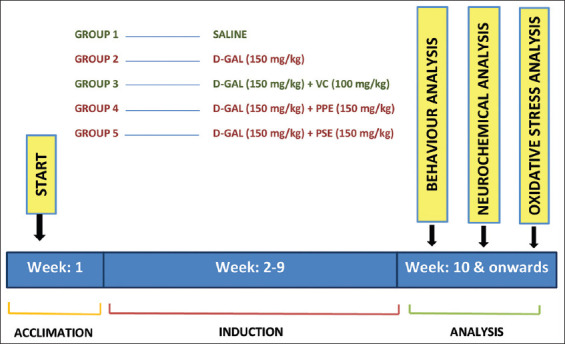
The rats were intraperitoneally injected with 150 mg/kg of D-galactose for 8 consecutive weeks to induce brain aging. In parallel, the rats of papaya pulp and papaya seed treated groups were injected with 150 mg/kg papaya pulp extract and 150 mg/kg papaya seed extract, respectively. The negative control group was only injected with 0.9% saline, whereas in the rats of the positive control group along with D-galactose 100 mg/kg VC was injected. After the treatment period, different neurobehavioral, neurochemical, and antioxidant analyses were performed to unmask the anti-aging strength of pulp and seeds extracts.
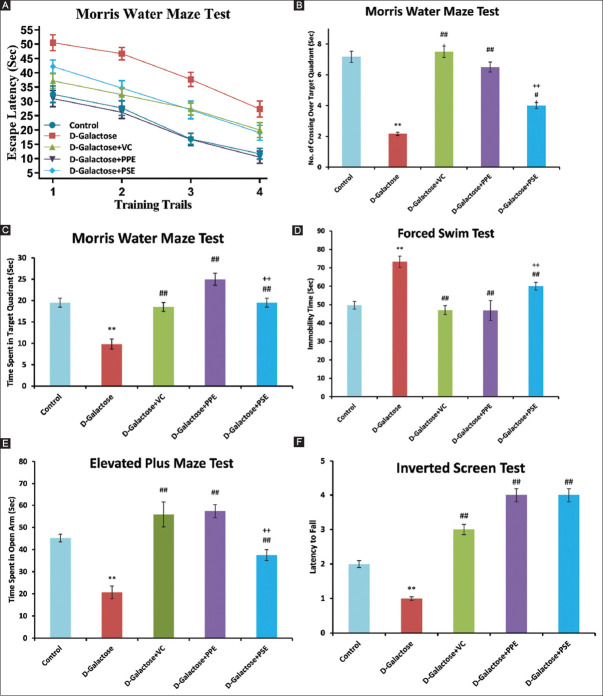
pulp and seed extracts significantly improved cognitive learning skills, memory, and muscular strength in aging rats while reducing stress and anxiety levels. Moreover, they enhanced neurotransmitters concentration and reduced oxidative stress. However, the anti-aging effects of pulp were more significant than seeds.
These results suggest that both pulp and seed extracts possess neuroprotective effects against brain aging or age-related brain deteriorations but the age-protecting capability of pulp is higher than seeds. Therefore, it could be utilized as a component to design a novel brain anti-aging drug.
Brain aging is a natural process that every individual experiences in his life. The regular consumption of can improve the quality of life by protecting neurons from age-related deteriorations.
大脑是人体最复杂且至关重要的器官之一。随着全球老年人口数量逐渐增加,大脑健康成为所有人关注的问题。番木瓜是一种常见植物,其不同部位对多种神经退行性疾病具有神经保护作用。然而,其大脑抗衰老作用尚未得到研究。因此,本研究检测了番木瓜果肉和种子提取物对D - 半乳糖诱导的衰老大鼠的大脑抗衰老强度。
连续8周给大鼠腹腔注射150 mg/kg的D - 半乳糖以诱导大脑衰老。同时,番木瓜果肉和番木瓜种子处理组的大鼠分别注射150 mg/kg的番木瓜果肉提取物和150 mg/kg的番木瓜种子提取物。阴性对照组仅注射0.9%生理盐水,而阳性对照组的大鼠在注射D - 半乳糖的同时注射100 mg/kg的维生素C。治疗期结束后,进行不同的神经行为、神经化学和抗氧化分析,以揭示番木瓜果肉和种子提取物的抗衰老强度。
番木瓜果肉和种子提取物显著改善了衰老大鼠的认知学习能力、记忆力和肌肉力量,同时降低了应激和焦虑水平。此外,它们提高了神经递质浓度并减轻了氧化应激。然而,番木瓜果肉的抗衰老作用比种子更显著。
这些结果表明,番木瓜果肉和种子提取物对大脑衰老或与年龄相关的大脑退化均具有神经保护作用,但番木瓜果肉的抗老化能力高于番木瓜种子。因此,它可作为设计新型大脑抗衰老药物的一种成分。
大脑衰老是每个人在生命中都会经历的自然过程。经常食用番木瓜可以通过保护神经元免受与年龄相关的退化来提高生活质量。