Song Qianbo, Cheng Sau Wan, Li Dan, Cheng Huiyuan, Lai Yuen Sze, Han Quanbin, Wu Hoi Yan, Shaw Pang Chui, Zuo Zhong
School of Pharmacy, The Chinese University of Hong Kong, Hong Kong, Hong Kong SAR, China.
Institute of Chinese Medicine, The Chinese University of Hong Kong, Hong Kong, Hong Kong SAR, China.
Front Pharmacol. 2022 Nov 14;13:1043527. doi: 10.3389/fphar.2022.1043527. eCollection 2022.
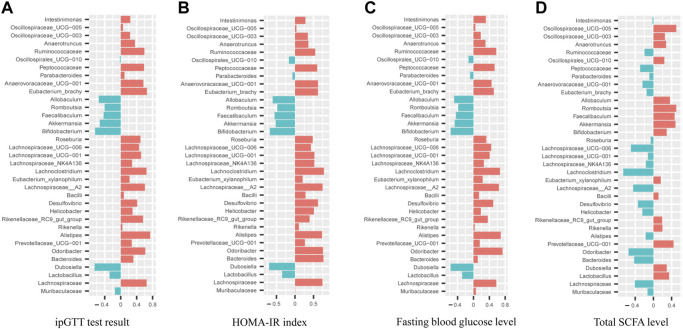
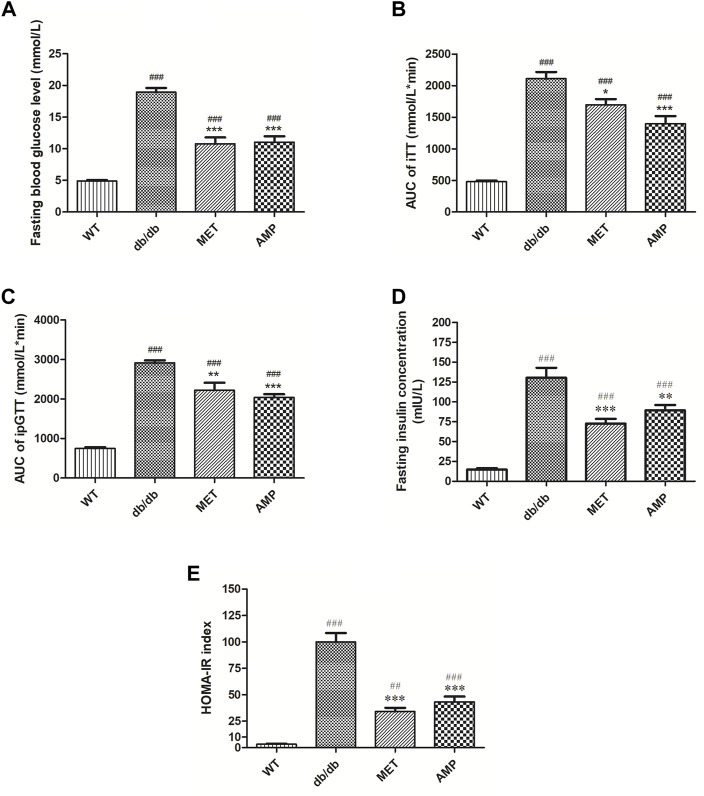
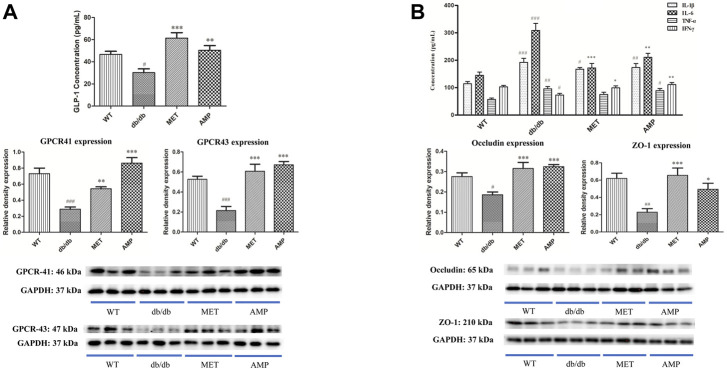
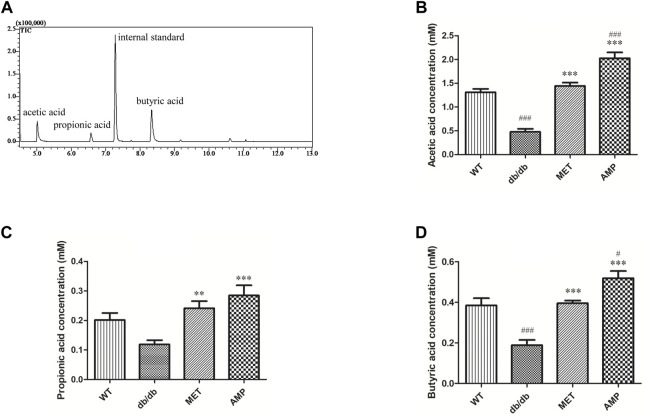
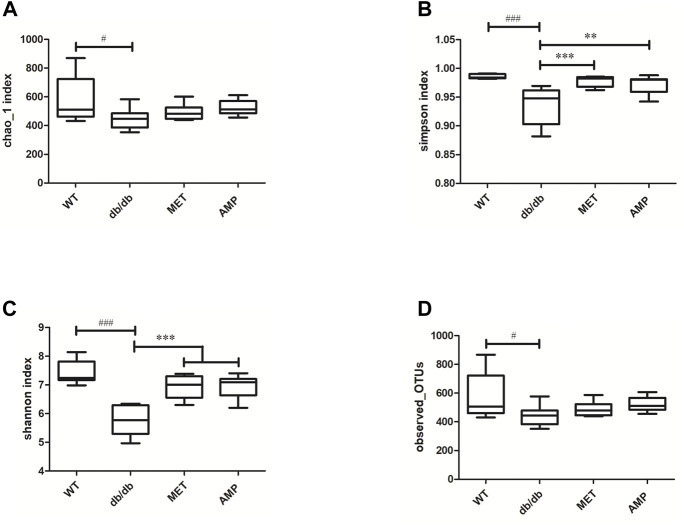
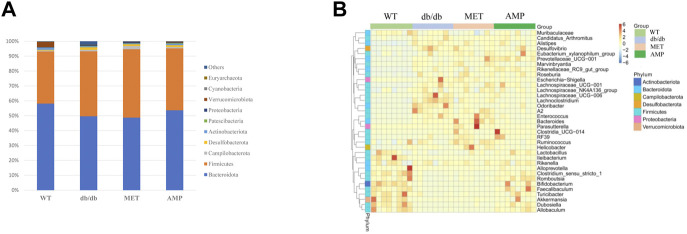
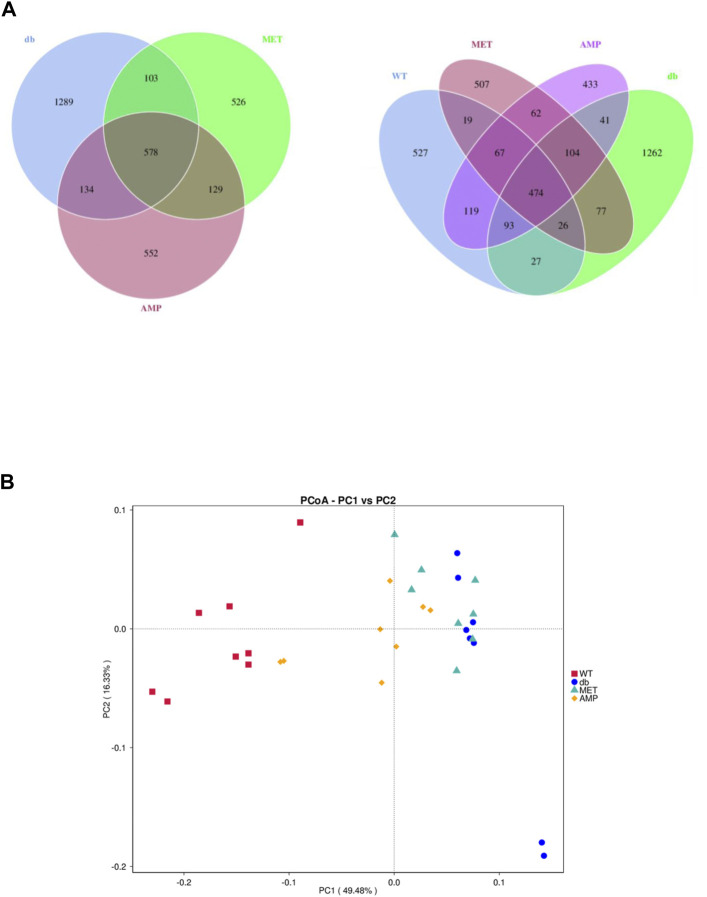
Gut microbiota has been reported to be closely associated with Type-II diabetes. Restoration of disordered gut microbiota ecosystem has been developed into a therapeutic strategy and gradually applied on Type-II diabetes treatment with both western drugs and herbal polysaccharides. Although polysaccharides (AMP) have also been used to treat Type-II diabetes, no study investigated correlations between gut microbiota regulation and its hypoglycemic effect. In the present study, the role of gut microbiota on the hypoglycemic effect of AMP in mice was investigated for the first time. Sixteen days treatment of AMP at the dosage of 600 mg/kg in mice not only alleviated its diabetic symptoms significantly but also restored its gut microbiota community with increased production of fecal short chain fatty acids (SCFA). Our further Pearson correlation analyses revealed that the relative abundance of two intestinal bacteria, and , were significantly positively correlated with the hypoglycemic effect of AMP as well as fecal SCFA production. It was also noted that treatment of AMP resulted in increased secretion of glucagon-like peptide-1 (GLP-1) in serum and enhanced intestinal integrity. Further mechanistic study revealed that the increased SCFA after AMP treatment could stimulate GLP-1 secretion and improve intestinal integrity via enhancing the expression of G protein-coupled receptors 41/43 and tight junction proteins (Occudin and ZO-1), respectively, leading to the alleviation of diabetic symptoms in mice.
据报道,肠道微生物群与2型糖尿病密切相关。恢复紊乱的肠道微生物群生态系统已发展成为一种治疗策略,并逐渐应用于2型糖尿病的治疗,包括西药和草药多糖。尽管多糖(AMP)也已用于治疗2型糖尿病,但尚无研究调查肠道微生物群调节与其降血糖作用之间的相关性。在本研究中,首次研究了肠道微生物群对AMP在小鼠体内降血糖作用的影响。以600mg/kg的剂量对小鼠进行16天的AMP治疗,不仅显著减轻了其糖尿病症状,还恢复了其肠道微生物群群落,粪便短链脂肪酸(SCFA)产量增加。我们进一步的Pearson相关性分析表明,两种肠道细菌的相对丰度与AMP的降血糖作用以及粪便SCFA产量显著正相关。还注意到,AMP治疗导致血清中胰高血糖素样肽-1(GLP-1)分泌增加,并增强了肠道完整性。进一步的机制研究表明,AMP治疗后SCFA增加可分别通过增强G蛋白偶联受体41/43和紧密连接蛋白(Occludin和ZO-1)的表达来刺激GLP-1分泌并改善肠道完整性,从而减轻小鼠的糖尿病症状。