Ma Qingyu, Zhai Ruohan, Xie Xiaoqing, Chen Tao, Zhang Ziqi, Liu Huicui, Nie Chenxi, Yuan Xiaojin, Tu Aobai, Tian Baoming, Zhang Min, Chen Zhifei, Li Juxiu
College of Food Science and Engineering, Northwest A&F University, Yangling, China.
Front Nutr. 2022 Jun 30;9:916271. doi: 10.3389/fnut.2022.916271. eCollection 2022.
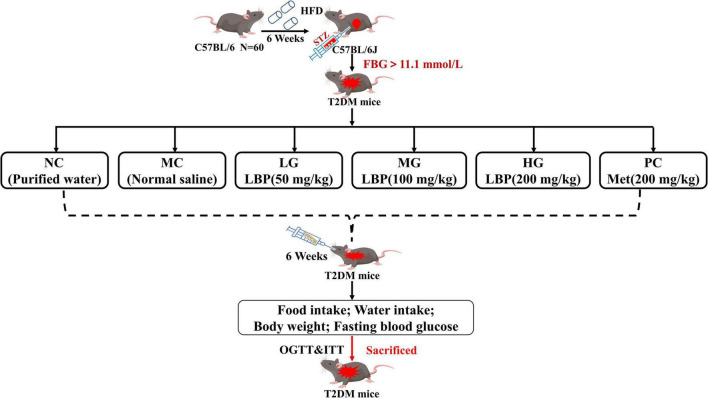
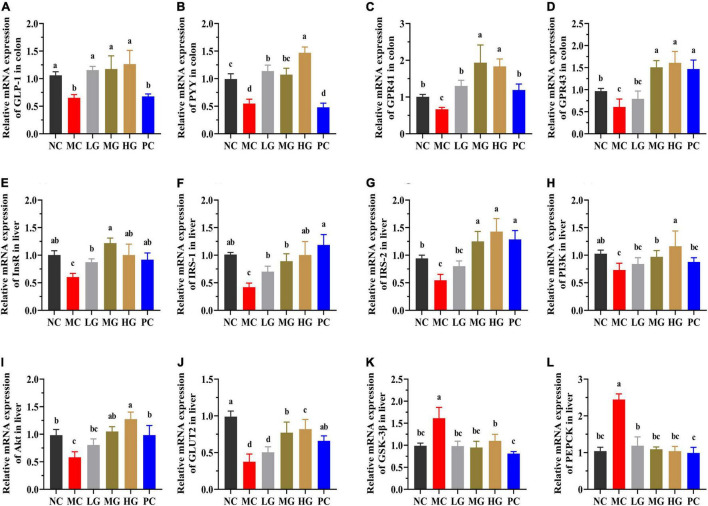
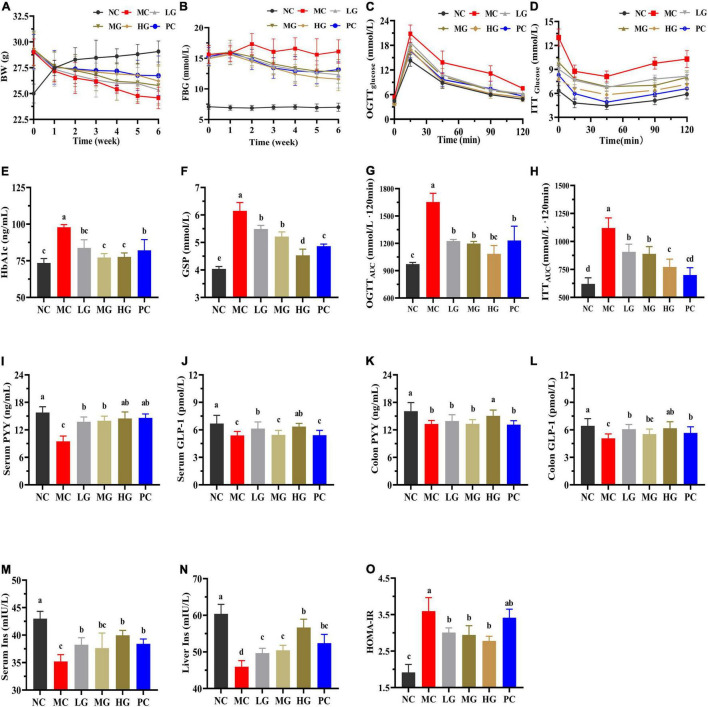
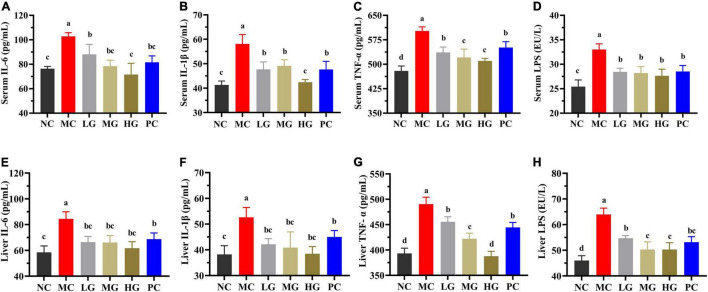
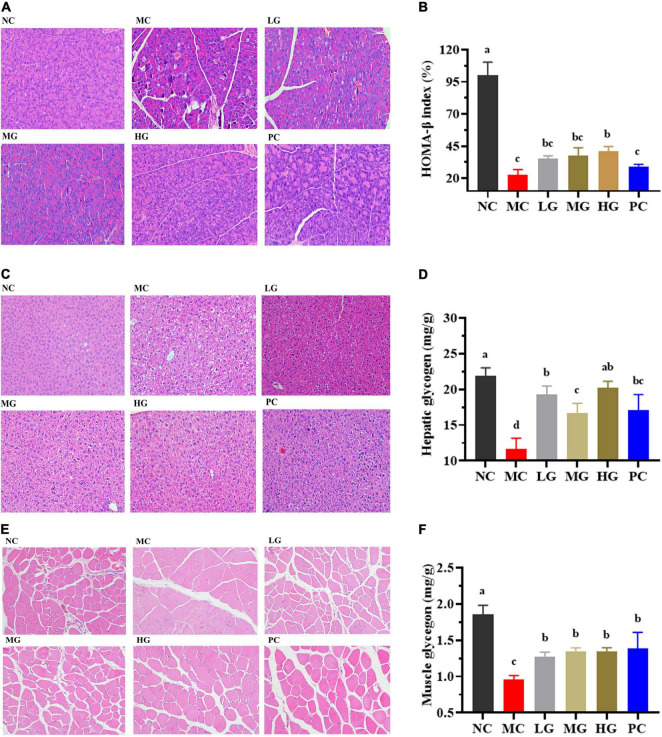
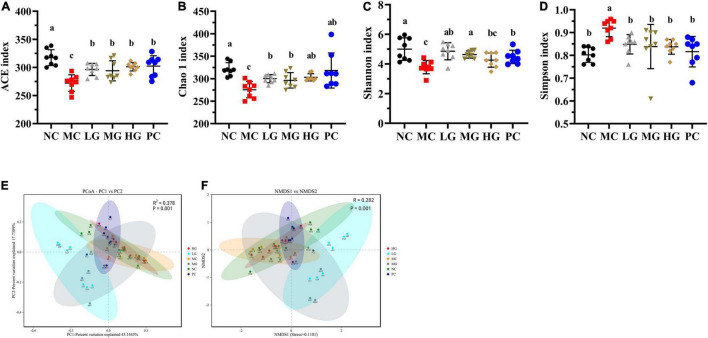
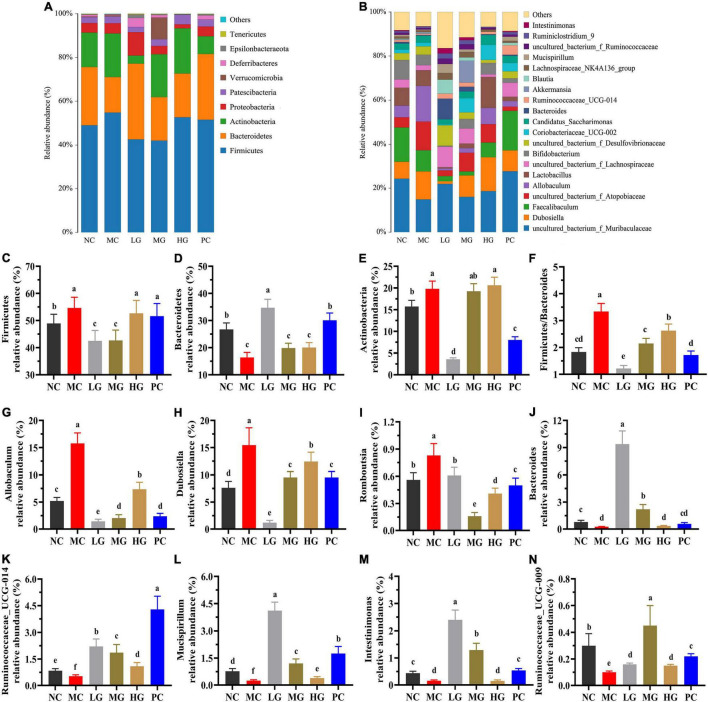
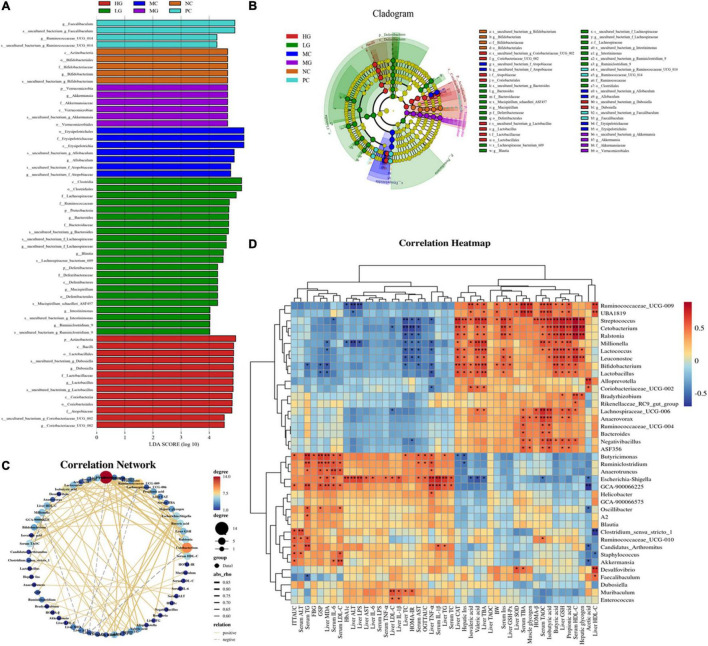
This study aims to explore the molecular mechanisms of polysaccharide (LBP) in alleviating type 2 diabetes through intestinal flora modulation. A high-fat diet (HFD) combined with streptozotocin (STZ) was applied to create a diabetic model. The results indicated that LBP effectively alleviated the symptoms of hyperglycemia, hyperlipidemia, and insulin resistance in diabetic mice. A high dosage of LBP exerted better hypoglycemic effects than low and medium dosages. In diabetic mice, LBP significantly boosted the activities of CAT, SOD, and GSH-Px and reduced inflammation. The analysis of 16S rDNA disclosed that LBP notably improved the composition of intestinal flora, increasing the relative abundance of , , , , and decreasing the relative abundance of , , . LBP significantly improved the production of short-chain fatty acids (SCFAs) in diabetic mice, which corresponded to the increase in the beneficial genus. According to Spearman's correlation analysis, , , . , , and correlated positively with insulin, whereas , , , , and correlated negatively with HOMA-IR, HDL-C, ALT, AST, TC, and lipopolysaccharide (LPS). These findings suggested that the mentioned genus may be beneficial to diabetic mice's hypoglycemia and hypolipidemia. The up-regulation of peptide YY (PYY), glucagon-like peptide-1 (GLP-1), and insulin were remarkably reversed by LBP in diabetic mice. The real-time PCR (RT-PCR) analysis illustrated that LBP distinctly regulated the glucose metabolism of diabetic mice by activating the IRS/PI3K/Akt signal pathway. These results indicated that LBP effectively alleviated the hyperglycemia and hyperlipidemia of diabetic mice by modulating intestinal flora.
本研究旨在探讨枸杞多糖(LBP)通过调节肠道菌群来缓解2型糖尿病的分子机制。采用高脂饮食(HFD)联合链脲佐菌素(STZ)建立糖尿病模型。结果表明,LBP能有效缓解糖尿病小鼠的高血糖、高血脂和胰岛素抵抗症状。高剂量LBP的降糖效果优于低剂量和中剂量。在糖尿病小鼠中,LBP显著提高了CAT、SOD和GSH-Px的活性并减轻了炎症。16S rDNA分析表明,LBP显著改善了肠道菌群的组成,增加了 、 、 、 、 的相对丰度,降低了 、 、 的相对丰度。LBP显著提高了糖尿病小鼠短链脂肪酸(SCFAs)的产生,这与有益菌属的增加相对应。根据Spearman相关性分析, 、 、 。 、 、 与胰岛素呈正相关,而 、 、 、 、 与HOMA-IR、HDL-C、ALT、AST、TC和脂多糖(LPS)呈负相关。这些发现表明,上述菌属可能对糖尿病小鼠的降血糖和降血脂有益。LBP显著逆转了糖尿病小鼠中肽YY(PYY)、胰高血糖素样肽-1(GLP-1)和胰岛素的上调。实时荧光定量PCR(RT-PCR)分析表明,LBP通过激活IRS/PI3K/Akt信号通路明显调节糖尿病小鼠的糖代谢。这些结果表明,LBP通过调节肠道菌群有效缓解了糖尿病小鼠的高血糖和高血脂。