National Research Institute of Police Science, 6-3-1 Kashiwanoha, Kashiwa, Chiba, 277-0882, Japan.
Forensic Toxicol. 2022 Jan;40(1):64-74. doi: 10.1007/s11419-021-00590-x. Epub 2021 Jul 31.
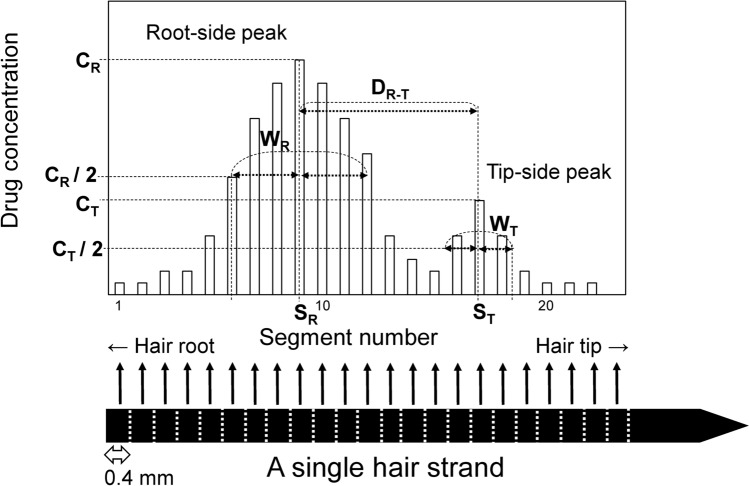
Drug distribution in scalp hair can provide historical information about drug use, such as the date and frequency of drug ingestion. We previously developed micro-segmental hair analysis, which visualizes drug distribution at 0.4-mm intervals in individual hairs. The present study examines whether the distribution profiles of drugs can be markers for the administration or external contamination of the drugs using scalp, axillary, and pubic hairs.
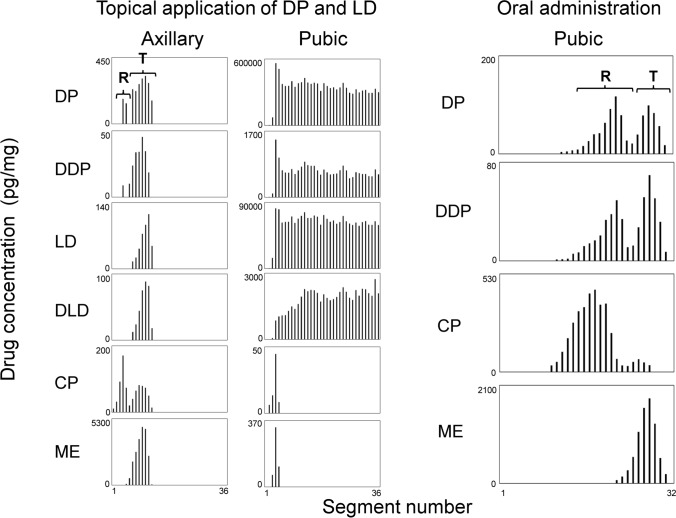
A single dose of anti-itch ointment containing diphenhydramine (DP) and lidocaine (LD) was topically applied to the axillary or pubic areas of two volunteers; DP was also orally administered; and LD was intra-gingivally injected. Scalp, axillary, and pubic hairs were assessed using our micro-segmental analysis.
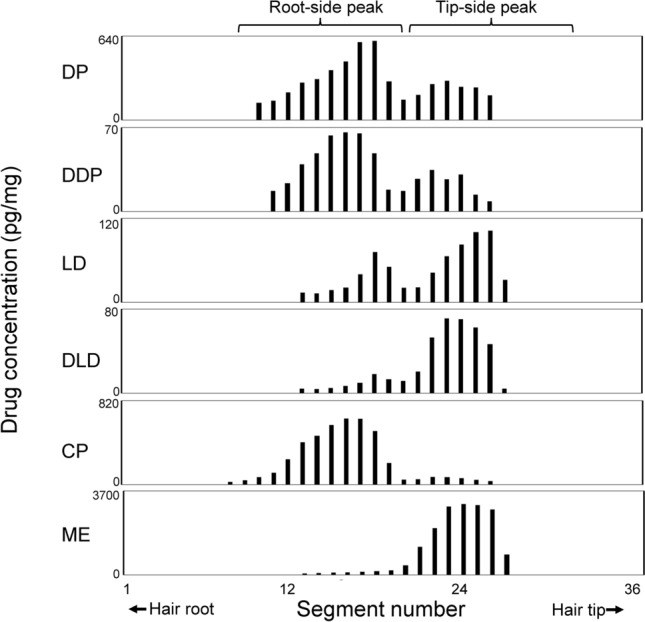
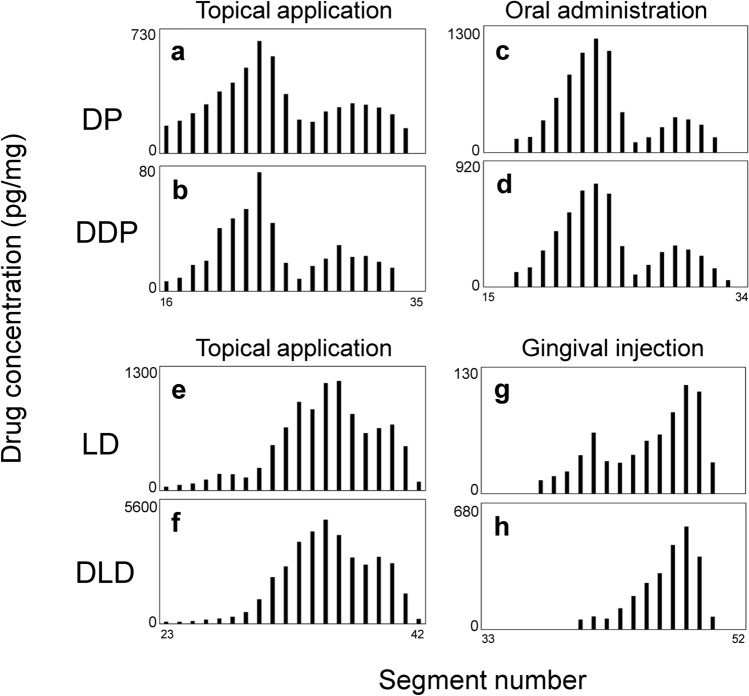
The localization of DP and LD differed within individual scalp hair strands, implying DP and LD were predominantly incorporated into scalp hair via the bloodstream and via sweat/sebum, respectively, showing double-peak profiles. However, DP and LD were distributed along the shafts of axillary and pubic hairs without appearance of the double-peak profiles when the ointment had been applied to the axillary and pubic areas. The distributions of DP and LD in scalp hairs did not significantly differ according to administration routes, such as oral administration, gingival injection, and topical application.
Micro-segmental analysis revealed differences in the distribution profiles of drugs in hairs, and distinguished hairs with and without external contamination. These findings will be useful for understanding of the mechanism of drug uptake into hair and for estimating the circumstances for a drug use.
头皮毛发中的药物分布可提供药物使用的历史信息,例如药物摄入的日期和频率。我们之前开发了微分段毛发分析技术,可在单个毛发中以 0.4 毫米的间隔可视化药物分布。本研究探讨了药物的分布情况是否可以作为药物给药或外部污染的标志物,使用的是头皮、腋窝和阴毛。
两名志愿者的腋窝或阴部局部应用含有苯海拉明(DP)和利多卡因(LD)的止痒软膏作为单次剂量;DP 也经口给予;LD 经牙龈内注射。使用我们的微分段分析评估头皮、腋窝和阴毛。
DP 和 LD 在个体头皮毛发中的定位不同,这意味着 DP 和 LD 主要通过血液和汗液/皮脂分别掺入头皮毛发,呈现双峰分布。然而,当软膏应用于腋窝和阴部时,DP 和 LD 沿腋窝和阴毛的轴分布,而没有双峰分布的出现。DP 和 LD 在头皮毛发中的分布方式与给药途径(如口服、牙龈注射和局部应用)无关。
微分段分析揭示了毛发中药物分布模式的差异,并区分了有和无外部污染的毛发。这些发现将有助于理解药物进入毛发的机制,并估计药物使用的情况。