NUS Environmental Research Institute, National University of Singapore, Singapore 117411, Singapore; Energy and Environmental Sustainability for Megacities (E2S2) Phase II, Campus for Research Excellence and Technological Enterprise (CREATE), 1 Create Way, Singapore 138602, Singapore.
NUS Environmental Research Institute, National University of Singapore, Singapore 117411, Singapore.
J Hazard Mater. 2023 Mar 5;445:130393. doi: 10.1016/j.jhazmat.2022.130393. Epub 2022 Nov 15.
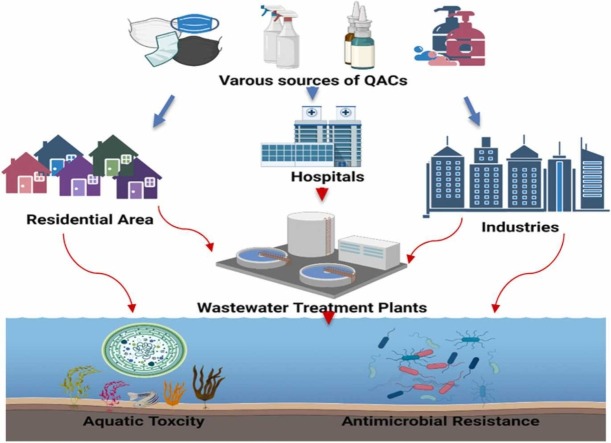
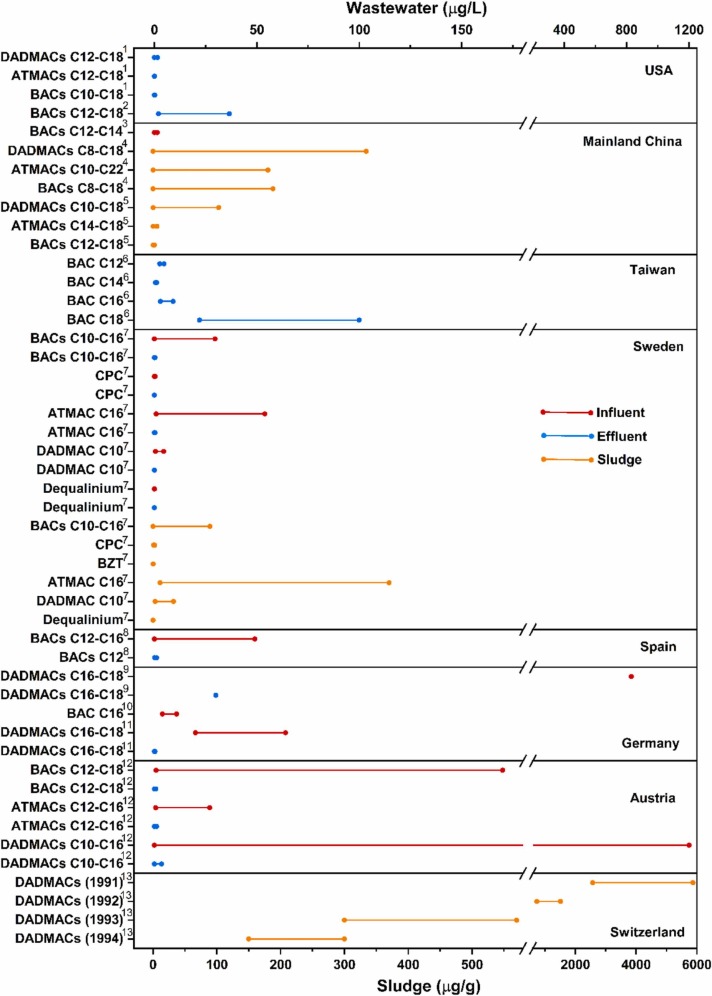
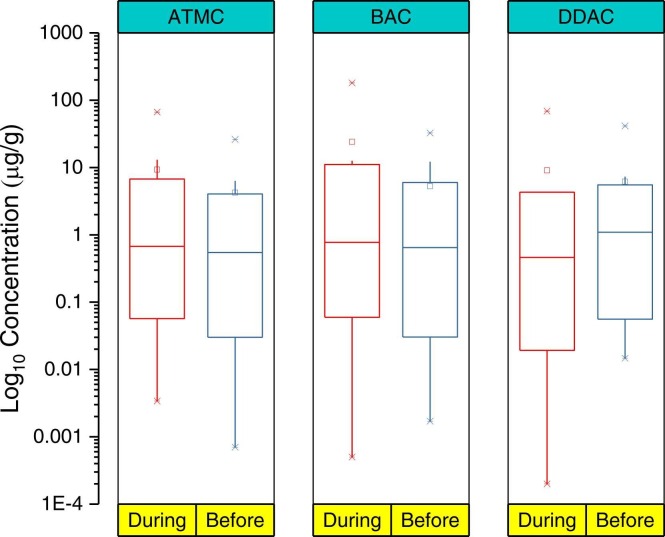
Amplified hygiene and precautionary measures are of utmost importance to control the spread of COVID-19 and future infection; however, these changes in practice are projected to trigger a rise in the purchase, utilisation and hence, discharge of many disinfectants into the environment. While alcohol-based, hydrogen peroxide-based, and chlorine-based compounds have been used widely, quaternary ammonium compounds (QACs) based disinfectants are of significant concern due to their overuse during this pandemic. This review presents the classification of disinfectants and their mechanism of action, focusing on QACs. Most importantly, the occurrence, fate, toxicity and antimicrobial resistance due to QACs are covered in this paper. Here we collated evidence from multiple studies and found rising trends of concern, including an increase in the mass load of QACs at a wastewater treatment plant (WWTP) by 331% compared to before the COVID-19 pandemic, as well as an increases in the concentration of 62% in residential dust, resulting in high concentrations of QACs in human blood and breast milk and suggesting that these could be potential sources of persistent QACs in infants. In addition to increased toxicity to human and aquatic life, increased use of QACs and accelerated use of antibiotics and antimicrobials during the COVID-19 pandemic could multiply the threat to antimicrobial resistance.
加强卫生和预防措施对于控制 COVID-19 和未来感染的传播至关重要;然而,这些实践中的变化预计会导致许多消毒剂的购买、使用量增加,从而排放到环境中。虽然已经广泛使用了基于酒精、过氧化氢和氯的化合物,但由于在大流行期间过度使用,基于季铵化合物 (QAC) 的消毒剂引起了极大的关注。本综述介绍了消毒剂的分类及其作用机制,重点介绍了 QACs。最重要的是,本文涵盖了 QACs 的出现、命运、毒性和抗微生物耐药性。在这里,我们整理了多项研究的证据,发现了令人担忧的上升趋势,包括与 COVID-19 大流行前相比,污水处理厂 (WWTP) 中 QAC 的质量负荷增加了 331%,以及住宅灰尘中浓度增加了 62%,导致人类血液和母乳中 QAC 浓度较高,并表明这些可能是婴儿体内持久性 QAC 的潜在来源。除了对人类和水生生物的毒性增加之外,COVID-19 大流行期间 QAC 的使用增加以及抗生素和抗菌药物的加速使用,可能会使抗微生物耐药性的威胁倍增。