Department of Conservative and Prosthetic Dentistry, Faculty of Dentistry, University Complutense of Madrid, Plaza Ramón Y Cajal S/N. 28040, Madrid, Spain.
Clínica Dental Vilagran, Badalona, Barcelona, Spain.
Clin Oral Investig. 2023 Jun;27(6):2521-2532. doi: 10.1007/s00784-022-04809-y. Epub 2022 Dec 3.
The aim of this study was to evaluate the accuracy, in terms of trueness and precision, of printed models using five different industrial and dental desktop 3D printers.
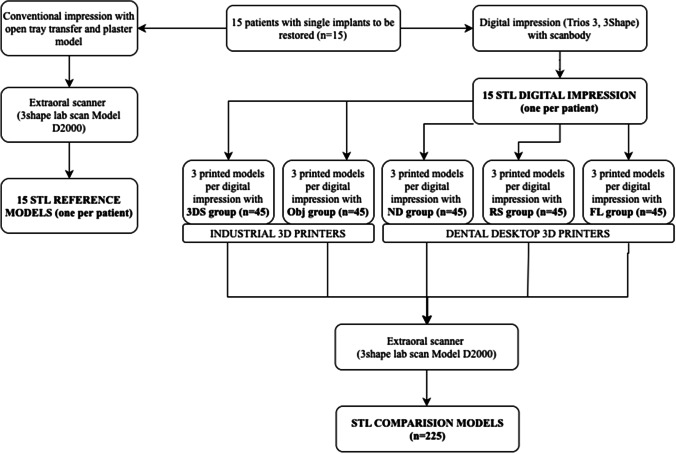
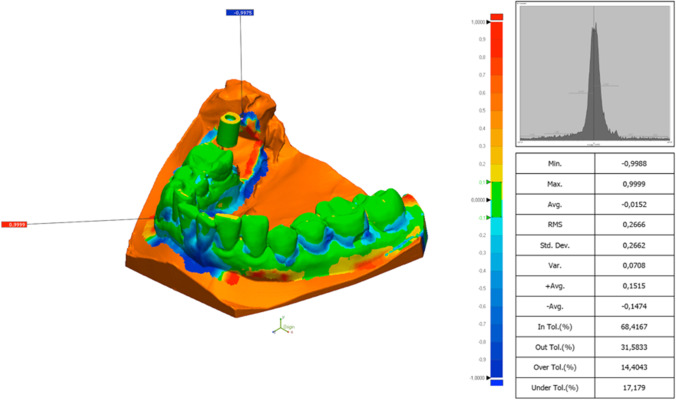
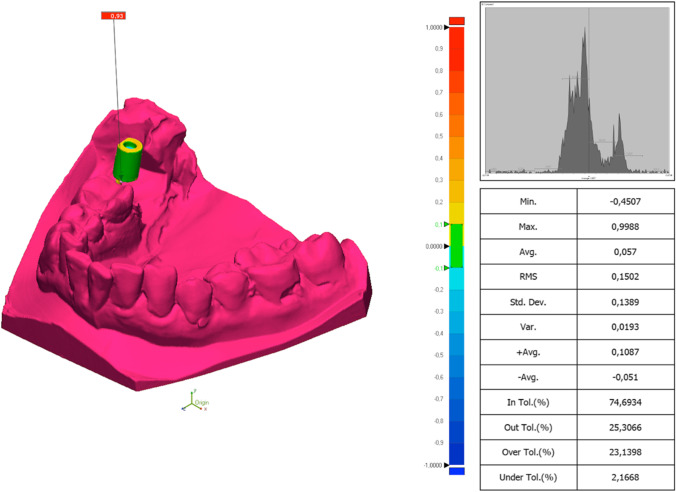
Full-arch digital models with scanbodies of 15 patients were printed with five different 3D printers. The industrial printers were 3D system Project MJP2500 (3DS) and Objet30 OrthoDesk (Obj). The dental desktop printers were NextDent 5100 (ND), Formlabs Form 2 (FL) and Rapidshape D30 (RS). A total of 225 printed models were analysed. The printed models were digitized and compared with the reference cast model using the Control X software (Geomagic). The descriptive statistics and one-way ANOVA with the post hoc Tukey test were performed (α = 0.05).
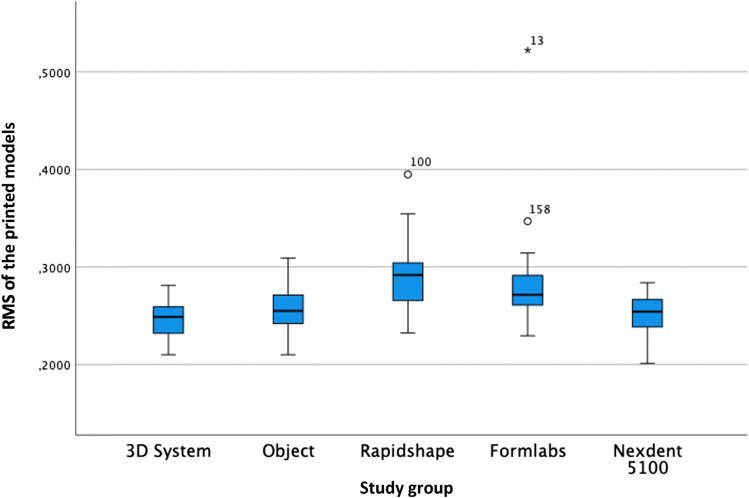
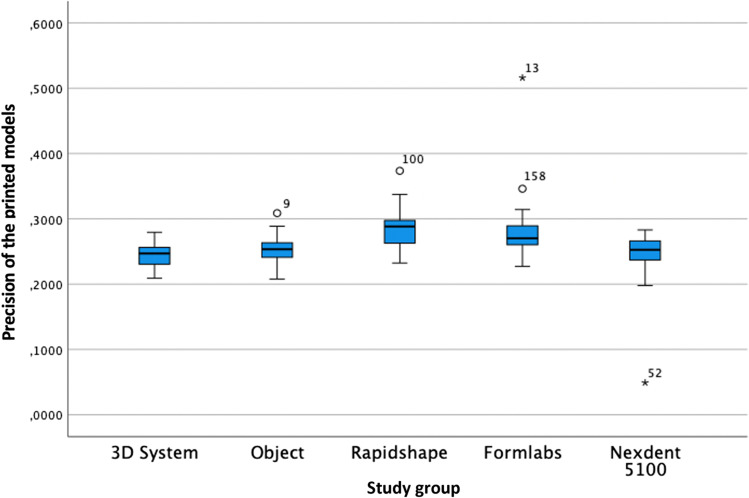
The one-way ANOVA for the trueness and precision of the printed model presented the best results for the 3DS, followed by ND, Obj, FL and RS (P < 0.01). In the scanbody zone, the best results were for the 3DS group, followed by Obj, ND, FL and RS (P < 0.01). Comparing the technologies, the Multijet technology used in industrial printers presented better results than the DLP and SLA technologies used in dental desktop printers (P > 0.01).
There were statistically significant differences in terms of the accuracy of the printed models, with better results for the industrial than the dental desktop 3D printers.
The industrial 3D printers used in dental laboratories presented better accuracy than the in-office dental desktop 3D printers, and this should be considered when the best accuracy is needed to perform final prosthetic restorations.
本研究旨在评估使用五种不同工业和牙科桌面 3D 打印机打印模型的准确性,包括准确度和精密度。
对 15 名患者的全口数字模型进行扫描后,使用五种不同的 3D 打印机进行打印。工业 3D 打印机包括 3D 系统 Project MJP2500(3DS)和 Objet30 OrthoDesk(Obj)。牙科桌面 3D 打印机为 NextDent 5100(ND)、Formlabs Form 2(FL)和 Rapidshape D30(RS)。共分析了 225 个打印模型。使用 Control X 软件(Geomagic)对打印模型进行数字化,并与参考铸模进行比较。采用描述性统计和单因素方差分析,组间比较采用 Tukey 检验(α=0.05)。
单因素方差分析结果显示,打印模型的准确度和精密度最好的是 3DS,其次是 ND、Obj、FL 和 RS(P<0.01)。在扫描体区域,3DS 组的结果最好,其次是 Obj、ND、FL 和 RS(P<0.01)。比较不同技术,工业 3D 打印机中使用的多喷头喷射技术比牙科桌面 3D 打印机中使用的数字光处理技术和立体光固化技术的效果更好(P>0.01)。
打印模型的准确性存在统计学差异,工业 3D 打印机的准确性优于牙科桌面 3D 打印机。
当需要进行最终修复体制作时,牙科实验室使用的工业 3D 打印机比口腔内使用的桌面 3D 打印机具有更高的准确性,这一点需要考虑。