Rong Yuluo, Wang Zhuanghui, Tang Pengyu, Wang Jiaxing, Ji Chengyue, Chang Jie, Zhu Yufeng, Ye Wu, Bai Jianling, Liu Wei, Yin Guoyong, Yu Lipeng, Zhou Xuhui, Cai Weihua
Department of Orthopedics, The First Affiliated Hospital of Nanjing Medical University, Nanjing, 210029, Jiangsu, China.
Department of Biostatistics, School of Public Health, Nanjing Medical University, Nanjing, 210029, Jiangsu, China.
Bioact Mater. 2022 Nov 25;23:328-342. doi: 10.1016/j.bioactmat.2022.11.011. eCollection 2023 May.
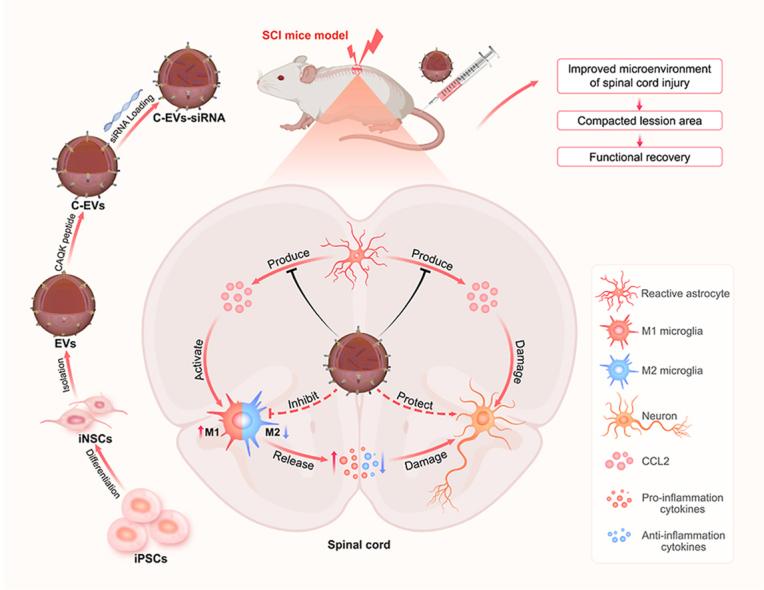
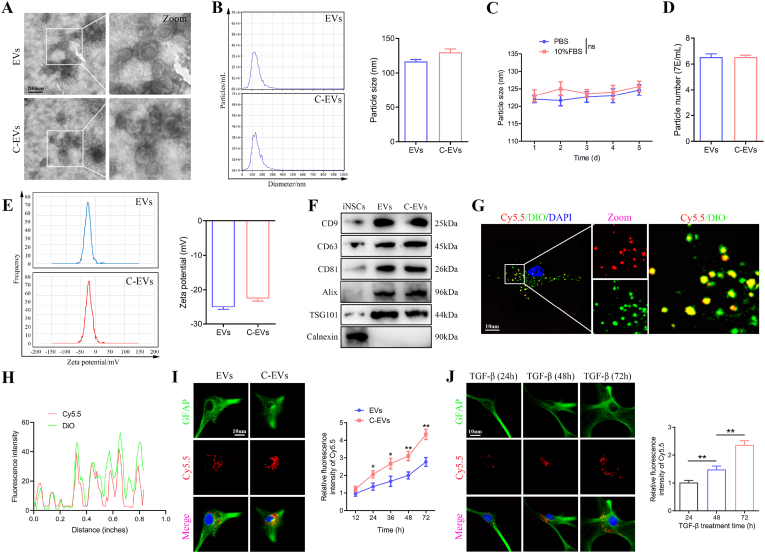
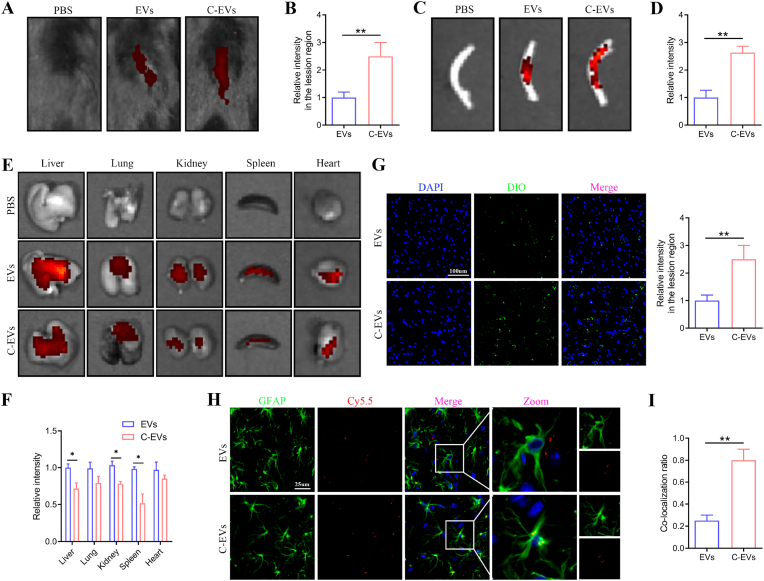
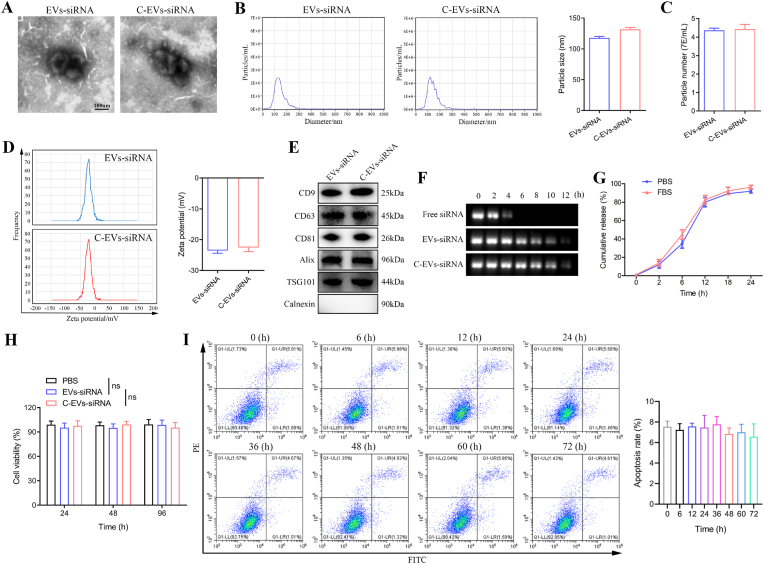
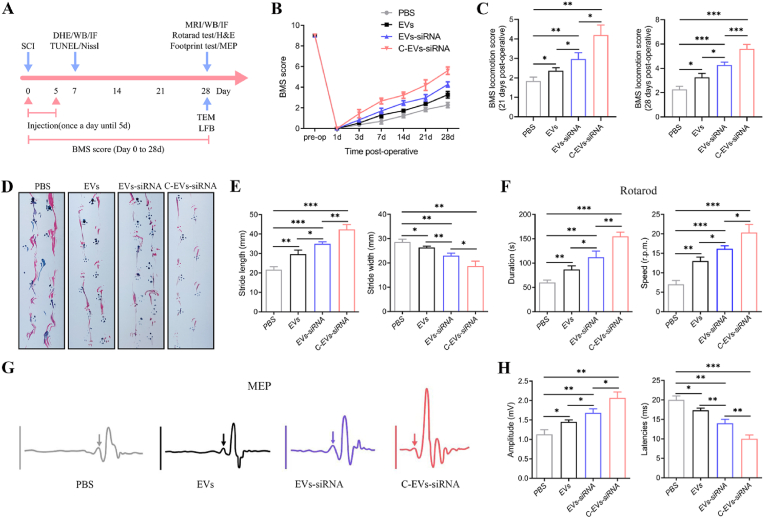
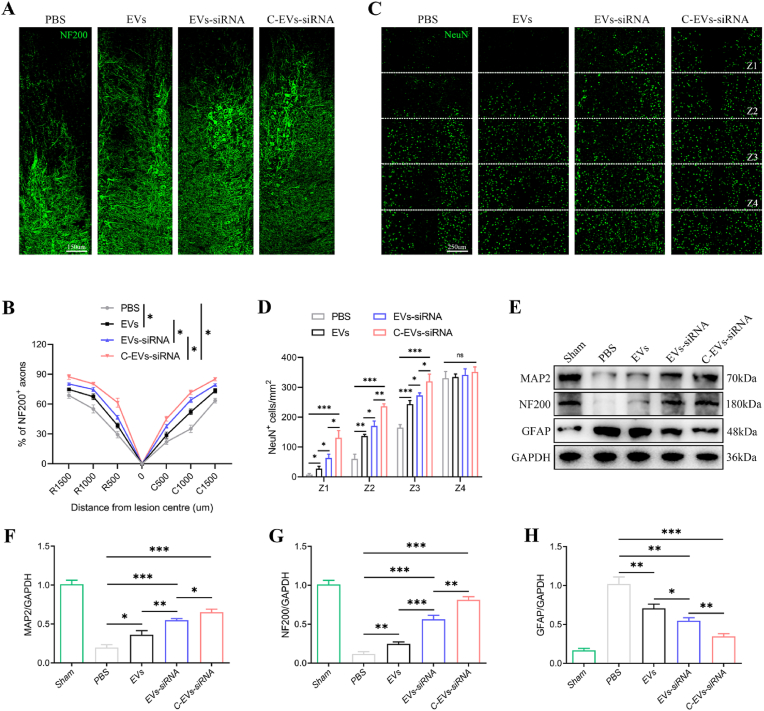
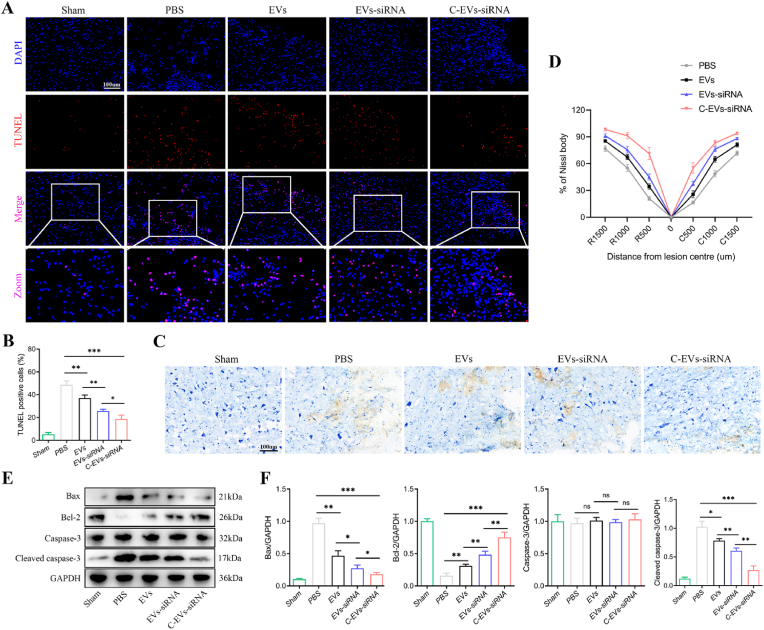
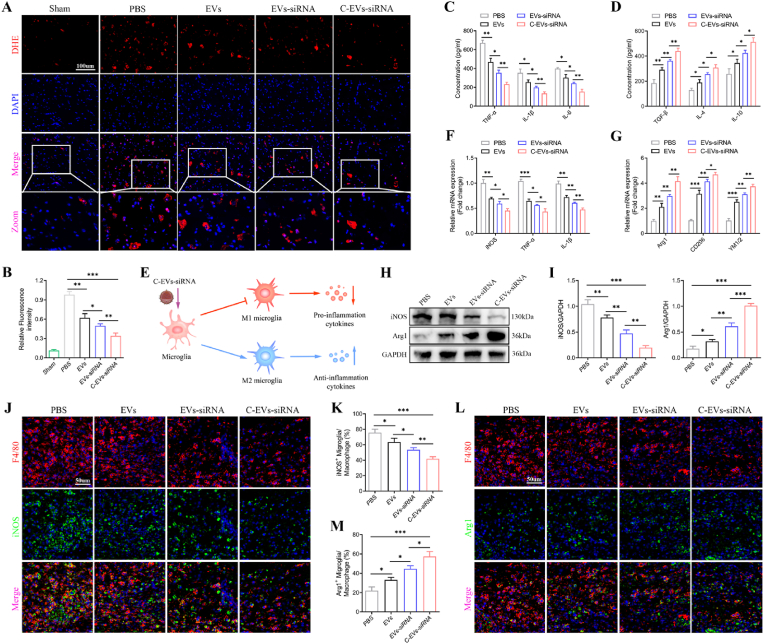
Spinal cord injury (SCI) is a severe disease of the nervous system that causes irreparable damage and loss of function, for which no effective treatments are available to date. Engineered extracellular vesicles (EVs) carrying therapeutic molecules hold promise as an alternative SCI therapy depending on the specific functionalized EVs and the appropriate engineering strategy. In this study, we demonstrated the design of a drug delivery system of peptide CAQK-modified, siRNA-loaded EVs (C-EVs-siRNA) for SCI-targeted therapy. The peptide CAQK was anchored through a chemical modification to the membranes of EVs isolated from induced neural stem cells (iNSCs). CCL2-siRNA was then loaded into the EVs through electroporation. The modified EVs still maintained the basic properties of EVs and showed favorable targeting and therapeutic effects and . C-EVs-siRNA specifically delivered siRNA to the SCI region and was taken up by target cells. C-EVs-siRNA used the inherent anti-inflammatory and neuroreparative functions of iNSCs-derived EVs in synergy with the loaded siRNA, thus enhancing the therapeutic effect against SCI. The combination of targeted modified EVs and siRNA effectively regulated the microenvironmental disturbance after SCI, promoted the transformation of microglia/macrophages from M1 to M2 and limited the negative effects of the inflammatory response and neuronal injury on functional recovery in mice after SCI. Thus, engineered EVs are a potentially feasible and efficacious treatment for SCI, and may also be used to develop targeted treatments for other diseases.
脊髓损伤(SCI)是一种严重的神经系统疾病,会导致不可修复的损伤和功能丧失,迄今为止尚无有效的治疗方法。携带治疗分子的工程化细胞外囊泡(EVs)有望成为一种替代的SCI治疗方法,这取决于特定功能化的EVs和适当的工程策略。在本研究中,我们展示了一种用于SCI靶向治疗的肽CAQK修饰、负载siRNA的EVs(C-EVs-siRNA)药物递送系统的设计。肽CAQK通过化学修饰锚定在从诱导神经干细胞(iNSCs)分离的EVs膜上。然后通过电穿孔将CCL2-siRNA加载到EVs中。修饰后的EVs仍保持EVs的基本特性,并显示出良好的靶向性和治疗效果。C-EVs-siRNA将siRNA特异性递送至SCI区域并被靶细胞摄取。C-EVs-siRNA利用iNSCs来源的EVs固有的抗炎和神经修复功能与负载的siRNA协同作用,从而增强对SCI的治疗效果。靶向修饰的EVs与siRNA的组合有效调节了SCI后的微环境紊乱,促进了小胶质细胞/巨噬细胞从M1向M2的转变,并限制了炎症反应和神经元损伤对SCI后小鼠功能恢复的负面影响。因此,工程化的EVs是一种潜在可行且有效的SCI治疗方法,也可用于开发针对其他疾病的靶向治疗。